Camping has long been one of the best ways to disconnect from the demands of everyday life. Fresh air, quiet surroundings, star-filled skies, and time spent in nature offer a welcome break from busy schedules and constant notifications. At the same time, camping has changed considerably over the past decade. Many campers now bring smartphones, GPS devices, smartwatches, portable power stations, Bluetooth speakers, and even mobile Wi-Fi hotspots to stay connected or simply make their trip more convenient. As a result, EMF exposure while camping has become a topic of interest for people who want to enjoy modern technology while also being mindful of their surroundings.
The good news is that camping often places you in environments with fewer electronic devices than your home or workplace. Depending on where you camp and the equipment you bring, your overall electromagnetic field (EMF) exposure may actually be lower than what you experience during a typical day. Still, understanding the sources of EMF exposure while camping can help you make simple adjustments if reducing unnecessary exposure is one of your personal wellness goals.
This guide explains where EMFs commonly come from at campsites, how tent camping differs from RV camping, and practical steps you can take to reduce exposure without sacrificing comfort or convenience. Rather than suggesting that every electronic device is something to fear, the goal is to provide balanced information so you can make decisions that fit your camping style.
What Is EMF?
Before discussing camping specifically, it helps to understand what electromagnetic fields actually are. EMFs are invisible areas of energy that are produced naturally and by human-made electrical devices. Natural EMFs have always existed around us, originating from the Earth’s magnetic field, lightning, and even the sun. Human-made EMFs are generated whenever electricity flows through wires or wireless devices transmit information.
Most discussions about EMFs focus on two general categories.
The first category is extremely low frequency (ELF) EMFs, which are produced by household electrical wiring, extension cords, power lines, generators, battery chargers, and appliances. These fields are present whenever electrical current is flowing.
The second category is radiofrequency (RF) EMFs, which are produced by wireless technologies such as smartphones, Wi-Fi routers, Bluetooth devices, cell towers, GPS units, and mobile hotspots. Unlike ELF fields, RF signals are used to transmit data wirelessly from one device to another.
While researchers continue studying EMFs and their long-term effects, major public health organizations generally state that everyday exposure below established safety guidelines has not been proven to cause adverse health effects. Even so, some people prefer taking reasonable precautions by reducing unnecessary exposure whenever it is practical. Camping naturally presents opportunities to do just that without making major lifestyle changes.
Why Camping Can Be Different From Everyday Life
Many people assume that leaving home automatically means leaving EMFs behind. In reality, the answer depends largely on where you camp and what equipment accompanies you.
A remote campsite located deep inside a state forest will typically contain far fewer wireless signals than a suburban neighborhood filled with Wi-Fi routers, smart home devices, security cameras, and nearby cell phones. On the other hand, a modern RV campground with electrical hookups, campground Wi-Fi, satellite television, and dozens of neighboring campers using electronic devices may produce an environment that feels much closer to everyday living.
Your own equipment also plays a significant role. Some campers prefer little more than a tent, flashlight, and cooler. Others bring portable refrigerators, power stations, laptops, tablets, smart speakers, battery charging stations, electric cooking equipment, and wearable technology. Every additional electrical or wireless device contributes some level of electromagnetic field.
Fortunately, unlike many environments where electronics are unavoidable, camping allows you to choose exactly which devices you bring and how often you use them.
Common Sources of EMF Exposure While Camping
Understanding the most common sources of EMFs during a camping trip helps separate genuine sources from common misconceptions. Most campers are surrounded by far fewer electronic devices than they encounter at home, but certain pieces of equipment can still contribute to EMF exposure while camping. Becoming familiar with these sources allows you to make thoughtful decisions without feeling like you need to eliminate technology completely.
Smartphones
For many campers, the smartphone remains the single most frequently used electronic device. It serves as a camera, flashlight, GPS navigator, weather station, emergency communication tool, and entertainment center all in one.
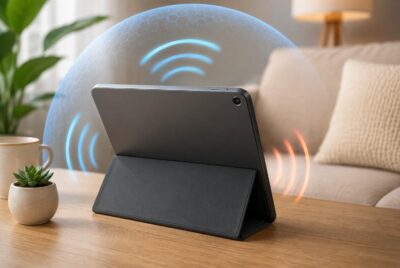
Whenever a phone communicates with nearby cell towers, it sends and receives radiofrequency signals. Signal strength often affects transmission power. In remote camping locations where reception is weak, a phone may increase its transmitting power while searching for a stable connection.
If your phone is simply being used as a camera or to access downloaded maps, placing it in Airplane Mode can temporarily disable most wireless communications while still allowing many offline features to function.
Mobile Hotspots
Some campers work remotely or enjoy streaming movies during their trip. Portable hotspots make internet access possible almost anywhere a cellular signal exists.
Because hotspots continuously transmit wireless signals while connected, they generally produce more sustained RF emissions than a smartphone that sits idle much of the day. If internet access is only needed occasionally, turning the hotspot off between uses can reduce unnecessary wireless activity while also conserving battery life.
Bluetooth Speakers and Headphones
Music has become a popular camping companion. Compact Bluetooth speakers are lightweight, weather resistant, and capable of playing for many hours on a single charge.
Bluetooth operates at significantly lower transmitting power than cellular communication, but it still uses radiofrequency signals whenever connected. Although exposure levels are typically much lower than those from a cell phone making a voice call, turning Bluetooth off when it is no longer needed is an easy way to eliminate another wireless signal.
The same principle applies to wireless earbuds and headphones. Disconnecting them when you’re finished listening to music or podcasts helps preserve battery life while reducing unnecessary transmissions.
Smartwatches and Fitness Trackers
Many outdoor enthusiasts wear smartwatches to monitor hiking distance, heart rate, elevation gain, and sleep quality while camping.
Most smartwatches communicate with smartphones using Bluetooth, and some cellular-enabled models can also connect directly to mobile networks. While these devices generally operate at relatively low power levels, people who prefer limiting wireless technology may choose to disable certain wireless features during periods when connectivity is unnecessary.
GPS Navigation Devices
Dedicated GPS units remain popular among backpackers, hunters, anglers, and hikers exploring unfamiliar trails.
Unlike cell phones transmitting information back and forth with nearby towers, traditional GPS receivers mainly receive signals from satellites. Satellite communicators, however, can both receive and transmit information, especially when sending emergency messages or location updates.
For most recreational campers, GPS devices provide an excellent balance between convenience and safety, particularly in areas where cell phone coverage is limited.
Portable Power Stations
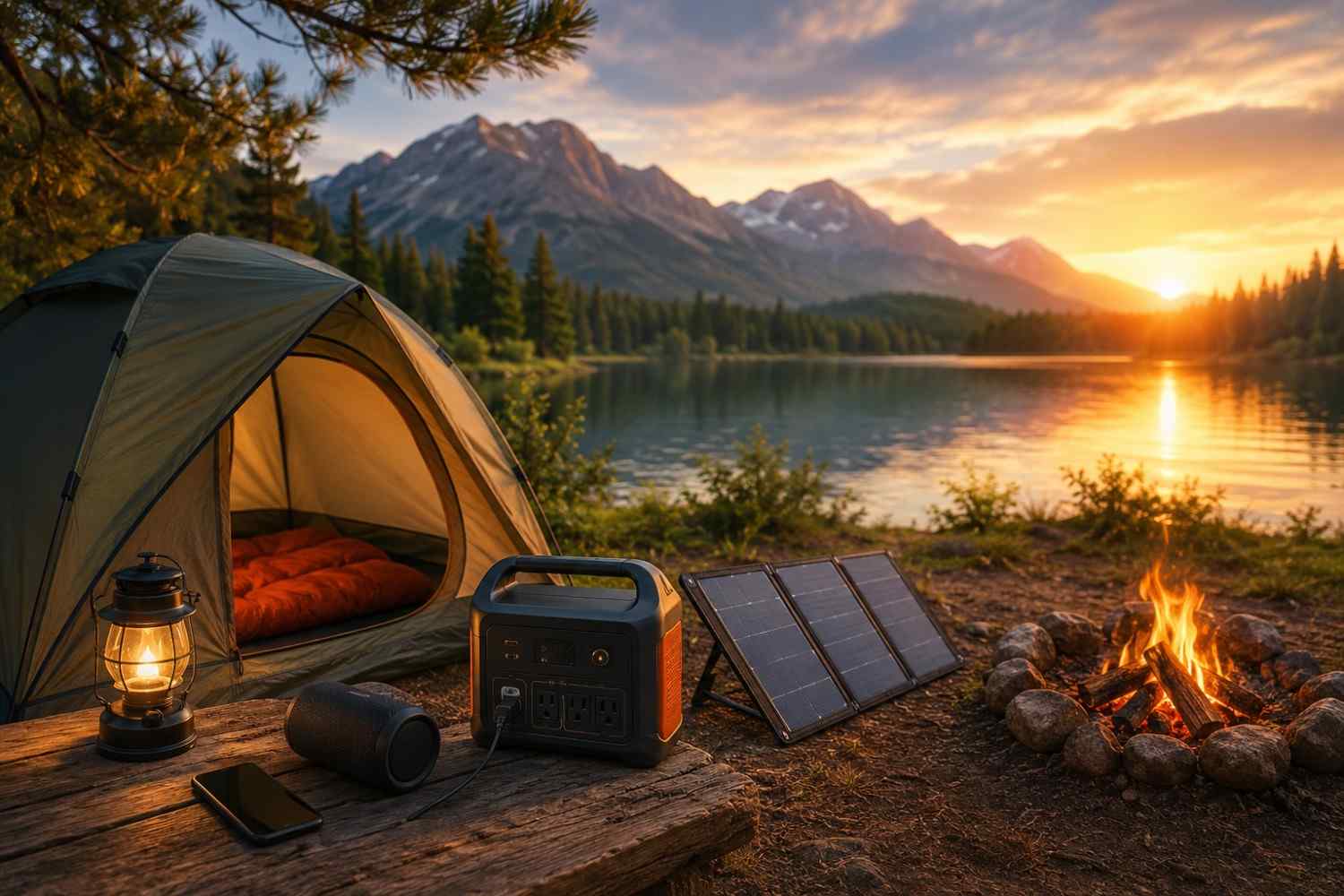
Portable lithium battery power stations have become one of the fastest-growing camping accessories. They can charge phones, power CPAP machines, operate small appliances, run lights, and even support electric coolers.
These units generate extremely low frequency electromagnetic fields whenever electricity flows through their internal electronics or connected devices. Most manufacturers design them to operate within established electrical safety standards, but many campers choose to position them several feet away from sleeping areas simply because distance naturally reduces exposure to electrical fields.
Portable power stations are especially useful for extended camping trips where reliable electricity isn’t available, making thoughtful placement a practical consideration rather than a reason to avoid using them.
Solar Panels and Solar Generators
Portable solar panels are increasingly common at campsites. During daylight hours they convert sunlight into electricity, allowing campers to recharge batteries without relying on fuel-powered generators.
The solar panels themselves generate relatively little electromagnetic activity. Most electrical fields associated with these systems originate from the charge controller, battery system, or inverter connected to the panels. Since these components are typically positioned together near the power station, simply avoiding prolonged time sitting directly beside them is an easy precaution.
Solar charging remains one of the quietest and most environmentally friendly methods of producing electricity while camping.
Battery Chargers
Today’s campers often bring chargers for phones, cameras, drones, rechargeable lanterns, flashlights, radios, and other electronic equipment.
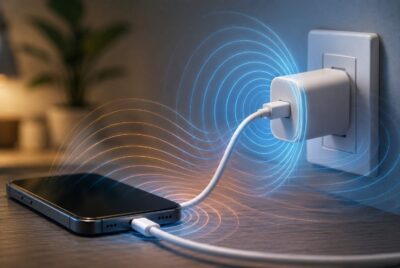
Every charger carrying electrical current produces an extremely low frequency field while operating. Although these fields generally decrease rapidly with distance, organizing a central charging station rather than scattering chargers throughout your sleeping area can help reduce unnecessary exposure and keep your campsite better organized.
Campground Electrical Hookups
Campers staying at developed campgrounds may connect their RV or trailer directly to electrical service. These hookups provide convenient access to household-style electricity for lighting, air conditioning, microwaves, refrigerators, and numerous other appliances.
Because electricity continuously flows through the RV’s electrical system while connected, ELF electromagnetic fields are present around powered wiring and appliances just as they are inside a home. This doesn’t necessarily mean there is cause for concern, but it does illustrate why RV camping often involves more electrical sources than primitive tent camping.
Nearby Cell Towers
Some campers intentionally choose remote destinations where cell service is limited, while others prefer campgrounds offering excellent coverage.
Nearby cellular towers provide communication for everyone in the surrounding area. Their signals become part of the general RF environment, although actual exposure levels depend on factors such as distance, terrain, network traffic, and the direction of the antennas.
Ironically, camping in a location with a stronger cell signal may sometimes allow your own phone to transmit at lower power than it would in a remote area where reception is poor.
As you can see, EMF exposure while camping comes from a variety of sources, most of which are devices many people already use every day. Fortunately, camping also gives you something that daily life often doesn’t: complete control over how much technology you choose to bring along. In the next section, we’ll compare tent camping and RV camping, explain how their EMF environments differ, and explore practical ways to reduce unnecessary exposure while still enjoying all the conveniences of a modern camping trip.
Tent Camping vs. RV Camping: How Do They Compare?
One of the most common questions people ask is whether tent camping or RV camping results in lower EMF exposure. The answer is not as simple as declaring one method “good” and the other “bad.” Instead, each style of camping creates a different electrical environment based on the equipment being used and the amount of technology involved.
For many people, simply understanding these differences makes it easier to decide where small adjustments can be made if reducing EMF exposure is one of their personal goals.
Tent Camping
Traditional tent camping generally involves fewer electrical devices than almost any other recreational activity. A typical tent setup may include a sleeping bag, lantern, cooler, camp stove, flashlight, and perhaps a smartphone for emergencies or taking photos.
Because there are usually no electrical hookups and relatively few powered appliances, extremely low frequency (ELF) EMFs tend to be limited. Wireless exposure is also often lower simply because campers spend more time enjoying nature than using connected devices.
Many campers intentionally download maps, trail guides, and entertainment before leaving home. Doing so allows their phones to remain in Airplane Mode for much of the trip while still providing access to useful offline features.
Another advantage of tent camping is flexibility. Since you’re not surrounded by built-in electrical wiring or powered appliances, it’s easy to keep electronics several feet away while sleeping. Even placing a phone inside a backpack near the tent entrance instead of beside your pillow is a simple adjustment that many campers find worthwhile.
Of course, this doesn’t mean every tent campsite has low EMF levels. A crowded campground filled with hundreds of campers using smartphones, portable hotspots, Bluetooth speakers, and nearby Wi-Fi may present a different environment than a secluded backcountry campsite.
RV Camping
RV camping offers a completely different experience. Modern recreational vehicles often include refrigerators, microwaves, televisions, air conditioners, lighting systems, battery chargers, inverters, water pumps, Wi-Fi boosters, and multiple charging stations.
These conveniences make camping more comfortable, especially during extended trips or family vacations. They also introduce more electrical equipment into your immediate surroundings.
If your RV is connected to campground shore power, electricity continuously flows through the vehicle’s wiring. Even when operating from batteries, power still passes through electrical systems that allow appliances and outlets to function.
Many RV owners also install rooftop solar panels connected to charge controllers and battery banks. These systems provide clean, renewable energy while reducing dependence on generators, but they also add additional electrical components.
None of this automatically means RV camping creates unsafe conditions. Rather, it highlights that RV campers simply have more opportunities to be mindful about where electronics are placed and how frequently certain devices are used.
Affiliate Advertisement
Practical Ways to Reduce EMF Exposure While Camping
One of the best aspects of camping is that small changes can often make a noticeable difference without reducing enjoyment. Most of the suggestions below involve common-sense habits that may also improve battery life, reduce clutter, and encourage spending more time outdoors.
Use Airplane Mode Whenever You Don’t Need Cellular Service
If you’re hiking, relaxing around the campfire, or sleeping for the night, your phone may not need to remain connected to cellular networks.
Placing your phone in Airplane Mode disables most wireless communications while still allowing you to use many offline functions such as your camera, downloaded maps, notes, alarm clock, and stored music.
If you need to check messages or make a call later, turning wireless services back on only takes a few seconds.
For many campers, this is one of the easiest ways to reduce EMF exposure while camping while also extending battery life during longer trips.
Download Maps Before Leaving Home
Many navigation apps allow you to download maps for offline use before your trip begins.
This simple habit means you won’t need continuous internet access while hiking or exploring unfamiliar areas. Besides reducing reliance on wireless signals, offline maps are often more reliable in remote locations where cell service may disappear entirely.
Preparing in advance also reduces the temptation to constantly check your phone throughout the day.
Keep Electronics Away From Your Sleeping Area
Many people place their phone directly beside their sleeping bag or pillow without giving it much thought.
If reducing EMF exposure is one of your priorities, simply placing electronics several feet away while sleeping is an easy adjustment. This applies not only to smartphones but also portable hotspots, tablets, smartwatches being charged overnight, battery chargers, and portable power stations.
Distance is one of the simplest ways to reduce exposure to many types of electromagnetic fields because field strength generally decreases as you move farther away from the source.
Charge Devices During the Day
Rather than charging multiple electronics beside your bed overnight, consider charging them while you’re preparing meals, relaxing at the campsite, or enjoying the afternoon outdoors.
This approach keeps charging equipment away from your sleeping area and ensures everything is ready for evening activities.
It can also help you identify which devices actually need charging, reducing unnecessary electricity use.
Turn Off Bluetooth When You’re Finished Using It
Bluetooth is convenient, but many devices continue searching for connections long after you’re done listening to music or using wireless accessories.
Turning Bluetooth off on your phone, speaker, smartwatch, or headphones when it’s no longer needed reduces another source of wireless communication while also helping conserve battery power.
For campers trying to simplify their experience, fewer active wireless features often make the trip feel more relaxing.
Limit Portable Hotspot Use
Portable hotspots have become increasingly common among campers who work remotely or travel with family members needing internet access.
If internet access is only required occasionally, consider turning the hotspot on only when necessary rather than leaving it running throughout the day.
This approach not only reduces wireless transmissions but can significantly increase battery life as well.
Position Portable Power Stations Thoughtfully
Portable power stations have transformed camping by providing reliable electricity without the noise and fumes of traditional generators.
Instead of placing one immediately beside your cot or sleeping bag, consider positioning it several feet away while still keeping it protected from weather.
This simple change allows you to enjoy its convenience without having major electrical equipment directly beside you throughout the night.
Reduce Unnecessary Electronics
Camping provides a rare opportunity to disconnect from everyday routines.
Many campers discover they don’t miss checking social media every few minutes or streaming television every evening. Reading a book, watching wildlife, hiking, fishing, or sitting around a campfire often becomes the highlight of the trip.
Reducing the number of electronic devices you bring naturally reduces the number of potential EMF sources while making room for experiences that many people say they remember far longer than anything on a screen.
What About Portable Generators?
Portable generators remain common at campgrounds, particularly during longer RV trips.
Traditional gasoline generators primarily produce ELF electromagnetic fields through their electrical systems while running. They also create noise and exhaust emissions that many campers find disruptive.
Battery-powered portable power stations combined with solar charging have become popular alternatives because they operate quietly and require little maintenance.
Regardless of which power source you use, placing generators or battery stations a reasonable distance from your primary sleeping area is generally considered good camping practice for both comfort and organization.
Should You Use an EMF Meter While Camping?
Some campers enjoy measuring the EMF levels around different devices to better understand how their equipment behaves in real-world conditions.
An EMF meter can help identify where electrical and wireless fields are strongest, allowing you to experiment with different equipment placement or compare environments such as a remote tent campsite versus a fully equipped RV park.
It’s important to remember, however, that EMF readings naturally fluctuate. Cell phones increase and decrease transmission power depending on signal strength, nearby devices communicate intermittently, and electrical equipment cycles on and off throughout the day.
Because of these normal variations, occasional measurements are generally more useful for learning than constantly monitoring every location you visit.
For readers interested in measuring their surroundings, one professional-grade option is the Safe and Sound Pro II RF Meter from Safe Living Technologies.
This handheld meter is designed to measure radiofrequency signals from sources such as Wi-Fi routers, cell phones, Bluetooth devices, and nearby wireless transmitters. It can be a useful educational tool for those who want to better understand the RF environment around their camping equipment. Like any measuring device, it is intended to provide information – not diagnose health conditions or determine whether a particular environment is “safe” or “unsafe.”
Frequently Asked Questions About EMF Exposure While Camping
After learning about the different sources of EMFs found at campsites, many people still have a few practical questions. The answers below summarize some of the topics campers ask most often and can help you make informed decisions before your next outdoor adventure.
Does camping usually reduce EMF exposure?
For many people, yes. If you compare a quiet tent campsite to a typical home or office, there are often fewer wireless devices, less electrical wiring, and fewer nearby electronics operating around the clock.
That said, every camping experience is different. A primitive campsite located miles from the nearest road will usually have a different electromagnetic environment than a crowded RV campground offering Wi-Fi, electrical hookups, and hundreds of connected devices.
Your own equipment also plays a significant role. A camper carrying only a flashlight and smartphone will likely encounter fewer EMF sources than someone traveling with multiple tablets, portable hotspots, Bluetooth speakers, battery chargers, and several portable power stations.
Should I sleep with my phone inside my sleeping bag?
Many people keep their phones close at night for emergency calls or to use as an alarm clock. If reducing EMF exposure is one of your goals, there are easy alternatives.
Placing your phone on a nearby camp table, inside a backpack near the tent entrance, or several feet away from your sleeping area allows it to remain accessible without resting directly beside your body throughout the night.
If cellular service is not needed while you sleep, switching the phone to Airplane Mode can also reduce wireless communication until the following morning.
Are RV campgrounds higher in EMFs than tent campgrounds?
They often can be, although not always.
RV parks typically contain electrical hookups, powered appliances, Wi-Fi systems, satellite equipment, battery chargers, and numerous electronic devices operating at the same time. These features naturally create more electrical activity than a primitive campsite.
However, simply staying in an RV does not automatically mean your exposure is excessive. Thoughtful placement of electronics, limiting unnecessary wireless devices, and maintaining a comfortable distance from larger electrical equipment are practical habits that many RV owners already follow.
Do portable solar panels create EMFs?
Solar panels themselves generate relatively little electromagnetic activity.
Most electrical fields associated with portable solar systems come from supporting equipment such as inverters, battery banks, and charge controllers that manage electricity after it has been collected by the panels.
Keeping these components a reasonable distance from where you spend long periods sitting or sleeping is a simple precaution that many campers choose to follow.
Is Airplane Mode useful while camping?
For many campers, absolutely.
If you’ve already downloaded maps, trail information, music, or books before leaving home, Airplane Mode allows you to continue using many of those features without your phone constantly communicating with nearby cellular towers.
Many people also notice an added benefit: significantly improved battery life, which can be especially valuable during multi-day camping trips.
Should I worry about every electronic device I bring?
Probably not.
Camping is meant to be enjoyable, and worrying about every charger or flashlight can take away from the experience.
A more balanced approach is to understand where EMFs originate, avoid unnecessary wireless use when practical, and focus on simple habits that require very little effort. Small changes often provide peace of mind without making camping feel complicated.
Finding a Practical Balance
It’s easy to find articles online that either dismiss every concern about EMFs or suggest avoiding nearly every modern electronic device. In reality, most campers fall somewhere between those two extremes.
Technology has made camping safer and more enjoyable in many ways. GPS devices help hikers navigate unfamiliar trails. Weather apps provide severe storm alerts. Emergency satellite communicators can be lifesaving in remote areas. Portable power stations allow campers to operate medical equipment such as CPAP machines, while rechargeable lanterns provide dependable lighting without fuel.
At the same time, many of these conveniences are optional. One of the greatest benefits of camping is having the opportunity to decide which technologies truly improve your experience and which ones simply come along out of habit.
You may discover that you don’t miss checking email every hour or scrolling through social media before bed. Instead, evenings become opportunities to enjoy a campfire, listen to wildlife, watch the stars, or spend uninterrupted time with family and friends.
Reducing technology use often has benefits that extend beyond EMF awareness. Many campers report sleeping better, feeling less distracted, conserving battery power, and returning home feeling genuinely refreshed after spending several days outdoors.
Final Thoughts
Camping offers something that many parts of modern life cannot – an opportunity to slow down, unplug, and reconnect with nature. While electronic devices certainly have their place, they don’t have to define your outdoor experience.
Understanding EMF exposure while camping doesn’t mean avoiding smartphones, GPS units, portable power stations, or other useful equipment. Instead, it means recognizing where electromagnetic fields commonly originate and making simple, practical choices when those adjustments fit your lifestyle.
Whether you prefer primitive backcountry camping, family weekends at a state park, or extended RV adventures, a few thoughtful habits can go a long way. Using Airplane Mode when practical, keeping electronics away from your sleeping area, limiting unnecessary wireless connections, and bringing only the technology you truly need are all easy steps that require very little effort.
Ultimately, EMF exposure while camping is just one small part of the overall camping experience. Fresh air, exercise, beautiful scenery, and time spent away from the distractions of daily life remain some of the biggest reasons people continue to head outdoors year after year. By staying informed and making balanced decisions, you can enjoy all the benefits of camping while using modern technology in a way that feels comfortable for you.
Before You Go…
Get Weekly EMF Protection Tips
Enjoy this article? Join the EMFLuLu newsletter for simple weekly tips to reduce everyday EMF exposure from phones, WiFi routers, laptops, and smart home devices.
Try Our Free EMF Calculators
Curious how much EMF exposure you may experience each day?
These simple tools can help you estimate your exposure and identify possible problem areas in your home.
Try these free calculators:
Like this article? Pin it on Pinterest!
More to Explore