Smartphones have become part of nearly every aspect of modern life. Most people keep their phones within arm’s reach all day long, whether they are working, traveling, sleeping, or relaxing at home. As awareness of electromagnetic field exposure continues to grow, many people are asking the same question: does airplane mode reduce EMF radiation?
The short answer is yes. In most situations, airplane mode significantly reduces the radiofrequency (RF) emissions produced by a smartphone because it disables many of the wireless communication features responsible for transmitting signals. However, understanding exactly what airplane mode does – and what it does not do – is important if you want a balanced and practical view of EMF exposure.
This article explains how airplane mode works, why phones emit EMF radiation in the first place, what signals may still remain active, and several realistic ways to reduce exposure without becoming overwhelmed or fearful of technology.
Understanding EMF Radiation From Smartphones
Before discussing airplane mode specifically, it helps to understand what types of EMF radiation smartphones produce during normal operation.
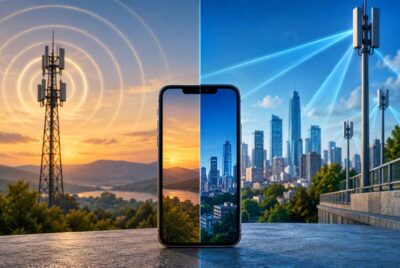
Phones communicate using wireless radiofrequency signals. These signals allow the device to connect to cellular towers, WiFi routers, Bluetooth accessories, and GPS satellites. Every time your phone sends or receives data, it produces electromagnetic fields.
This type of EMF is considered non-ionizing radiation. Non-ionizing radiation does not have enough energy to directly damage DNA in the same way ionizing radiation from X-rays or radioactive materials can. Still, many people prefer to reduce unnecessary exposure whenever possible, especially because phones are often kept close to the body for long periods.
One important detail many people overlook is that phones do not emit the same amount of RF energy all the time. Signal strength changes constantly depending on network conditions. For example, your phone may increase transmission power when:
- You are in a weak signal area
- You are moving quickly in a vehicle
- You are streaming video
- You are uploading files
- You are making voice or video calls
- The phone is searching for a network
This is one reason many people become interested in airplane mode. They want to reduce those active wireless transmissions whenever full connectivity is not necessary.
What Exactly Does Airplane Mode Do?
Airplane mode was originally designed for airline travel. Airlines wanted passengers to disable wireless transmissions that could potentially interfere with aircraft communication systems. Today, airplane mode has become a standard feature on virtually all smartphones and tablets.
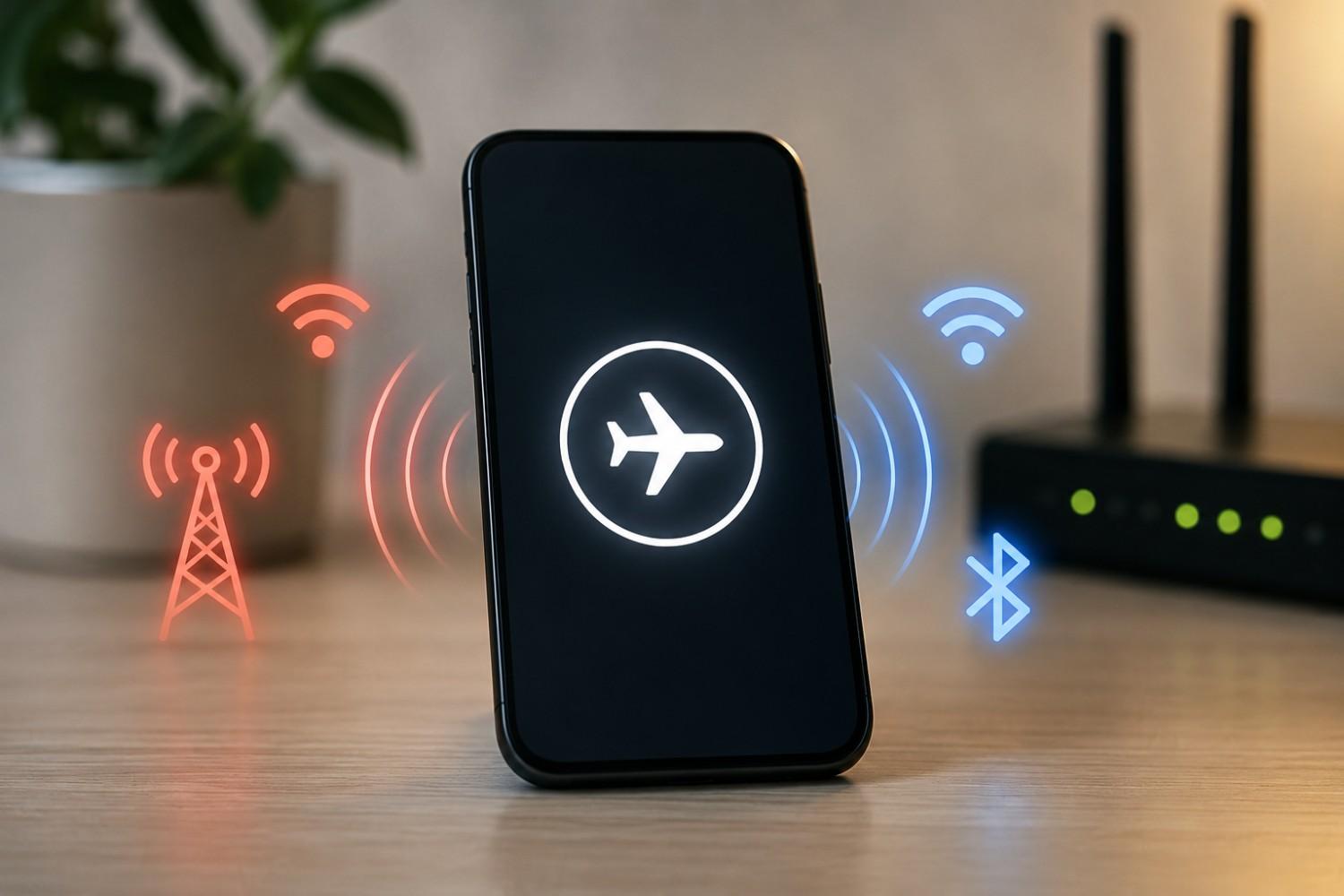
When airplane mode is activated, the phone disables several wireless communication systems simultaneously. In most cases, airplane mode turns off:
- Cellular signals
- WiFi connections
- Bluetooth communication
Once enabled, the phone stops actively communicating with nearby cellular towers. This reduction in wireless communication is the main reason EMF emissions drop significantly while airplane mode is active.
However, there are a few important details worth understanding. Many phones allow users to manually re-enable WiFi or Bluetooth after airplane mode is turned on. For example, someone on a flight may activate airplane mode but still use onboard WiFi.
If WiFi or Bluetooth is manually turned back on, the phone will once again emit RF signals through those systems. The overall exposure may still be lower than normal phone operation, but wireless communication has resumed.
GPS behavior can also vary slightly depending on the device. Some phones continue passive GPS functions without transmitting cellular signals, while others limit additional location-related activity.
Does Airplane Mode Reduce EMF Radiation?
When people ask, “does airplane mode reduce EMF radiation,” they are usually referring to RF radiation from wireless communication signals. In that context, airplane mode generally does reduce exposure substantially.
The largest reduction occurs because the phone stops continuously sending and receiving cellular data. Under normal conditions, smartphones regularly communicate with nearby towers even when not actively being used. This background activity includes checking for messages, updating apps, syncing notifications, and maintaining network connections.
Once airplane mode is enabled, those transmissions largely stop.
This reduction can be especially noticeable in poor coverage areas where the phone would normally increase transmission strength while searching for a stronger signal. A phone struggling to maintain connection in a basement, elevator, parking garage, or rural location may emit more RF energy than a phone operating in a strong signal environment.
Airplane mode removes much of that constant communication process.
At the same time, it is important to avoid exaggeration. Airplane mode does not completely eliminate all electromagnetic activity from a device. The phone still contains internal electronics, processors, and battery systems that generate small electrical fields. The screen still functions. Offline apps may still operate.
The key point is that airplane mode greatly reduces wireless RF emissions because the primary transmitting systems are disabled.
Why Many People Use Airplane Mode While Sleeping
One of the most common situations where people use airplane mode is overnight while sleeping.
Many people place their phones directly beside the bed, under pillows, or on a nearby nightstand. Since phones may continue transmitting signals throughout the night, some individuals prefer reducing unnecessary wireless activity during sleeping hours.
Using airplane mode overnight offers several practical benefits.
First, it allows people to continue using their phone as an alarm clock without maintaining active cellular communication. The alarm function still works normally even when airplane mode is enabled.
Second, it may reduce distractions. Notifications, calls, and alerts are silenced unless WiFi or Bluetooth are manually reactivated.
Third, it can reduce battery usage because the phone is no longer constantly searching for signals and updating apps in the background.
Many people appreciate this approach because it is simple, free, and easy to implement without purchasing additional equipment.
Airplane Mode During Travel and Weak Signal Areas
Another situation where airplane mode may be particularly useful is during travel.
Phones often work harder in areas with poor reception. Inside airplanes, trains, tunnels, elevators, or remote regions, devices may repeatedly attempt to establish stronger network connections. This constant searching process can increase wireless transmission activity.
Some people use airplane mode during these situations to avoid continuous signal hunting.
For example, if you are driving through rural areas with poor reception and do not need calls or internet access, activating airplane mode can prevent the phone from repeatedly increasing power output while searching for towers.
This may also help preserve battery life during long trips.
People who download music, podcasts, or movies ahead of time can still use their devices offline while keeping wireless communication disabled.
Airplane Mode vs Turning the Phone Completely Off
Some people wonder whether turning the phone off entirely is better than using airplane mode.
A powered-off phone generally produces even less electrical activity than a phone operating in airplane mode. However, airplane mode remains popular because it offers convenience.
With airplane mode enabled:
- Alarms still work
- Offline apps remain available
- Photos and videos can still be viewed
- Notes and documents remain accessible
- The device can still function as a camera
For many users, airplane mode offers a practical middle ground between full connectivity and completely powering down the device.
In daily life, convenience often matters. People are more likely to adopt habits consistently when they are simple and realistic.
What Signals May Still Remain Active?
To fully answer the question does airplane mode reduce EMF radiation, it is important to understand what may still remain active after airplane mode is enabled.
Many newer smartphones allow WiFi and Bluetooth to be manually turned back on individually. If this happens, those systems resume wireless communication.
For example:
- Bluetooth headphones reconnect
- Smart watches sync with the phone
- WiFi networks reconnect
- Streaming services resume data transmission
In those situations, RF exposure increases again because wireless communication is active.
Some background electronics inside the phone also continue functioning. The battery, processor, display, and internal circuits still produce small electromagnetic fields. These are generally different from the stronger RF emissions associated with cellular communication.
This distinction matters because some online discussions incorrectly suggest airplane mode creates a completely radiation-free device. That is not accurate.
A more balanced statement would be that airplane mode significantly reduces wireless RF exposure by disabling most transmitting systems.
Affiliate Advertisement

Additional Ways to Reduce Daily Phone EMF Exposure
Many people who use airplane mode also adopt other practical habits to reduce unnecessary exposure during daily phone use.
The most important concept is distance. EMF intensity decreases rapidly as you move farther from the source. Even small increases in distance can meaningfully reduce exposure.
Several simple habits may help reduce direct exposure without making technology difficult to use.
Use Speakerphone When Possible
Holding a phone directly against the head during long calls places the transmitting antenna very close to the body. Speakerphone creates additional distance while still allowing comfortable communication.
Avoid Weak Signal Calls
Phones often increase transmission power in weak signal environments. If possible, waiting until signal strength improves may reduce wireless output.
Keep Phones Out of Pockets When Practical
Many people carry phones directly against the body throughout the day. Using a bag, backpack, desk, or nearby surface creates more distance between the device and the body.
Download Media Instead of Constant Streaming
Streaming video and audio requires ongoing wireless data transmission. Downloading content ahead of time can reduce continuous network communication.
Use Airplane Mode for Children’s Devices
Some parents enable airplane mode when children are using phones or tablets for offline games, movies, or educational apps.
Optional EMF-Related Products Some People Use
While lifestyle habits are often the most practical starting point, some people also choose to explore EMF-related accessories. It is important to approach these products realistically and avoid exaggerated claims. No product should be viewed as a magical solution, but some may complement sensible phone-use habits.
One popular category is shielding phone cases.
DefenderShield EMF Radiation Protection Phone Cases – These cases are designed to reduce exposure from one side of the phone while still allowing the device to function normally. Many people combine shielding cases with airplane mode habits during sleep or travel.
Some readers may also want to measure environmental EMF levels directly.
Safe Living Technologies EMF Meters – Meters can help identify stronger RF sources in the home and show how signal levels change when airplane mode is activated.
Others explore products intended to support a lower-exposure environment during daily device use.
Common Misunderstandings About Airplane Mode and EMF
There are many confusing claims online about EMF exposure and airplane mode. A balanced understanding is important.
One common misconception is that airplane mode blocks all forms of electromagnetic activity. In reality, it mainly disables wireless communication systems such as cellular, WiFi, and Bluetooth transmissions.
Another misunderstanding is that phones emit maximum radiation at all times. Wireless output changes continuously depending on usage patterns and signal conditions.
Some people also assume that stronger phone service means greater exposure. In many cases, the opposite can occur. Phones in weak signal areas may increase transmission strength while searching for connection.
Understanding these details helps people make informed decisions without unnecessary fear.
Conclusion
So, does airplane mode reduce EMF radiation? In most everyday situations, the answer is yes. Airplane mode significantly reduces wireless RF emissions because it disables the phone’s primary communication systems, including cellular connections, WiFi, and Bluetooth.
Although airplane mode does not completely eliminate all electromagnetic activity from a device, it is one of the easiest and most practical ways to reduce unnecessary wireless exposure when full connectivity is not needed.
For many people, simple habits such as using airplane mode while sleeping, avoiding weak-signal calls, increasing distance from devices, and limiting unnecessary wireless activity provide a balanced and realistic approach to managing everyday EMF exposure.
Before You Go…
Get Weekly EMF Protection Tips
Enjoy this article? Join the EMFLuLu newsletter for simple weekly tips to reduce everyday EMF exposure from phones, WiFi routers, laptops, and smart home devices.
Try Our Free EMF Calculators
Curious how much EMF exposure you may experience each day?
These simple tools can help you estimate your exposure and identify possible problem areas in your home.
Try these free calculators:
Like this article? Pin it on Pinterest!
More to Explore