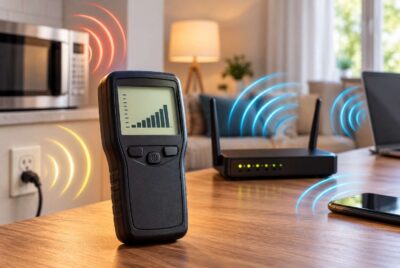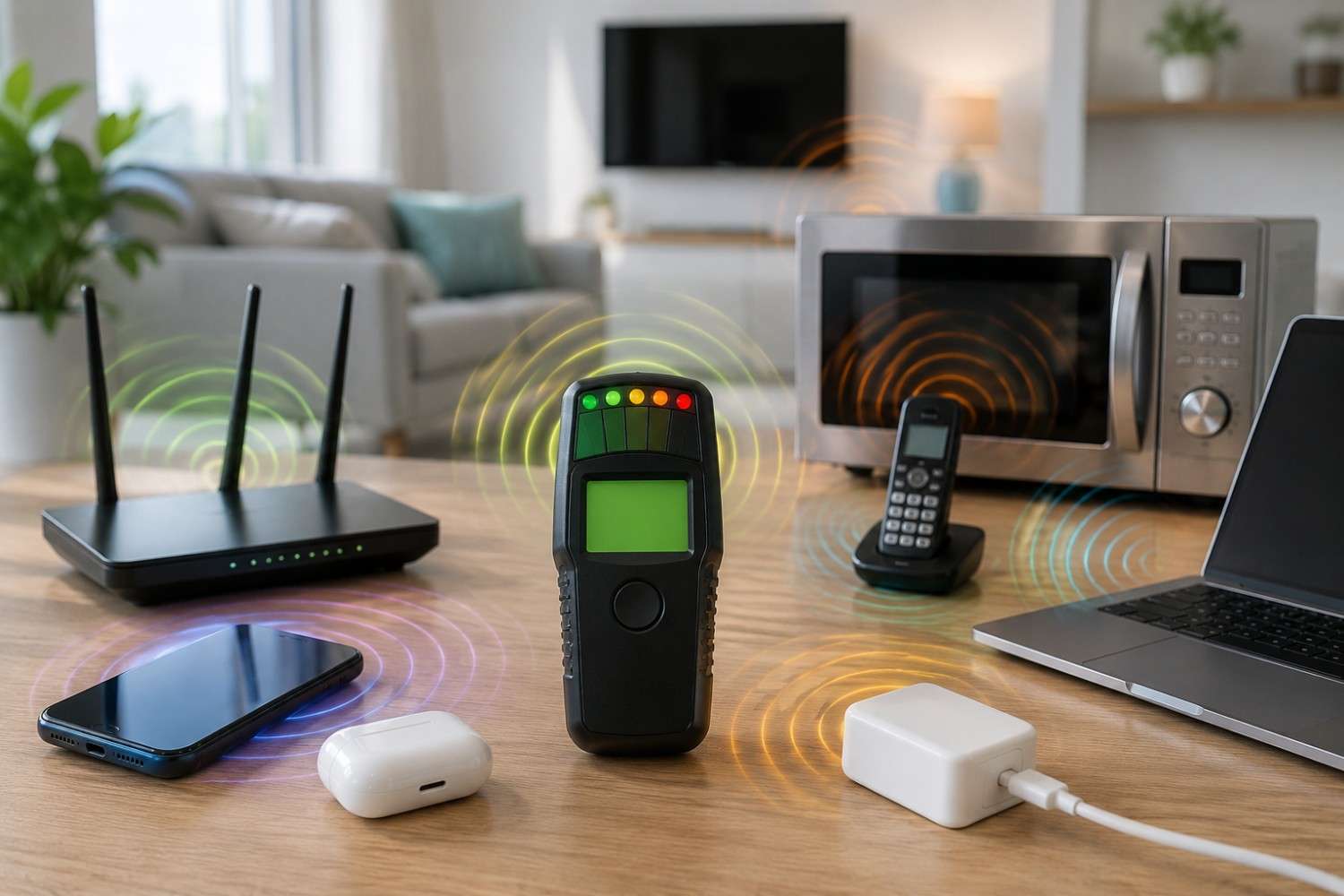
If you have recently purchased an EMF meter, one of the first questions that probably came to mind is: what is a high EMF reading? You point the meter at a WiFi router, a microwave oven, or a power cord and suddenly numbers begin jumping across the screen. Some readings seem low, while others appear surprisingly high. Without understanding what those numbers represent, it can be difficult to know whether the readings are normal or something worth investigating further.
The answer is not as simple as identifying one universal number. EMF meters can measure several different types of electromagnetic fields, and each type uses different units of measurement. A magnetic field reading that may be considered high is measured differently than a radiofrequency reading from a wireless router. Understanding these differences is the first step toward interpreting your meter correctly.
In this guide, we will answer the question what is a high EMF reading, explain how EMF meters work, discuss common household measurements, and provide practical tips for evaluating readings in your home without unnecessary fear or confusion.
What Does an EMF Meter Measure?
Before discussing whether a reading is high or low, it is important to understand what the meter is measuring. Many people assume all EMF meters perform the same function, but that is not the case.
Electromagnetic fields generally fall into three categories that are commonly measured by consumer EMF meters: electric fields, magnetic fields, and radiofrequency (RF) radiation. Some meters measure only one category, while more advanced meters measure all three.
Electric fields are created whenever voltage is present. A lamp plugged into a wall outlet may produce an electric field even when it is switched off. Magnetic fields are created when electrical current is actively flowing through wires and devices. Radiofrequency radiation is associated with wireless technologies such as WiFi routers, Bluetooth devices, cell phones, and smart home products.
Because each field type is measured differently, there is no single number that defines a high EMF reading across all situations.
Why There Is No Universal Definition of a High Reading
One reason EMF measurements can be confusing is that different organizations use different exposure guidelines.
Government agencies often focus on preventing short-term biological effects, such as tissue heating caused by high levels of radiofrequency energy. Other organizations advocate precautionary approaches and recommend significantly lower exposure levels.
As a result, two people looking at the same measurement may reach different conclusions. This does not necessarily mean one person is right and the other is wrong. It simply reflects different viewpoints regarding acceptable exposure levels.
For most homeowners, the more useful approach is understanding how their readings compare to typical household environments and identifying whether there are unusually elevated sources nearby.
What Is Considered a High Magnetic Field Reading?
Magnetic fields are among the most common measurements people encounter when using an EMF meter. These fields are usually measured in milligauss (mG) or microtesla (µT).
In most homes, background magnetic field readings are relatively low. Areas away from electrical appliances may show readings between 0.1 and 1 milligauss. As you move closer to operating devices, readings often increase substantially.
Typical household magnetic field readings include:
- Background environment: 0.1 to 1 mG
- Living rooms: 0.5 to 2 mG
- Refrigerators: 5 to 20 mG nearby
- Hair dryers: 10 to 300+ mG
- Microwave ovens: 10 to 200+ mG near the appliance
- Electrical panels: 20 to several hundred mG
Many EMF-conscious individuals begin paying closer attention when readings consistently exceed 3 to 5 milligauss in frequently occupied areas. Readings above 10 milligauss are generally considered elevated compared to typical residential background levels.
This does not automatically mean there is a problem. It simply indicates that a stronger magnetic field source is present and may warrant further investigation.
What Is Considered a High Electric Field Reading?
Electric fields are commonly measured in volts per meter (V/m). Unlike magnetic fields, electric fields can exist even when devices are not actively operating, provided they remain connected to a power source.
Electric field measurements vary greatly depending on home wiring, nearby appliances, and the location being tested.
Typical electric field levels may include:
- Under 10 V/m in low-exposure environments
- 10 to 100 V/m in many residential settings
- 100 to 500 V/m near electrical wiring
- 500+ V/m near large electrical equipment
Bedrooms are often areas where people pay special attention to electric field levels because of the amount of time spent sleeping. Electronics near the bed, extension cords, chargers, and power strips can all contribute to elevated readings.
If you notice higher electric field measurements, simply increasing distance from the source often produces significant reductions.
What Is Considered a High RF Radiation Reading?
Radiofrequency radiation measurements often generate the most questions because wireless devices have become such a large part of everyday life.
RF radiation comes from sources including:
- WiFi routers
- Smartphones
- Tablets
- Bluetooth devices
- Smart TVs
- Smart meters
- Cell towers
- Wireless security systems
Unlike electric and magnetic fields, RF measurements can be expressed using several different units depending on the meter. Some meters display microwatts per square meter (µW/m²), while others use milliwatts per square meter (mW/m²).
Readings can vary dramatically depending on location and distance from the source. Standing next to a WiFi router will produce a much different reading than standing twenty feet away.
One important concept to remember when evaluating RF exposure is that wireless signals are constantly changing. A reading may increase or decrease within seconds as devices communicate across the network.
When asking what is a high EMF reading in relation to wireless technology, context matters greatly. The same reading may be considered typical in one setting and unusually elevated in another.
Household Devices That Often Produce Higher Readings
Many people are surprised to learn that some of the strongest readings in a home come from ordinary appliances rather than cell towers or WiFi equipment.
Understanding which devices commonly produce elevated measurements helps homeowners interpret their EMF meter results more effectively.
Hair Dryers
Hair dryers often produce some of the strongest magnetic field readings found in a typical home. Because they contain powerful motors and heating elements, measurements taken directly against the device can be quite high.
Fortunately, exposure duration is usually brief.
Microwave Ovens
Microwave ovens often produce elevated magnetic and electric field readings when measured very close to the appliance. Readings generally decrease quickly as distance increases.
Induction Cooktops
Induction cooking technology relies on electromagnetic energy to heat cookware. As a result, higher readings near the cooking surface are common during operation.
WiFi Routers
Wireless routers continuously transmit data throughout the day. Readings are often highest within a few feet of the device.
Electric Blankets
Electric blankets can generate electric and magnetic fields close to the body during use. Some individuals choose to limit their use or turn them off before sleeping.
Laptop Chargers
Power adapters and charging bricks frequently produce elevated magnetic field readings compared to many other household electronics.
Why Distance Matters So Much
One of the most important lessons EMF meter owners learn is that distance can dramatically affect exposure levels.
Many electromagnetic fields weaken rapidly as you move away from the source. In practical terms, moving a few feet farther from an appliance may reduce readings significantly.
For example, a hair dryer may produce a strong measurement directly at the handle, yet only a fraction of that reading several feet away. The same principle applies to WiFi routers, cordless phone bases, laptop chargers, and many other devices.
This is why measurements should always be interpreted in context. A high reading directly against an appliance does not necessarily mean a person experiences that same exposure level throughout the day.
When evaluating your home, consider where people actually spend their time rather than focusing solely on peak readings obtained inches from a device.
How to Use an EMF Meter Properly
Accurate measurements require more than simply pointing a meter at an object. Small changes in technique can affect results significantly.
When measuring EMFs, it is helpful to establish a baseline reading first. Begin by testing an area away from major appliances and electronics. This provides a reference point for comparison.
Take multiple readings rather than relying on a single measurement. EMF levels can fluctuate throughout the day depending on electrical usage and wireless activity.
It is also important to identify the source of a reading before drawing conclusions. If a meter suddenly spikes, try turning nearby devices on and off individually to determine which one is responsible.
Testing at realistic distances is equally important. Measurements taken directly against a device often produce values much higher than those encountered during normal use.
Should You Be Concerned About a High Reading?
Many people purchase an EMF meter expecting a simple answer that separates safe readings from unsafe readings. In reality, interpreting measurements requires a more balanced approach.
A higher reading does not automatically indicate danger. It simply means stronger electromagnetic fields are present in that location at that moment.
The more useful questions are:
- How long is the exposure?
- How close is the source?
- Is the exposure continuous or occasional?
- Can the reading be reduced easily through distance or relocation?
In many cases, simple adjustments can significantly reduce exposure without requiring major lifestyle changes.
Understanding the source of the reading is usually more productive than focusing solely on the number itself.
Affiliate Advertisement
EMF Meters Worth Considering
If you are researching EMF levels, a quality meter can make the process much easier.
For readers looking for a versatile consumer meter, the GQ EMF-390 is one of the most widely used options available through Amazon. It measures multiple field types and is popular among homeowners interested in learning more about their environment.
For readers primarily interested in radiofrequency measurements, the Safe and Sound Pro II RF Meter from Safe Living Technologies is often recommended by EMF consultants and building investigators.
These tools can help identify potential sources of exposure, but they are most useful when paired with a good understanding of what the measurements actually mean.
Practical Ways to Reduce Elevated EMF Levels
Many people who ask “what is a high EMF reading” are ultimately trying to determine whether they should make changes in their environment.
Fortunately, reducing exposure is often straightforward.
Increasing distance from wireless devices is one of the simplest and most effective strategies. Moving a WiFi router away from areas where people spend long periods of time may reduce exposure significantly.
Turning off wireless devices when they are not needed can also lower RF levels throughout the home.
Keeping unnecessary electronics away from beds and sleeping areas is another common recommendation among EMF-conscious homeowners.
When using a smartphone, speakerphone mode or wired accessories can increase distance from the body during calls.
Conclusion
So, what is a high EMF reading? The answer depends on the type of field being measured, the location of the measurement, and the amount of time spent near the source. There is no single number that defines a high reading in every situation. Electric fields, magnetic fields, and radiofrequency radiation all require different interpretations.
The most effective approach is learning what your EMF meter measures, establishing normal background levels in your environment, and identifying unusually elevated sources. Once you understand the numbers on the screen, you can make informed decisions about your surroundings and focus on practical steps that may help reduce unnecessary exposure.
Before You Go…
Get Weekly EMF Protection Tips
Enjoy this article? Join the EMFLuLu newsletter for simple weekly tips to reduce everyday EMF exposure from phones, WiFi routers, laptops, and smart home devices.
Try Our Free EMF Calculators
Curious how much EMF exposure you may experience each day?
These simple tools can help you estimate your exposure and identify possible problem areas in your home.
Try these free calculators:
Like this article? Pin it on Pinterest!
More to Explore