Air travel has become a normal part of modern life. Many people now spend hours on airplanes for vacations, work trips, family visits, and international travel. Along with the convenience of flying comes a growing interest in understanding how electronics and wireless technology affect the travel environment. One question that continues to come up is whether it is possible to reduce EMF on airplane trips without making flying stressful or complicated.
The truth is that airplanes contain many electronic systems and wireless devices. Passengers often travel with smartphones, tablets, laptops, Bluetooth headphones, smart watches, and portable gaming systems. Modern aircraft also commonly offer onboard WiFi, charging ports, and entertainment systems. For travelers who prefer a more precautionary approach to technology exposure, there are practical steps that may help reduce EMF on airplane travel while still allowing the trip to remain comfortable and enjoyable.
This article is not about fear or panic. Instead, it focuses on realistic habits that may help limit unnecessary wireless exposure during flights. Many of these strategies are simple, inexpensive, and easy to follow whether you fly once per year or every week.
What Types of EMF Exposure Exist on an Airplane?
The airplane environment is unique because passengers are surrounded by electronics in a relatively compact space for long periods of time. Unlike being at home where you can move farther away from devices or routers, airplanes place dozens or even hundreds of travelers close together with active electronics operating throughout the flight.
Some of the most common sources of EMF exposure on airplanes include passenger smartphones, tablets, laptops, Bluetooth accessories, onboard WiFi systems, seatback entertainment screens, and aircraft communication equipment. During boarding and after landing, many phones aggressively search for cellular signals, which may increase device transmission activity. Travelers also often stream video, use wireless earbuds, sync smart watches, or work online for several consecutive hours.
It is important to recognize that scientific discussion around long-term EMF exposure is still ongoing. Some researchers believe modern wireless exposure deserves closer study, while others believe current exposure levels remain within accepted safety guidelines. Many travelers who look into EMF reduction are not necessarily convinced that wireless technology is dangerous, but instead prefer a practical “reduce what you reasonably can” approach.
This balanced mindset tends to work best during travel because flying already involves enough stress without becoming overwhelmed by every electronic device nearby.
Why Phones May Increase Activity During Flights
One important detail many travelers do not realize is that smartphones may increase transmission activity when trying to maintain weak connections. Phones are designed to constantly communicate with nearby towers or networks. When a signal becomes weak, devices may work harder to reconnect or search for service.
This often happens during taxiing, takeoff, landing, or while waiting at airports. A phone searching for a signal is generally more active than a phone resting quietly in airplane mode.
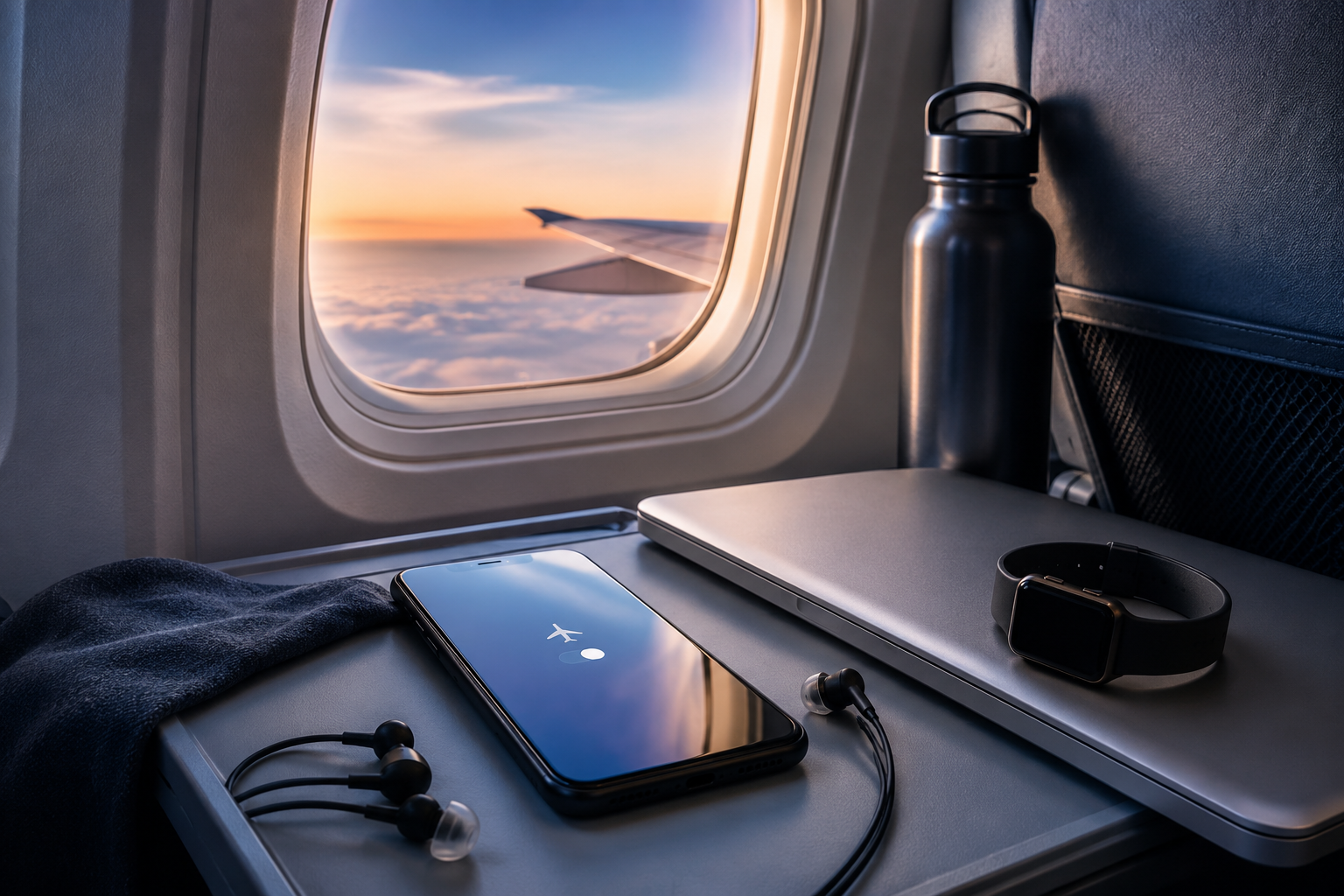
That is one reason why airplane mode is frequently recommended for travelers hoping to reduce EMF on airplane trips. Airplane mode disables cellular communication functions and prevents the device from constantly attempting to connect with towers. Travelers can still use downloaded movies, podcasts, books, or music without needing an active wireless connection.
Using offline content before a flight can make a noticeable difference in how often devices are transmitting. Downloading Netflix shows, YouTube videos, Spotify playlists, audiobooks, maps, and documents before leaving home is one of the easiest travel habits available.
Simple Ways to Reduce EMF Exposure While Flying
The good news is that most exposure reduction strategies do not require expensive products or major lifestyle changes. Small adjustments in how devices are used during travel may help lower unnecessary wireless activity while also reducing screen fatigue and battery drain.
Put Your Phone in Airplane Mode Early
Many travelers wait until the flight crew announces airplane mode instructions. Turning airplane mode on before boarding or shortly after entering the airport can help reduce continuous signal searching. Once enabled, the phone stops trying to maintain a cellular connection.
If you still want limited connectivity, some travelers choose to enable WiFi manually later while keeping cellular functions disabled. Others prefer to leave the device entirely offline during the flight.
This simple habit may also improve battery life, which becomes especially useful during long trips.
Avoid Keeping Active Devices Against Your Body
Many people carry phones directly in pockets, hoodies, bras, or against the body for hours at a time. During flights, some travelers prefer to place devices in a backpack, purse, or seat pocket instead.
This strategy creates additional distance between the body and the device. Even small amounts of distance can reduce direct exposure from wireless electronics.
If you are working on a laptop during the flight, consider placing it on the tray table rather than directly on your lap whenever possible.
Limit Bluetooth Usage
Bluetooth devices emit lower power signals than many cellular connections, but they still use wireless communication. Some travelers prefer reducing Bluetooth usage during long flights, especially when using devices continuously for several hours.
Wired headphones remain a popular option for people looking to minimize wireless exposure.
One product some travelers use is the DefenderShield EMF-Free Air Tube Wired Earbuds.
Air tube headphones work differently than standard earbuds because part of the sound travels through hollow tubes instead of electrical wiring directly near the ears. Many EMF-conscious travelers appreciate this design for flights, commuting, and office use.
Should You Use Airplane WiFi?
Airplane WiFi has become extremely common. Many travelers now stream entertainment, answer emails, browse social media, or even attend meetings while flying. For people who want to reduce exposure, WiFi usage becomes a personal decision involving convenience and comfort.
Using onboard WiFi occasionally during a short flight is very different from streaming video continuously for six or eight hours. Some travelers choose a middle-ground approach where they connect briefly when necessary but otherwise remain offline.
Downloading entertainment before travel is one of the simplest alternatives. Watching downloaded movies, reading books, listening to podcasts, or working offline can reduce wireless activity while also preventing interruptions caused by unstable in-flight internet.
Many travelers also discover that staying offline during flights improves relaxation. Instead of answering messages nonstop, they use travel time for reading, resting, journaling, or sleeping.
Affiliate Advertisement

Does Your Seat Location Matter?
There is limited publicly available consumer data showing exact EMF levels throughout commercial aircraft cabins. Because of this, it is difficult to make precise claims about which seat locations are definitively “best” or “worst.”
Still, some travelers prefer certain seating arrangements based on practical habits. Window seats sometimes provide slightly more personal space and reduce the number of passengers directly beside you. Other travelers prefer seats away from crowded charging stations or high-traffic areas where multiple electronics may remain active.
The most important thing is maintaining perspective. Becoming overly focused on exact seat placement may create more stress than benefit. Practical habits involving your own device usage likely matter more than obsessing over tiny seating differences.
Long Flights, Fatigue, and Screen Overload
When people feel tired, overstimulated, or mentally drained after flying, EMF exposure is often blamed immediately. However, air travel itself involves many factors that can affect how the body feels.
Long flights commonly include dehydration, poor sleep, jet lag, cabin pressure changes, stress, noise, blue light exposure, reduced movement, and hours of staring at screens. These factors may contribute to headaches, fatigue, eye strain, irritability, or poor sleep quality.
Reducing overall screen use during flights may help many travelers feel better regardless of whether EMF exposure is involved. Lowering brightness, avoiding endless scrolling, taking breaks from devices, and resting the eyes periodically can all make travel more comfortable.
Travel Habits That May Matter More Than EMF
One of the easiest ways to create a balanced article about EMF is to acknowledge that overall travel wellness often involves much more than electronics alone.
Many travelers feel dramatically better during flights simply by improving basic travel habits. Drinking enough water, avoiding excessive alcohol, stretching periodically, sleeping before travel days, and reducing stress may have a larger impact on comfort than any specific EMF product.
Screen overload itself may also contribute to feeling exhausted after flights. Hours of scrolling social media, streaming videos, or answering work emails can mentally drain travelers before they even reach their destination.
For this reason, some of the best “EMF reduction” strategies are actually healthy technology habits in general. Putting devices away for part of the flight may benefit sleep quality, stress levels, focus, and relaxation.
Are EMF Products Worth Bringing on Flights?
Travelers interested in EMF reduction often wonder whether special products are necessary for flying. The answer depends on personal preference, budget, and comfort level.
Some people are satisfied simply using airplane mode and wired accessories. Others prefer additional shielding products while traveling regularly for work.
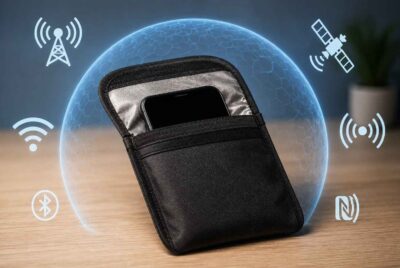
One product category commonly used by travelers is laptop shielding pads. These products create a barrier between laptops and the body during extended use.
An example is the DefenderShield Laptop Radiation Shield Pad.
Another company frequently mentioned in EMF-conscious communities is Safe Living Technologies, which offers shielding fabrics and other exposure-reduction products.
For travelers purchasing any EMF-related product, moderation and realistic expectations are important. No product should replace healthy device habits, sleep, hydration, or common sense technology use.
A Balanced Perspective on Airplane EMF Exposure
One challenge with EMF discussions online is that information often becomes extremely polarized. Some websites insist every wireless device is dangerous, while others completely dismiss any concern at all.
Most travelers probably fit somewhere in the middle. They may not want to eliminate technology completely, but they also appreciate practical ways to reduce unnecessary exposure when possible.
That is why simple habits usually make the most sense. Turning on airplane mode, reducing streaming, avoiding constant Bluetooth use, downloading content before flights, and taking breaks from screens are all realistic steps that do not interfere with normal travel.
There is also value in reducing stress around the topic itself. Worrying intensely about every nearby device during a six-hour flight may create more anxiety than benefit. A calm, practical approach tends to work much better long term.
Conclusion
Modern air travel surrounds passengers with electronics, wireless signals, and long hours of screen exposure. While scientific discussion around EMF continues, many travelers prefer taking simple precautionary steps that may help reduce unnecessary wireless activity during flights. Fortunately, there are several easy ways to reduce EMF on airplane trips without making travel uncomfortable or complicated.
Using airplane mode, downloading entertainment ahead of time, limiting Bluetooth use, avoiding carrying active devices directly against the body, and taking breaks from screens are all practical habits that may help. Products such as wired air tube headphones or laptop shielding pads may also appeal to travelers who want additional support during frequent flights.
In the end, balance is probably the healthiest approach. Technology makes travel easier in many ways, but mindful device habits can help travelers feel more relaxed, rested, and comfortable while flying.
Before You Go…
Get Weekly EMF Protection Tips
Enjoy this article? Join the EMFLuLu newsletter for simple weekly tips to reduce everyday EMF exposure from phones, WiFi routers, laptops, and smart home devices.
Try Our Free EMF Calculators
Curious how much EMF exposure you may experience each day?
These simple tools can help you estimate your exposure and identify possible problem areas in your home.
Try these free calculators:
Like this article? Pin it on Pinterest!
More to Explore