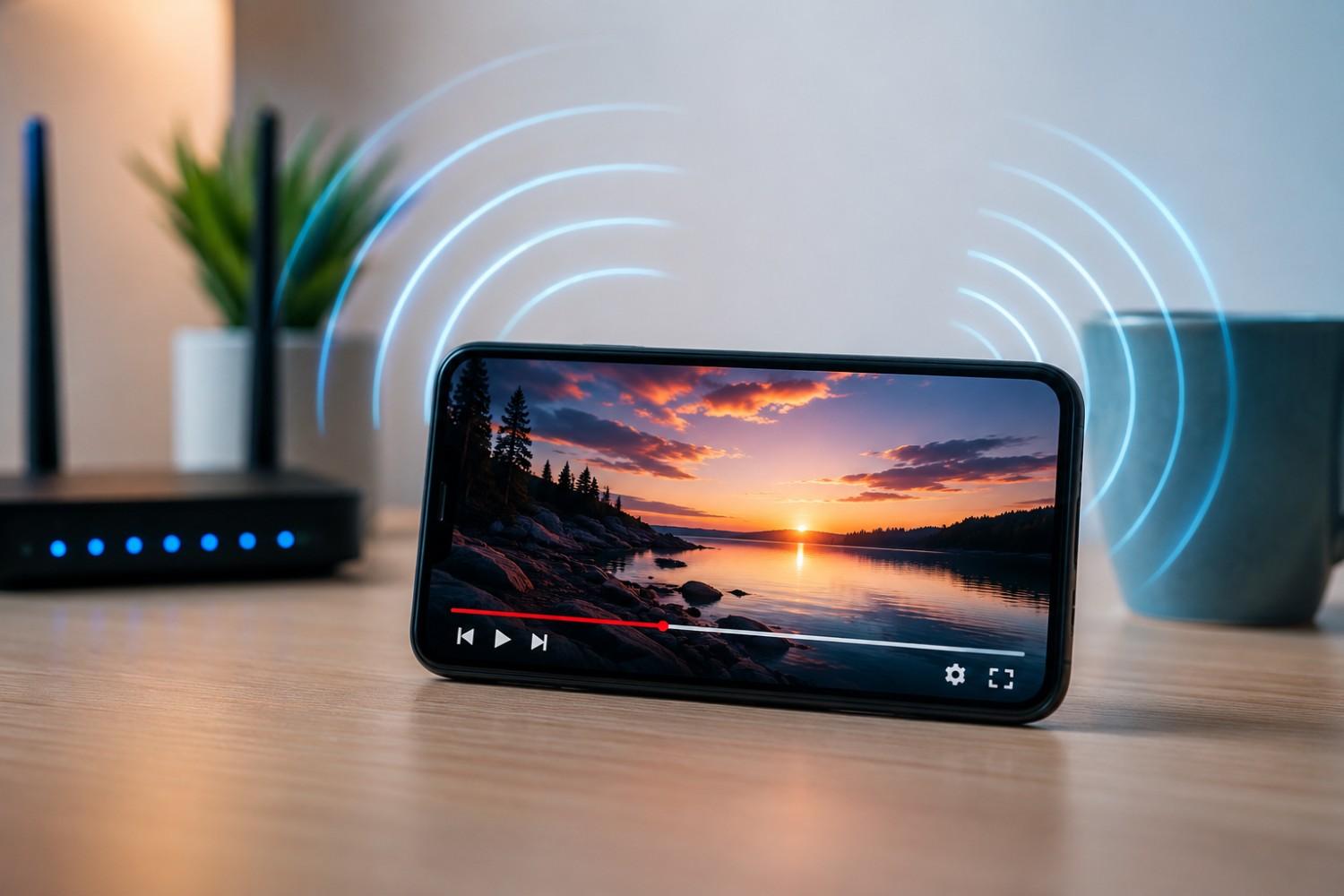
Streaming video has become one of the most common activities people perform on their phones every single day. Whether someone is watching YouTube clips during lunch, streaming Netflix before bed, scrolling endlessly through TikTok videos, or watching live sports on a mobile device, phones are now constantly handling large amounts of wireless data. As people spend more time connected to streaming platforms, many are beginning to ask questions about streaming video EMF radiation and whether streaming activity changes how much radiofrequency energy a phone emits.
The topic can sound complicated at first, but the basic idea is fairly straightforward. Phones communicate wirelessly whenever they send or receive data. Streaming video requires a steady flow of information between your phone and either a cell tower or Wi-Fi router. Since streaming often uses much more data than texting or simple web browsing, many people wonder whether that increase in wireless activity also increases EMF exposure.
The answer is that streaming can increase wireless transmission activity under certain conditions, especially when signal strength is poor or when high-definition video is being streamed continuously for long periods. That does not automatically mean someone should panic or stop using their phone entirely. Instead, understanding how streaming video EMF radiation works can help people make practical choices that reduce unnecessary exposure while still enjoying modern technology.
What Happens Inside Your Phone During Video Streaming?
When a person watches a streaming video, the phone is constantly downloading small packets of data from the internet. Unlike reading a static webpage, where data loads once and remains mostly idle afterward, video streaming requires continuous communication. Every few seconds, the device requests additional video data so playback remains smooth without buffering interruptions.
This process becomes even more active when someone streams HD or 4K video. Higher-quality video requires much larger amounts of data, which means the phone stays busy communicating with wireless networks almost nonstop during the viewing session.
At the same time, the phone’s processor, graphics system, battery, and wireless antennas are all working harder than normal. Many people notice their devices becoming warm during extended streaming sessions. Heat itself is not EMF radiation, but it often reflects increased device activity.
Streaming also becomes more demanding during live video calls or livestreams because the phone may simultaneously upload and download data. Watching a prerecorded movie mostly involves downloading information, while a FaceTime or Zoom call requires two-way wireless communication happening continuously.
Phones also adjust transmission power automatically depending on conditions. If signal strength is weak, the phone often increases power output in an attempt to maintain a stable connection. This is one reason why wireless activity may change dramatically depending on where someone is using their device.
Does Streaming Video Increase EMF Radiation?
In many situations, yes. Streaming video can increase radiofrequency emissions because the phone remains actively transmitting and receiving wireless data for longer periods.
A phone sitting idle on a table may still communicate occasionally with nearby towers or routers, but the activity level is usually lower than when the device is streaming movies, video calls, or live sports. The more data being transferred, the more active the wireless systems inside the phone become.
That said, EMF exposure levels are not fixed. They constantly fluctuate based on several factors including:
- Signal strength
- Distance from the tower or router
- Streaming quality
- Network congestion
- Device design
- Whether Wi-Fi or cellular data is being used
Many people researching streaming video EMF radiation assume the phone always emits maximum power during streaming, but that is not necessarily true. A phone connected to strong Wi-Fi while resting several feet away may operate at relatively low transmission levels compared to a phone struggling to maintain cellular signal in a weak coverage area.
This distinction matters because poor signal environments are often where phones work the hardest.
Cellular Data vs Wi-Fi Streaming
One of the most important factors affecting phone radiation during streaming is the type of connection being used. There can be a significant difference between streaming over cellular data and streaming over Wi-Fi.
Streaming on Cellular Data
When streaming through a mobile network, the phone communicates directly with nearby cellular towers. If the signal is weak, obstructed, or congested, the phone may increase transmission power to maintain a reliable connection.
This commonly happens in places like:
- Parking garages
- Elevators
- Rural roads
- Large stadiums
- Airports
- Basements
- Moving vehicles
Someone watching HD video while riding in a car through weak coverage areas may experience much higher wireless activity than someone streaming the same content at home on strong Wi-Fi.
Signal bars can offer a rough clue. A phone showing one or two bars often works harder than a phone showing full reception.
Streaming on Wi-Fi
Wi-Fi streaming is often more stable and may allow the phone to operate at lower transmission power levels compared to poor cellular connections. Strong home Wi-Fi networks typically create smoother streaming experiences with less strain on the phone.
Still, Wi-Fi exposure can vary too. Sitting directly beside a router all day is different from using a device several feet away in another room. Router placement matters, especially in bedrooms or small apartments.
For people looking to reduce direct phone exposure during long viewing sessions, using distance can be extremely helpful. Setting the phone on a table instead of holding it against the body is one of the simplest strategies available.
Does Video Quality Affect EMF Exposure?
Video quality can play a surprisingly large role in how much wireless data a phone processes during streaming sessions.
Standard-definition video uses far less data than HD or 4K streaming. As resolution increases, the amount of information transferred rises significantly. This means the phone must continuously handle larger data streams.
Streaming platforms automatically adjust video quality based on internet speed. If bandwidth drops suddenly, the app may lower resolution temporarily to avoid buffering. If speeds improve, the app may increase quality again.
This constant adjustment creates fluctuating wireless activity throughout the streaming session.
For example, someone watching 4K sports highlights on cellular data while traveling through weak coverage areas may place far greater demands on the phone’s antennas compared to someone watching standard-definition content at home over stable Wi-Fi.
Downloading videos in advance can sometimes reduce continuous wireless transmission because the content is stored locally on the device. Watching downloaded content in airplane mode may dramatically reduce active wireless communication during playback.
Situations That May Increase Exposure During Streaming
Many people do not realize that how they hold or position their devices during streaming may matter just as much as the streaming itself.
The following situations often create longer or closer exposure periods.
Streaming With the Phone Against the Body
A common habit is resting the phone directly on the chest, lap, or stomach while watching videos in bed or on the couch. Since phones emit radiofrequency energy during active transmission, keeping some distance between the device and the body may help reduce direct exposure.
Even moving the phone a foot or two away onto a nearby table can make a noticeable difference because EMF intensity generally decreases rapidly with distance.
Streaming in Weak Signal Areas
Poor signal strength is one of the biggest contributors to increased phone transmission power. Phones often work much harder when trying to maintain stable connections in difficult environments.
This can happen during:
- Road trips
- Elevator rides
- Underground parking
- Remote hiking areas
- Crowded concerts
- Public transportation
Watching videos in these environments may increase wireless activity compared to streaming under strong signal conditions.
Streaming for Long Periods
Duration matters too. Someone who streams for ten minutes experiences a very different exposure pattern than someone binge-watching videos for five hours straight every evening.
Children and teenagers may spend especially long periods watching videos on tablets or phones. Since devices are often held close to the body, creating healthy usage habits early can be beneficial.
Streaming While Charging
Phones often become warmer while charging and streaming simultaneously. The combination of charging, processor activity, screen brightness, and wireless communication can place additional stress on the device.
Some people prefer avoiding long streaming sessions while the phone is directly against the body during charging periods.
For those who regularly watch videos or take calls for long periods, air tube headsets are another accessory some people use to increase distance between the phone and the head.
Affiliate Advertisement

Practical Ways to Reduce Streaming Video EMF Radiation
The good news is that reducing unnecessary exposure during streaming usually does not require extreme lifestyle changes. In many cases, small adjustments can significantly change how close the device remains to the body and how hard the phone must work during wireless communication.
Most practical strategies focus on improving signal quality, reducing direct contact with the device, and minimizing unnecessary wireless activity during long viewing sessions.
Use Wi-Fi Instead of Weak Cellular Data
When possible, strong Wi-Fi connections may allow phones to operate more efficiently than poor cellular signals. If cellular reception is weak, waiting until reaching a better coverage area can sometimes reduce heavy transmission activity.
Keep Some Distance From the Phone
Distance remains one of the simplest and most effective methods available. Instead of holding the device directly against the body during long streaming sessions, try placing it on a table, stand, or pillow beside you.
Even small increases in distance may help reduce direct exposure.
Download Content Ahead of Time
Many streaming platforms allow videos to be downloaded for offline viewing. Watching downloaded content can reduce continuous wireless communication during playback, especially if the phone is placed in airplane mode afterward.
Lower Streaming Resolution
Not every video needs to stream in maximum resolution. Reducing playback quality from 4K or HD to standard definition lowers data usage and may reduce wireless activity during long sessions.
Avoid Sleeping Beside an Active Streaming Device
Falling asleep beside a streaming phone under a pillow or next to the head is extremely common today. Moving the device farther away at night is a simple habit adjustment many people choose to make.
Consider Speaker Mode or Air Tube Headsets
Using speaker mode or accessories that create distance between the device and the head may help reduce close-range exposure during long viewing or calling sessions.
Some people also explore phone accessories designed for EMF-conscious users, such as the DefenderShield EMF Protection Phone Case.
Products like these are usually most useful when paired with sensible usage habits rather than viewed as standalone solutions.
Are Tablets and Smart TVs Different?
Streaming devices other than phones can create different exposure situations.
Tablets often sit farther away from the body than smartphones, which may reduce direct close-range exposure during use. Smart TVs also tend to be viewed from several feet away, creating even greater distance.
Streaming sticks, gaming consoles, and smart TVs still communicate wirelessly if connected through Wi-Fi, though the exposure pattern differs from holding a phone directly against the body.
Some people prefer wired Ethernet connections for home streaming setups because they reduce the amount of wireless communication needed between devices and routers.
Router placement can also influence overall household exposure. Keeping routers away from bedrooms and common seating areas may help reduce continuous nearby wireless signals throughout the day.
Final Thoughts
Modern streaming technology has changed how people consume entertainment, sports, news, and social media. Phones now spend hours each day handling enormous amounts of wireless data as users watch videos, livestreams, and online content almost nonstop.
Understanding streaming video EMF radiation is not about fear or abandoning technology altogether. It is about recognizing how phones behave during heavy wireless use and making informed choices when possible. Streaming video can increase wireless transmission activity, especially during weak signal conditions, long viewing sessions, or high-definition cellular streaming.
Simple habits such as using strong Wi-Fi, keeping some distance from the device, downloading videos ahead of time, and avoiding prolonged body contact during streaming can help reduce unnecessary exposure while still allowing people to enjoy the convenience of modern mobile technology.
Before You Go…
Get Weekly EMF Protection Tips
Enjoy this article? Join the EMFLuLu newsletter for simple weekly tips to reduce everyday EMF exposure from phones, WiFi routers, laptops, and smart home devices.
Try Our Free EMF Calculators
Curious how much EMF exposure you may experience each day?
These simple tools can help you estimate your exposure and identify possible problem areas in your home.
Try these free calculators:
Like this article? Pin it on Pinterest!
More to Explore