Modern smartphones have become part of everyday life. People use them for work, entertainment, navigation, messaging, streaming, and social media throughout the day. Because phones stay close to the body for long periods, many people have become more curious about how these devices communicate with cell towers and whether signal strength changes EMF exposure levels. One topic that continues to attract attention is phone signal strength EMF and how weak reception may influence the amount of radiofrequency energy a phone emits while trying to stay connected.
What surprises many users is that smartphones do not always operate at the same transmission power. Your phone constantly adjusts its output depending on signal quality, tower distance, surrounding obstacles, and data demand. In some situations, weak signal conditions may cause the phone to work harder to maintain communication with the network. Understanding how this process works can help people make more informed decisions about everyday phone habits without turning the topic into fear-based speculation.
This article explains how smartphones communicate with towers, why poor signal conditions can increase transmission activity, common places where exposure may rise, and simple ways to reduce unnecessary exposure in practical everyday situations.
How Cell Phones Communicate With Towers
Every smartphone relies on nearby cellular towers to send and receive information. Whether you are making a phone call, loading a webpage, streaming a video, or sending a text message, your phone is constantly exchanging radiofrequency signals with the network around it.
The important thing to understand is that communication goes both ways. The tower sends information to your phone, and your phone sends information back to the tower. This process happens continuously while the device remains connected to the network.
Phones are designed to maintain stable communication even while users move between locations. If you drive down the highway, walk through a city, or enter a building, your device automatically searches for the strongest and most reliable signal available. During this process, transmission power may rise or fall depending on how difficult it becomes for the phone to maintain a connection.
Several factors can affect signal quality, including:
- Distance from the nearest tower
- Thick walls or concrete structures
- Underground locations
- Metal buildings
- Elevators
- Crowded events
- Rural areas with fewer towers
- Moving vehicles
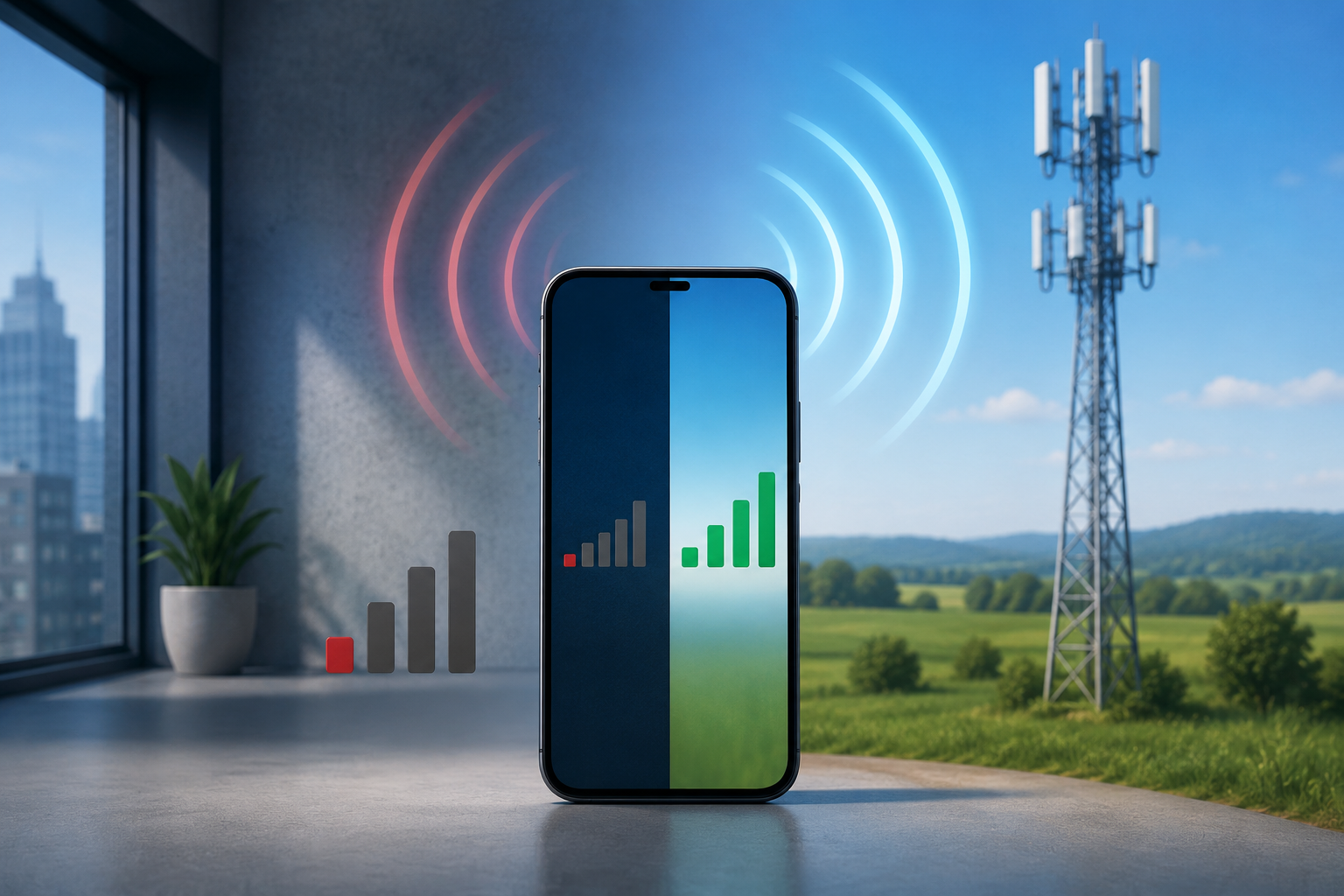
When signal quality drops, the phone may increase transmission strength in an effort to maintain communication. This is one reason the relationship between phone signal strength EMF exposure continues to attract interest from consumers who want to better understand how their devices operate.
Why Weak Signal Can Increase EMF Exposure
One of the most important concepts to understand is adaptive power control. Smartphones are engineered to automatically adjust their transmission power depending on current network conditions. The weaker the signal becomes, the harder the phone may work to stay connected.
Imagine trying to have a conversation with someone standing far away in a noisy environment. You would probably raise your voice so the other person could hear you. Smartphones operate somewhat similarly. When reception becomes weak, the phone may increase its radiofrequency transmission power to improve communication with the tower.
This does not necessarily mean exposure becomes dangerous during weak signal situations. It simply means transmission activity can increase compared to situations where a strong nearby tower provides an easier connection.
People often notice side effects of this increased effort without realizing what is happening behind the scenes. For example:
- Battery drain may increase
- Phones may feel warmer
- Streaming quality may fluctuate
- Calls may become unstable
- Data speeds may slow down
All of these can happen when the device struggles to maintain network communication.
The topic of phone signal strength EMF exposure becomes especially relevant during long phone calls, video streaming, hotspot use, or large file uploads in weak signal areas. During these situations, the device may remain at elevated transmission levels for extended periods.
Common Places Where Phones Work Harder
Many people assume their phones operate similarly in every location, but environmental conditions play a major role in signal quality. Certain locations consistently force devices to increase transmission activity because signals become partially blocked or weakened before reaching the phone.
Understanding these locations can help users recognize when their devices may be working harder than normal.
Elevators and Parking Garages
Metal structures often interfere with cellular communication. Elevators and underground parking garages can significantly weaken signals because concrete and metal reduce signal penetration. Phones inside these environments may repeatedly search for stronger connections while increasing transmission effort.
Rural Areas
In rural locations, towers may be farther apart. Because the device must communicate across longer distances, phones may increase transmission power more often compared to urban environments with denser tower coverage.
Inside Vehicles
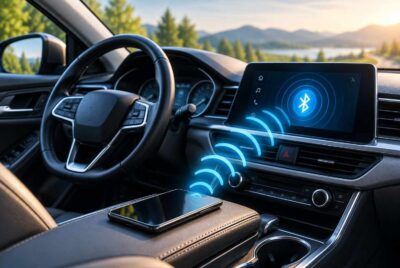
Cars, trucks, and buses create another challenging environment for cellular communication. Metal frames can partially block signals, and movement between towers causes the device to constantly adjust connections. Streaming or long calls during travel may increase transmission activity.
Stadiums and Concerts
Crowded venues create heavy network congestion. Thousands of devices may compete for bandwidth simultaneously, forcing phones to work harder to maintain stable communication.
Basements and Thick Buildings
Concrete walls and underground locations weaken signal strength substantially. People often notice fewer signal bars in these environments because the device struggles to maintain contact with the tower.
Does 5G Affect EMF Exposure Differently?
The arrival of 5G technology created a new wave of questions surrounding wireless communication and EMF exposure. While many discussions online become exaggerated, there are practical points worth understanding.
5G networks use a combination of frequencies depending on the carrier and location. Some frequencies travel long distances, while others provide faster speeds over shorter ranges. Importantly, smartphones still use adaptive power control with 5G networks just as they did with earlier technologies.
One interesting aspect of modern network expansion is that additional towers and smaller antennas may actually reduce the need for phones to transmit at higher power levels in some areas. When a tower is closer and signal quality improves, the device often requires less effort to maintain communication.
This means stronger local coverage may reduce certain high-transmission situations compared to older systems where towers were farther apart.
At the same time, high data usage activities like streaming ultra-high-definition video or using mobile hotspots can still increase phone activity regardless of network generation.
The key takeaway is that network quality, signal consistency, and phone usage patterns all play important roles in overall exposure conditions.
Practical Ways to Reduce Unnecessary Exposure
Many readers are not interested in eliminating technology entirely. Instead, they simply want practical ways to reduce unnecessary exposure while continuing to use smartphones normally. Fortunately, several small habit changes can make a meaningful difference without requiring extreme lifestyle adjustments.
The following strategies focus on reducing prolonged close-contact exposure during higher transmission situations.
Avoid Long Calls During Weak Signal Conditions
If your phone only has one or two bars of service, the device may be transmitting at higher power levels to maintain the call. In these situations, using speakerphone or waiting for better reception may reduce close-contact exposure.
Use Speakerphone or Wired Accessories
Creating even a small amount of distance between the phone and the body can significantly reduce direct exposure from the device.
Some users also choose shielding accessories designed to reduce exposure from one side of the phone while still allowing normal functionality. One commonly discussed option is the DefenderShield EMF Radiation Protection Phone Case.
The important thing with these products is maintaining realistic expectations. They are not magic devices that eliminate all exposure, but some users prefer them as part of a broader exposure-reduction approach.
Download Content Before Traveling
Streaming movies, podcasts, or videos in weak signal environments can force the phone to work harder for long periods. Downloading content ahead of time reduces constant transmission activity while traveling.
Avoid Sleeping Next to the Phone
Many people place phones directly beside their pillow overnight. Even while not actively used, phones continue communicating with the network periodically.
Some users choose to place devices several feet away or activate airplane mode while sleeping.
Use Airplane Mode When Signal Is Unavailable
One overlooked situation occurs when phones constantly search for service in dead zones. During this process, the device may repeatedly increase transmission attempts.
Airplane mode can stop continuous searching activity when connectivity is unnecessary.
Consider EMF-Aware Accessories Carefully
Some consumers also explore additional EMF-related accessories depending on their personal preferences and comfort level.
Examples include:
Products like these are best viewed as optional tools rather than miracle solutions. Practical phone habits and distance remain some of the simplest and most effective approaches.
Affiliate Advertisement

Myths About Signal Strength and EMF
There is a large amount of misinformation online regarding smartphones and EMF exposure. Some claims oversimplify the science, while others create unnecessary fear.
Understanding a few common myths can help readers approach the topic more realistically.
Myth: More Signal Bars Mean More Radiation
This misunderstanding appears frequently online. In reality, stronger reception often allows the phone to communicate more efficiently at lower transmission power levels.
Myth: Weak Signal Automatically Means Dangerous Exposure
Weak signal conditions may increase transmission activity, but this does not automatically mean harmful exposure occurs. Exposure levels depend on multiple factors including duration, usage patterns, device design, and distance from the body.
Myth: 5G Means Constantly Higher EMF
Network technology is more complicated than simple “higher” or “lower” exposure claims. In some situations, improved network infrastructure may actually reduce the need for phones to transmit aggressively.
Myth: Shielding Products Eliminate All Exposure
No accessory completely removes wireless exposure while maintaining full phone functionality. Consumers should remain cautious about exaggerated marketing claims promising total elimination.
When Signal Strength Matters Most
Signal strength becomes especially important during certain high-demand phone activities. These situations typically involve continuous data transmission or prolonged device use.
Activities that may increase transmission demands include:
- Video streaming
- Video calls
- Mobile hotspot use
- Uploading large files
- Online gaming
- Long voice calls
- Live streaming
If these activities occur in weak signal areas, the phone may maintain elevated transmission activity for extended periods.
For example, streaming video during a road trip through rural areas may place greater transmission demands on the device compared to watching downloaded content at home with strong reception.
This does not mean people need to avoid these activities entirely. Awareness simply allows users to make practical adjustments when desired.
Final Thoughts
Smartphones are designed to constantly adapt to changing network conditions. One of the most important things people can understand is that phones do not emit identical transmission levels at all times. Signal quality, tower distance, building materials, movement, and data demand all influence how hard the device works to stay connected.
The topic of phone signal strength EMF exposure becomes easier to understand when viewed through this practical lens. Weak signal conditions may increase transmission activity because the phone is attempting to maintain reliable communication with the network. Simple habits like avoiding long calls in low-signal areas, using speakerphone, downloading media ahead of travel, and creating more distance from the body can help reduce unnecessary close-contact exposure without giving up modern technology altogether.
For most people, balanced awareness and smart everyday habits are far more useful than fear-based approaches.
Before You Go…
Get Weekly EMF Protection Tips
Enjoy this article? Join the EMFLuLu newsletter for simple weekly tips to reduce everyday EMF exposure from phones, WiFi routers, laptops, and smart home devices.
Try Our Free EMF Calculators
Curious how much EMF exposure you may experience each day?
These simple tools can help you estimate your exposure and identify possible problem areas in your home.
Try these free calculators:
Like this article? Pin it on Pinterest!
More to Explore