Most people think about electromagnetic fields (EMF) inside their homes – where they sleep, work, and spend long stretches of time. However, EMF exposure in public places is just as important to understand, and in some cases, it can be even more complex. Public environments are filled with overlapping signals from multiple sources, many of which are outside your direct control.
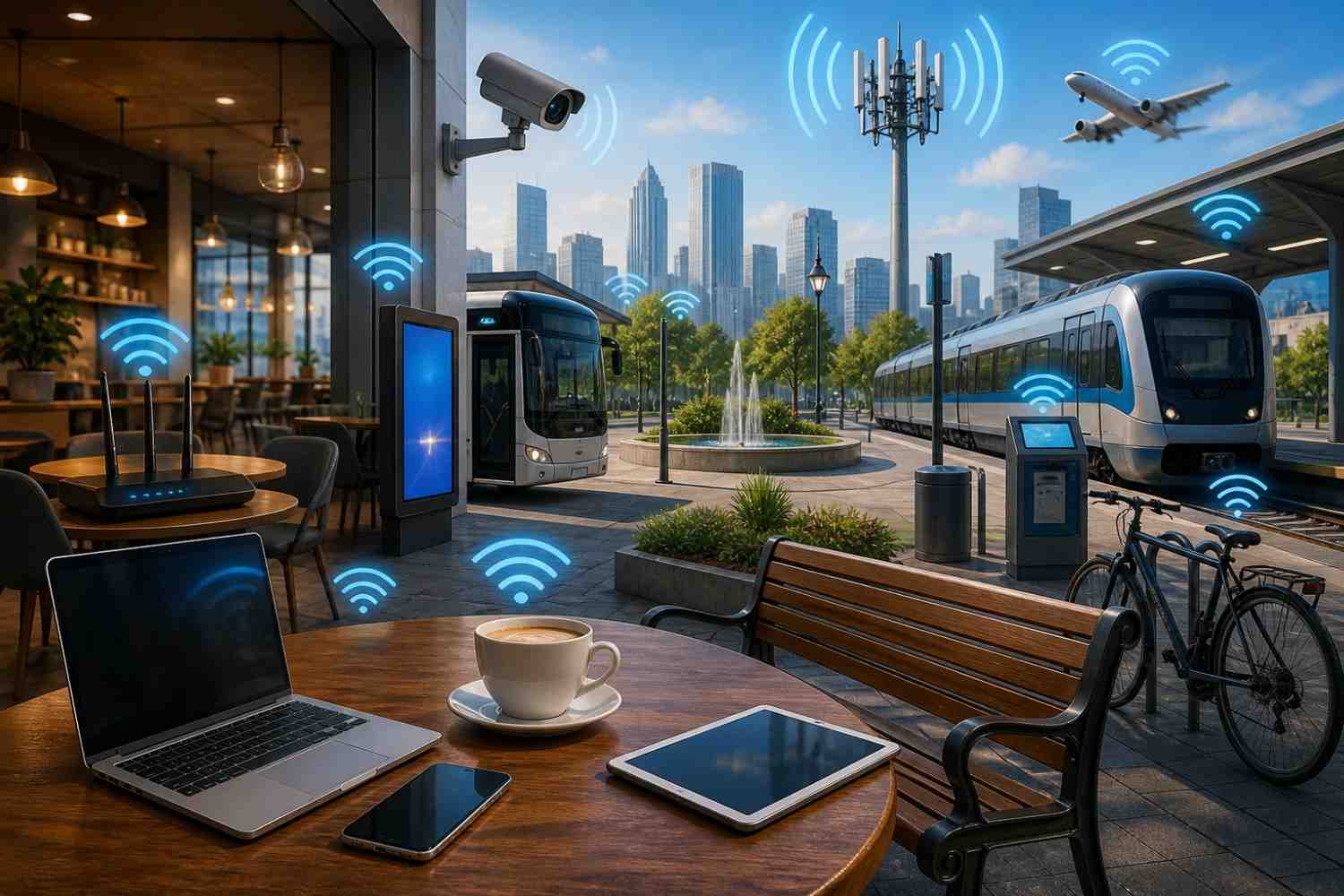
When you step into a coffee shop, board a train, or walk through an airport, you are entering a space where dozens or even hundreds of electronic devices are operating simultaneously. Phones are constantly connecting to towers, WiFi routers are broadcasting signals, and Bluetooth devices are communicating in the background. The result is not just a single source of exposure, but a layered environment that can fluctuate depending on where you are and how long you stay.
This article breaks down how EMF exposure in public places actually works, where it tends to be highest, and what you can realistically do to manage your exposure without drastically changing your lifestyle.
What Counts as EMF Exposure in Public Places?
Before looking at specific environments, it helps to understand what “counts” as EMF exposure when you are out in public. Unlike at home, where you can identify your router, devices, and appliances, public spaces introduce variables that are constantly changing.
In most cases, exposure is not coming from just one source. Instead, it is the result of many overlapping signals interacting at once. This layered effect is one of the key reasons public exposure can feel unpredictable.
Some of the most common contributors include:
Cell phones are the most obvious factor. Not just your own, but everyone else’s as well. Each device is continuously sending and receiving signals, especially in crowded areas where networks are congested.
Public WiFi networks are another major contributor. Cafés, airports, libraries, and stores often have multiple routers operating simultaneously to handle demand. These routers broadcast signals in all directions, creating a constant field of low-level exposure.
Cell towers and small-cell antennas provide the infrastructure that keeps everything connected. In urban or densely populated areas, these are placed closer together, increasing background exposure levels.
Bluetooth devices, such as earbuds, smartwatches, and fitness trackers, add another layer. While each individual device operates at relatively low power, the cumulative effect in a crowded space can be significant.
Transportation systems also play a role. Cars, buses, and trains often contain multiple wireless systems, and passengers bring their own devices into these enclosed environments.
Retail technology, including scanners, security systems, and wireless payment devices, contributes to the overall EMF environment as well.
The key takeaway is that public EMF exposure is rarely about a single strong source. It is about many smaller sources interacting at once.
Common High-Exposure Public Environments
Not all public places are equal when it comes to EMF exposure. Some environments naturally concentrate more signals due to the number of devices, the layout of the space, and the way people interact with technology.
Understanding these environments can help you recognize when your exposure is likely to be higher.
Airports are one of the most concentrated environments. Thousands of travelers pass through with smartphones, tablets, and laptops, all trying to connect at once. Add in security scanners, communication systems, and multiple WiFi networks, and you have a space where signals are constantly overlapping.
Coffee shops are another common hotspot. While they feel relaxed and low-tech, they are often packed with people using laptops, streaming content, and staying connected for long periods. Multiple routers are usually installed to keep up with demand, which increases overall signal density.
Public transportation, especially trains and subways, creates a unique situation. These are enclosed spaces, often with metal structures that can reflect signals. Passengers are typically using their phones continuously, and devices may increase their transmission power when signals are weak, adding to overall exposure.
Gyms are filled with connected devices, from Bluetooth headphones to smart fitness equipment and wall-mounted screens. Even though people are moving around, the number of active signals in one space can be quite high.
Shared workspaces and offices also contribute. With multiple routers, laptops, monitors, and phones operating at the same time, these environments can resemble a concentrated version of a home setup – but multiplied many times over.
These examples highlight how EMF exposure in public places can vary significantly depending on where you are and how the space is used.
How Much EMF Exposure Are You Actually Getting?
One of the most common questions is how much exposure you are really getting in these environments. The honest answer is that it varies widely, but there are patterns that can help you estimate your level of exposure.
Distance plays the biggest role. The closer you are to a device or source, the stronger the signal you are likely to experience. Sitting directly next to a WiFi router will expose you to more energy than sitting across the room.
Duration is another important factor. A quick stop in a coffee shop may result in minimal exposure, while working there for several hours increases your total exposure over time.
Device density is often the hidden driver. A space with a high number of active devices will naturally have more overlapping signals. This is why crowded environments tend to feel different from quiet outdoor spaces.
To simplify things, you can think in terms of general categories. Walking outside in an open area typically represents a lower level of exposure. Sitting in a moderately busy café might fall into a moderate category. Being in a packed train during rush hour or a busy airport terminal is where exposure tends to be higher.
This doesn’t mean these environments are dangerous, but it does highlight how context matters.
The Hidden Factor – Exposure Stacking
One of the most overlooked aspects of EMF is something often referred to as exposure stacking. This is the idea that multiple small exposures can combine to create a larger overall effect.
In public environments, this happens constantly. You may have your phone in your pocket, a smartwatch on your wrist, and a laptop connected to WiFi. At the same time, dozens of other devices are operating nearby.
Each individual source may be relatively low, but together they create a combined environment that is more complex than it appears on the surface. This is why EMF exposure in public places can feel different from being at home, even if no single source stands out as particularly strong.
Understanding this concept is helpful because it shifts the focus away from any one device and toward your overall habits and environment.
Simple Ways to Reduce EMF Exposure in Public Places
Reducing your exposure in public does not require extreme measures. In most cases, small adjustments can make a meaningful difference without interrupting your daily routine.
The goal is not to eliminate exposure entirely, which is unrealistic in modern life, but to manage it in a practical way.
Creating distance is one of the simplest and most effective strategies. If you have the option, choose seating that is farther away from routers or heavily crowded areas. Even a few extra feet can reduce the intensity of exposure.
Limiting direct contact with devices is another easy step. Avoid keeping your phone pressed against your body for long periods when possible. Placing it in a bag or on a table can help create some separation.
Using airplane mode strategically can also reduce exposure. If you do not need to stay connected at a given moment, switching your phone to airplane mode stops it from constantly sending and receiving signals.
Avoiding high-bandwidth activities in crowded spaces can help as well. Streaming videos or downloading large files increases your device’s communication with networks, which can add to your overall exposure.
Taking breaks in lower-exposure environments, such as stepping outside or moving to a quieter area, can give you a chance to reduce cumulative exposure throughout the day.
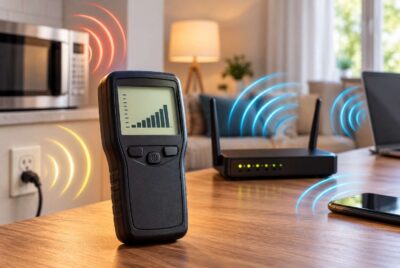
If you are interested in tools that help you better understand your environment, an EMF meter can be useful. For example, Safe Living Technologies EMF Meters allow you to measure signal levels in different locations:
There are also wearable options, such as the ones offered by EMF Harmony, which some individuals use as part of their personal routine:
These tools are optional and should be viewed as part of a broader approach that includes awareness and smart habits.
Affiliate Advertisement
Should You Be Concerned About Public EMF Exposure?
It is natural to wonder whether all of this exposure is something to worry about. The reality is that EMF is a normal part of modern life, and completely avoiding it is not practical.
Scientific research continues to explore the long-term effects of EMF exposure, and while there is still ongoing discussion, most everyday exposures fall within established safety guidelines.
What matters more for most people is how exposure accumulates over time. Spending long hours each day in high-density environments, combined with heavy personal device use, may have a different impact than occasional exposure during daily errands.
The key is balance. You do not need to avoid public places or drastically change your routine. Instead, focusing on simple habits – like creating distance, limiting unnecessary device use, and taking occasional breaks – can help you manage your exposure in a realistic way.
Conclusion
EMF exposure in public places is a natural part of living in a connected world. From coffee shops to airports, the environments we move through each day are filled with overlapping signals from countless devices. While this may sound overwhelming at first, it becomes much easier to manage once you understand where exposure comes from and how it builds over time.
The most important takeaway is that awareness leads to control. By recognizing higher-exposure environments and making small adjustments – such as creating distance, limiting direct contact with devices, and taking occasional breaks – you can reduce your overall exposure without disrupting your lifestyle.
You do not need to eliminate EMF from your life. You simply need to manage it in a way that fits your daily routine, allowing you to stay connected while being mindful of your environment.
Before You Go…
Get Weekly EMF Protection Tips
Enjoy this article? Join the EMFLuLu newsletter for simple weekly tips to reduce everyday EMF exposure from phones, WiFi routers, laptops, and smart home devices.
Try Our Free EMF Calculators
Curious how much EMF exposure you may experience each day?
These simple tools can help you estimate your exposure and identify possible problem areas in your home.
Try these free calculators:
Like this article? Pin it on Pinterest!
More to Explore