If you’re like most people, your dishwasher runs quietly in the background while you go about your evening or even while you sleep. It’s one of those appliances we rarely think twice about. But with growing awareness around electromagnetic fields in the home, a common question has started to surface: do dishwashers emit EMF, and if they do, is it something worth paying attention to?
The short answer is yes – dishwashers do emit electromagnetic fields while they are operating. However, the full story is much more nuanced. The strength of the EMF, how long you’re exposed to it, and how close you are to the appliance all play a role in determining whether it’s something to be concerned about.
In this article, we’ll break down exactly how EMF works in a dishwasher, how strong the exposure typically is, and what simple, practical steps you can take if you want to reduce it. The goal is not to create worry, but to give you clear, useful information so you can make informed decisions about your home environment.
What Is EMF and Where Does It Come From?
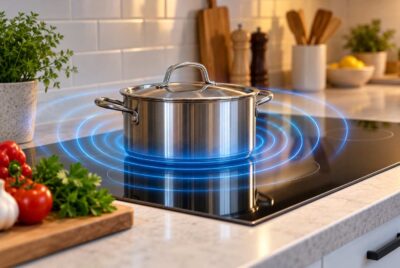
Before getting into specifics, it helps to understand what EMF actually is. Electromagnetic fields are produced anywhere electricity is used or transmitted. This includes everything from power lines and household wiring to appliances and wireless devices.
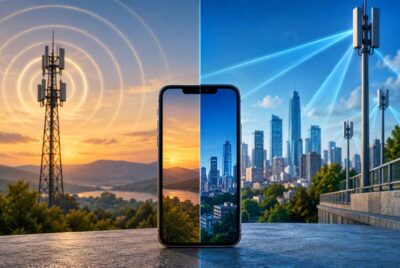
There are two main types of EMF you’ll encounter in a home setting. The first is low-frequency EMF, often called extremely low frequency (ELF), which is generated by electrical current flowing through wires and motors. The second is radiofrequency (RF) EMF, which is associated with wireless technologies like WiFi, Bluetooth, and cellular signals.
Dishwashers primarily produce low-frequency EMF because they rely on electric motors, pumps, and heating elements to function. Some newer models may also include WiFi connectivity, which introduces a small amount of RF EMF into the mix. Understanding this distinction is important, because not all EMF behaves the same way or travels the same distance.
Do Dishwashers Emit EMF While Running?
Let’s answer the main question directly: do dishwashers emit EMF while they are running? Yes, they do. Anytime electricity is flowing through an appliance, electromagnetic fields are generated as a natural byproduct.
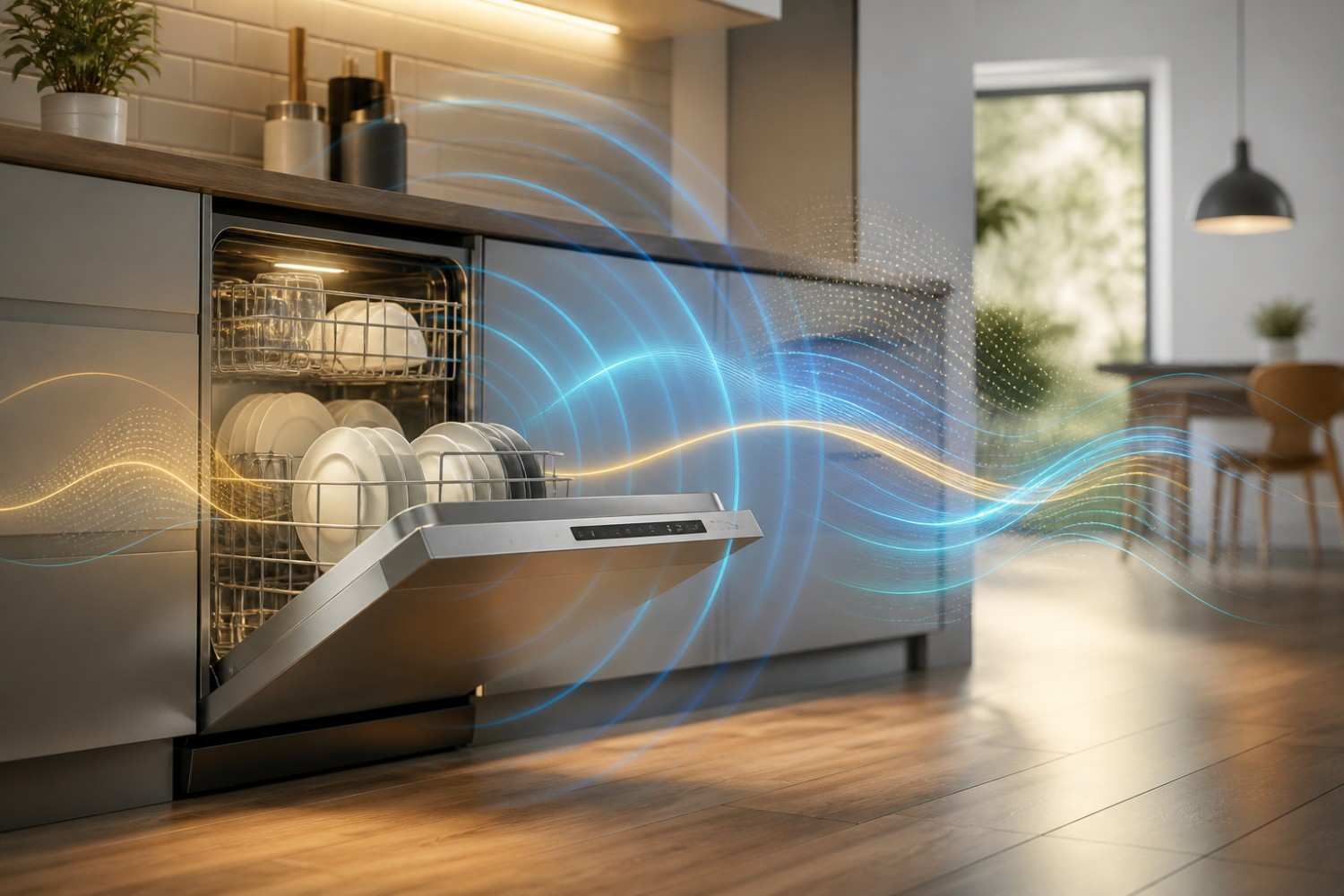
Inside a dishwasher, several components contribute to EMF production. The electric motor that powers the pump, the heating element that dries dishes, and the internal wiring all create low-frequency EMF when in use. These fields are strongest when the appliance is actively running a cycle, particularly during the wash and dry phases.
This is where the idea of dishwasher EMF radiation becomes relevant. While the term “radiation” can sound alarming, in this context it simply refers to the emission of electromagnetic energy from electrical activity. It does not mean the appliance is dangerous, but it does mean there is measurable energy being produced.
When the dishwasher is turned off or not actively running, EMF levels drop significantly. Like most appliances, the exposure is tied directly to usage.
How Strong Is Dishwasher EMF Radiation?
One of the most important factors in understanding EMF is intensity. Not all sources are equal, and dishwashers generally fall into the low-to-moderate range compared to other household devices.
The strongest EMF readings from a dishwasher are typically found very close to the unit – within a foot or two of the front panel or sides. This is because EMF strength decreases rapidly as you move away from the source. Even stepping back a few feet can significantly reduce your exposure.
In practical terms, this means that if you’re standing right next to a running dishwasher, you’ll experience higher levels than if you’re sitting across the room. In most homes, people are not positioned directly beside the appliance for extended periods, which naturally limits exposure.
It’s also worth noting that dishwashers are not constantly running. Unlike a WiFi router or a smartphone, which may emit signals continuously, a dishwasher operates in cycles. Once the cycle is complete, the EMF source is no longer active.
Do Smart Dishwashers Emit More EMF?
Modern appliances are increasingly connected, and dishwashers are no exception. Some newer models come with WiFi capabilities that allow you to control or monitor them through a smartphone app.
This introduces a second type of EMF into the equation: radiofrequency emissions. While the levels are generally low, they can be present even when the dishwasher is not actively running, depending on how the device communicates with your network.
That said, the RF exposure from a smart dishwasher is usually much lower than what you would get from a WiFi router or a smartphone held close to your body. It’s a relatively minor contributor in the overall picture of household EMF.
If you prefer to minimize this type of exposure, many smart appliances allow you to disable WiFi functionality. Doing so eliminates the RF component entirely, leaving only the low-frequency EMF associated with the appliance’s electrical operation.
Is Dishwasher EMF Radiation Dangerous?
This is where context really matters. Current scientific understanding suggests that the levels of EMF produced by typical household appliances, including dishwashers, are well within established safety guidelines.
Organizations such as the FCC in the United States set exposure limits designed to keep EMF levels at safe thresholds for everyday use. Dishwashers are designed to operate within these limits, and under normal conditions, they do not pose a known health risk.
At the same time, some individuals prefer to take a precautionary approach, especially when it comes to long-term exposure. This is particularly true in homes where appliances are used frequently or where living spaces are compact.
The key takeaway is that while dishwasher EMF is real, it is not generally considered a major source of concern compared to other everyday exposures. Still, if reducing EMF is important to you, there are simple and effective ways to do so.
Affiliate Advertisement

How to Reduce EMF Exposure from Your Dishwasher
If you’re interested in minimizing EMF exposure in your home, it’s helpful to focus on practical steps that make a real difference without disrupting your daily routine. The following strategies are easy to implement and can help reduce your overall exposure.
Create More Distance
Distance is one of the most effective ways to reduce EMF exposure. Because electromagnetic fields weaken quickly as you move away from the source, even a small increase in distance can have a noticeable impact.
In the case of a dishwasher, this simply means avoiding standing directly next to it while it’s running. If your kitchen layout allows, spending time a few feet away rather than right in front of the appliance can reduce exposure significantly.
Run the Dishwasher When You’re Not Nearby
Another simple strategy is to run your dishwasher at times when you’re not in close proximity. Many people already do this by running it overnight or while they’re in another part of the house.
This approach works well because it reduces both the duration and proximity of exposure without requiring any changes to the appliance itself.
Disable WiFi Features if Not Needed
If your dishwasher includes smart features, consider whether you actually use them. If not, turning off WiFi connectivity can eliminate any associated RF emissions.
This is a quick adjustment that can reduce overall EMF levels in your home, especially if you’re already mindful of wireless exposure from other devices.
Be Mindful of Kitchen Layout
In smaller homes or apartments, appliances are often closer to living or seating areas. If possible, avoid placing seating directly next to the dishwasher, particularly in open-concept spaces where the kitchen and living area blend together.
Even small layout adjustments can help create more distance between you and the source.
Measure EMF Levels for Awareness
For those who want a clearer picture of their home environment, using an EMF measurement device can provide helpful insight. These tools allow you to see how EMF levels vary in different areas and during different activities. Some people also choose to add EMF-reducing products to areas where they spend the most time. For example, Safe Living Technologies offers products such as shielding fabrics, grounding accessories, and EMF meters that can help you better understand and manage your home environment. While no single product eliminates all exposure, combining awareness, distance, and practical adjustments can help create a lower-EMF living space overall.
Dishwasher vs Other Household EMF Sources
When evaluating EMF exposure, it’s important to look at the bigger picture. Dishwashers are just one of many sources in a typical home, and they are often not the most significant.
For example, WiFi routers emit RF signals continuously, often throughout the entire day and night. Smartphones can produce relatively high exposure when held close to the body. Microwaves, while well-shielded, generate higher levels during operation than most other kitchen appliances.
Compared to these sources, a dishwasher is intermittent and localized. It runs for a set period of time and then turns off, and it’s usually not in constant close contact with people.
Understanding this comparison helps put dishwasher EMF into perspective. It’s part of the overall exposure picture, but rarely the primary contributor.
Final Thoughts: Do Dishwashers Emit EMF While Running?
So, do dishwashers emit EMF while running? Yes, they do – but the levels are generally low, temporary, and highly dependent on distance and usage patterns.
For most households, dishwasher EMF radiation is not a major concern. The exposure is limited to when the appliance is in use, and it decreases quickly as you move away. Simple habits, such as running the dishwasher when you’re not nearby or maintaining a bit of distance, can further reduce any exposure.
Ultimately, understanding how EMF works allows you to take a balanced and practical approach. Rather than focusing on a single appliance, it’s more effective to consider your overall environment and make small adjustments where they matter most.
Before You Go…
Get Weekly EMF Protection Tips
Enjoy this article? Join the EMFLuLu newsletter for simple weekly tips to reduce everyday EMF exposure from phones, WiFi routers, laptops, and smart home devices.
Try Our Free EMF Calculators
Curious how much EMF exposure you may experience each day?
These simple tools can help you estimate your exposure and identify possible problem areas in your home.
Try these free calculators:
Like this article? Pin it on Pinterest!


More to Explore