Wireless charging has quickly become one of the most convenient features in modern smartphones. Instead of plugging a cable into the device, users can simply place their phone on a charging pad and let the technology power the battery automatically. This feature is now common not only in smartphones but also in wireless earbuds, smartwatches, and even some furniture and vehicles that include built-in charging surfaces. As this technology becomes more widespread, many people who are aware of electromagnetic fields begin asking an important question: do wireless charging pads emit more EMF than regular chargers?
Understanding the answer requires looking at how both charging methods work and how electromagnetic fields are produced during the charging process. Wireless charging systems operate using electromagnetic induction, which means magnetic fields are actively involved in transferring energy from the charger to the device. Because EMF exposure is a topic that interests many consumers who want to reduce unnecessary radiation sources in their homes, it is helpful to explore whether wireless chargers produce higher EMF levels than traditional wired chargers.
In this article, we will examine how wireless charging technology works, how it differs from standard wired charging, what real EMF measurements show, and what practical steps can help reduce exposure while still enjoying the convenience of modern devices.
How Wireless Charging Technology Works
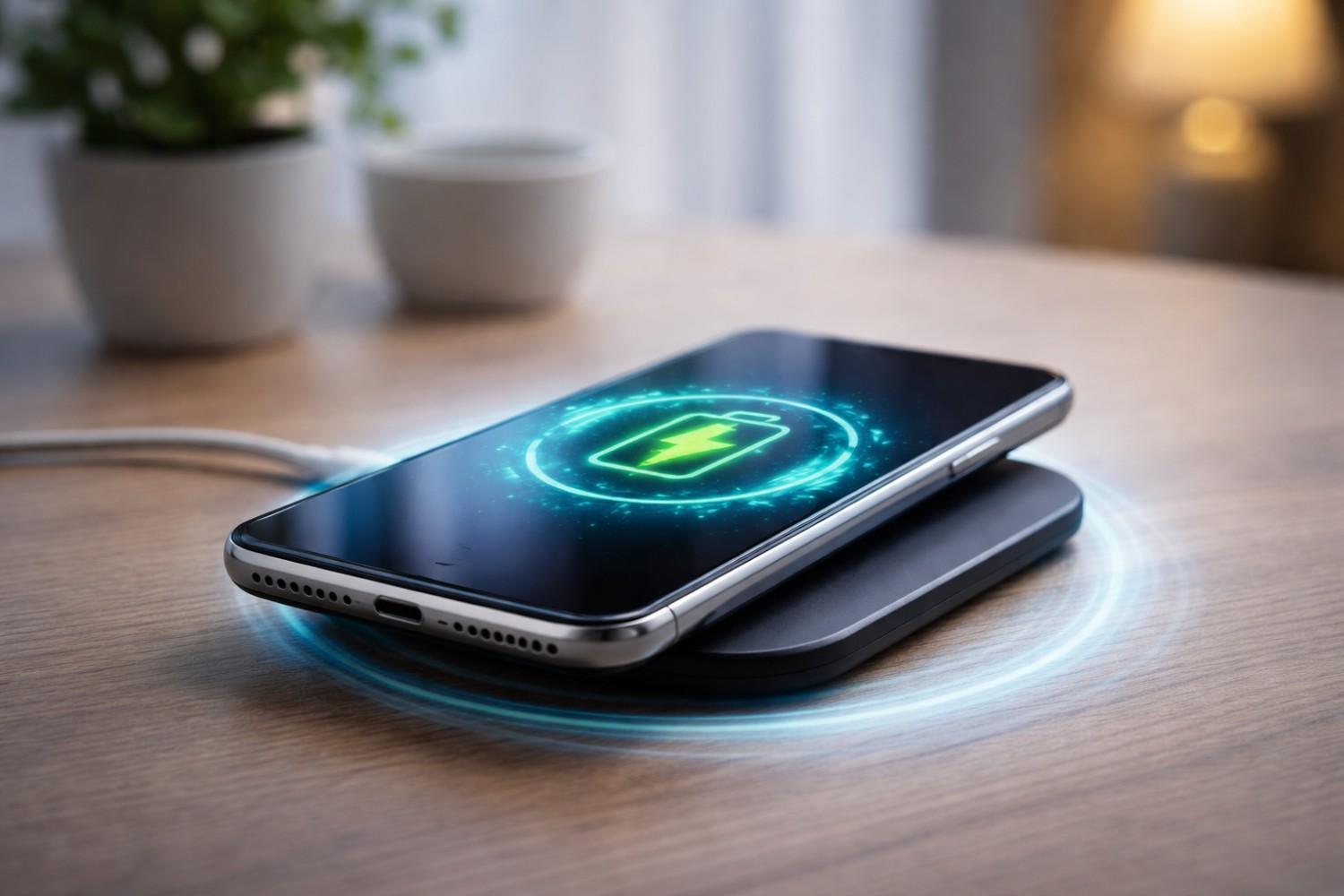
Wireless charging works through a process known as electromagnetic induction. In simple terms, electricity is transferred between two coils without a physical cable connecting them. One coil is located inside the charging pad, and the other is built into the device being charged.
When the charging pad is connected to power, electrical current flows through the transmitter coil inside the pad. This current generates a magnetic field that oscillates rapidly. When a compatible device such as a smartphone is placed on the pad, the receiver coil inside the phone interacts with this magnetic field. The magnetic field induces an electrical current inside the receiver coil, which then flows into the phone’s battery and charges it.
This process is governed by the Qi wireless charging standard, which is used by most modern smartphones and accessories. The Qi system ensures that chargers and devices from different manufacturers can work together safely and efficiently.
One important detail about wireless charging is that the magnetic field used to transfer power exists only over a short distance. The phone must be placed directly on the pad or extremely close to it in order for the energy transfer to occur. Because the system relies on magnetic fields, the charger actively generates electromagnetic fields during the charging process. This naturally leads many consumers to wonder whether those fields are stronger than the ones produced by wired chargers.
How Traditional Wired Chargers Work
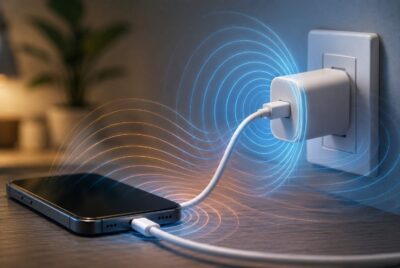
To understand the EMF difference between charging methods, it helps to look at how conventional chargers operate. A traditional wired charger works by transferring electricity directly through a cable. When the charger is plugged into a wall outlet, the adapter converts the alternating current from the electrical system into direct current that the phone’s battery can accept. That current then travels through the charging cable and into the device.
Because the energy moves through a wire rather than through the air, the charging process does not require the generation of an oscillating magnetic field between two coils. There are still small electromagnetic fields present around electrical wires, but they are usually quite low and decrease rapidly with distance.
For this reason, wired charging generally produces lower localized magnetic fields than wireless charging systems. The difference in the way energy is transferred is the key factor behind the EMF differences between the two technologies.
Do Wireless Charging Pads Emit More EMF Than Regular Chargers?
The central question many people ask is simple: do wireless charging pads emit more EMF than regular chargers? The short answer is that wireless charging pads usually produce stronger localized magnetic fields during active charging than wired chargers do. This is not surprising when considering how the technology functions.
Wireless chargers must generate a magnetic field strong enough to transfer energy across a small air gap between the charger and the device. That magnetic field fluctuates rapidly, which allows energy to be induced in the receiver coil inside the phone. Because this process depends on magnetic energy transfer, the field near the charging pad is measurable with EMF meters.
Wired chargers, on the other hand, rely on direct electrical conduction through a cable. While small electromagnetic fields exist around any energized wire, the levels are usually lower than those produced by a wireless charging coil operating at full power.
However, it is important to understand that EMF exposure decreases dramatically as distance increases. The magnetic field around a wireless charging pad is strongest very close to the surface of the charger. Even moving a few inches away from the pad can significantly reduce the measured EMF level.
When examining the question do wireless charging pads emit more EMF than regular chargers, the answer depends largely on how close a person is to the charger during operation. If the charger is sitting on a desk several feet away, the exposure level may be minimal.
Real EMF Measurements From Wireless Charging Pads
Laboratory measurements and independent testing with EMF meters show that wireless charging pads can generate measurable magnetic fields when actively transferring power. The strength of these fields varies depending on the charger model, the power output, and the alignment of the phone on the charging surface.
Typical wireless chargers operate at power levels ranging from 5 watts to 15 watts. Higher wattage chargers tend to produce stronger magnetic fields because more energy must be transferred between the coils. When measured directly at the surface of the pad, magnetic field readings may range from around 1 milligauss to several tens of milligauss.
These measurements sound significant, but they must be interpreted in context. International safety guidelines established by organizations such as the International Commission on Non-Ionizing Radiation Protection set limits for magnetic field exposure that are much higher than the levels produced by consumer electronics. Most wireless chargers operate well below these limits.
Another important point is that the magnetic field produced by a wireless charger drops quickly as distance increases. Even moving the phone slightly off the charging pad will reduce the field strength dramatically. This rapid drop-off means that EMF exposure tends to be localized around the charger itself rather than spreading throughout the room.
Factors That Influence EMF Levels During Wireless Charging
Several variables affect the amount of EMF produced by wireless charging systems. Understanding these factors can help explain why different chargers produce different readings and why certain usage habits may change exposure levels.
Wireless charging systems do not all operate under identical conditions. Design choices, device alignment, and charging power all influence how much electromagnetic energy is generated during the process.
Charger Power Output
The power rating of the charger is one of the most important factors affecting EMF levels. Higher-power chargers transfer more energy, which usually requires stronger magnetic fields. For example, a 15-watt fast wireless charger typically produces a stronger field than a basic 5-watt charging pad.
Phone Alignment on the Pad
Wireless charging coils must align closely for efficient power transfer. If the phone is not centered properly on the pad, the charger may increase its power output in order to maintain charging efficiency. This can temporarily increase the magnetic field around the charger.
Charging Duration
Wireless charging often takes longer than wired charging, particularly when lower-power chargers are used. Although the magnetic field may not be extremely strong, longer charging sessions can extend the duration of exposure.
Charger Design and Shielding
Some manufacturers design wireless chargers with additional shielding that helps control electromagnetic emissions. Higher-quality chargers may produce more stable and predictable EMF levels compared to very inexpensive models that lack proper design considerations.
Affiliate Advertisement

Are Wireless Charging Pads Safe to Use?
Modern wireless charging devices must comply with safety regulations before they can be sold to consumers. Regulatory agencies such as the Federal Communications Commission in the United States establish limits on electromagnetic emissions from electronic devices. Manufacturers test their products to ensure they meet these standards.
Most scientific studies examining wireless charging systems show that EMF levels remain well below established safety thresholds during normal operation. For the average user, occasional wireless charging is unlikely to represent a significant portion of daily EMF exposure compared with other sources such as mobile phone transmissions, WiFi routers, and Bluetooth devices.
Still, many people prefer to take simple steps to reduce unnecessary EMF exposure in their homes. Because wireless charging is optional, some consumers choose to use wired charging when possible or position chargers farther away from sleeping areas and resting places.
Practical Ways to Reduce EMF Exposure While Charging Devices
People who are interested in reducing their EMF exposure do not necessarily need to stop using wireless charging entirely. A few simple habits can help minimize exposure while still allowing the convenience of wireless technology.
One of the easiest strategies is to avoid placing charging pads very close to areas where the body remains for long periods of time. Charging devices across the room rather than directly next to a bed or couch can significantly reduce exposure.
It is also helpful to avoid actively using the phone while it is wirelessly charging. When a phone is in use, additional power is required for the screen, processor, and wireless communications. This may cause the charging system to operate at higher power levels, which can increase electromagnetic emissions.
Some consumers also choose to use EMF-reducing accessories when carrying or using their phones throughout the day. Products designed to reduce radiation exposure are commonly used by individuals who want an extra layer of protection.
One widely known option is the DefenderShield EMF Protection Phone Case.
Another commonly used option available through major retailers is the SafeSleeve EMF Blocking Phone Case. These types of products are designed to reduce the amount of radiation reaching the user when the phone is being used against the body. While they do not eliminate EMF entirely, many consumers use them as part of a broader strategy to manage exposure.
Affiliate Advertisement

When Wireless Charging Still Makes Sense
Wireless charging offers clear convenience advantages. It eliminates wear on charging ports, reduces the need for cables, and allows devices to charge simply by being placed on a surface. In homes with multiple devices, charging pads can make daily charging routines much easier.
For many people, the total EMF contribution from a wireless charging pad may be relatively small compared to other electronics in the home. WiFi routers, laptops, smart televisions, and mobile phone signals are often larger sources of electromagnetic exposure during everyday activities.
Because of this, some users choose a balanced approach. They may use wireless charging during the day when the phone sits on a desk while working, and switch to wired charging at night when the device is near the bed.
Understanding how the technology works allows consumers to make informed decisions about when and how they want to use it.
Conclusion
Wireless charging technology has made powering modern devices more convenient than ever, but it also raises understandable questions about electromagnetic exposure. Many people naturally wonder, do wireless charging pads emit more EMF than regular chargers?
Because wireless charging relies on electromagnetic induction to transfer energy between coils, these devices do produce measurable magnetic fields during operation. In many cases, the localized EMF levels near a wireless charging pad can be higher than those produced by a traditional wired charger. However, these fields decrease rapidly with distance and typically remain well within established safety guidelines.
For individuals who wish to minimize EMF exposure, simple habits such as charging devices a short distance away, avoiding phone use while charging, and occasionally using wired chargers can reduce overall exposure without giving up modern conveniences.
Wireless charging pads represent an interesting example of how emerging technologies introduce new considerations for consumers who want to understand the electromagnetic environment around them. By learning how these systems work and applying practical habits, it is possible to enjoy the convenience of wireless charging while still being mindful of EMF exposure.
Before You Go…
Get Weekly EMF Protection Tips
Enjoy this article? Join the EMFLuLu newsletter for simple weekly tips to reduce everyday EMF exposure from phones, WiFi routers, laptops, and smart home devices.
Try Our Free EMF Calculators
Curious how much EMF exposure you may experience each day?
These simple tools can help you estimate your exposure and identify possible problem areas in your home.
Try these free calculators:
Like this article? Pin it on Pinterest!

More to Explore