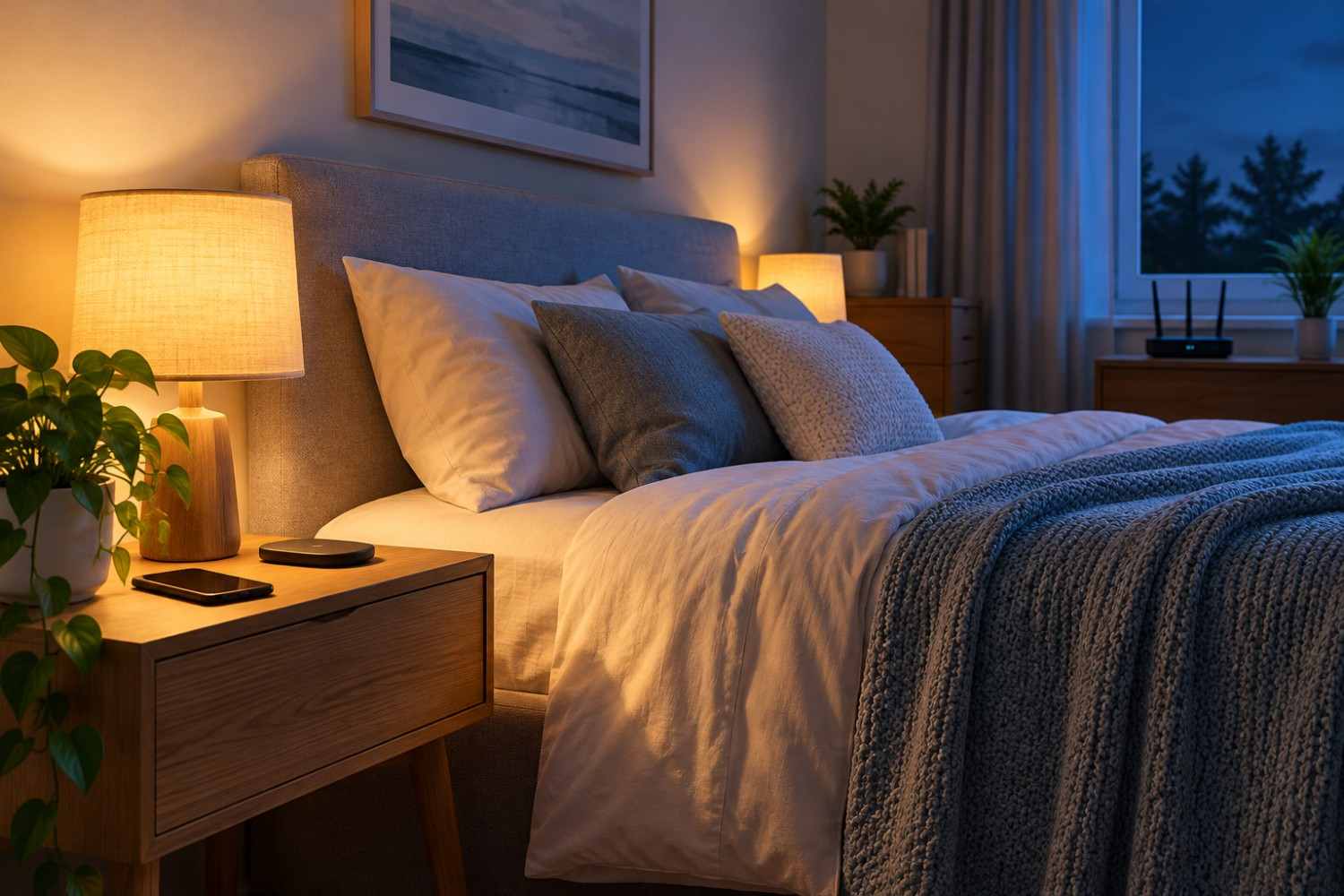
Your bedroom should be a place where you can relax, unwind, and enjoy a good night’s sleep. However, modern bedrooms often contain more electronic devices than we realize. Smartphones rest on nightstands, WiFi routers operate nearby, wireless speakers remain connected, and electrical chargers stay plugged in throughout the night. While these conveniences make everyday life easier, they also introduce different types of electromagnetic fields (EMFs) into the sleeping environment.
For people interested in learning how to reduce EMF in bedroom spaces, understanding common setup mistakes is an excellent starting point. Fortunately, many adjustments are simple, inexpensive, and require little more than changing where devices are placed or how they are used.
Electromagnetic fields are a normal part of modern life. Electrical wiring and appliances produce extremely low-frequency fields, while WiFi, Bluetooth, and cellular devices use radiofrequency electromagnetic energy. These are forms of non-ionizing radiation, meaning they do not have enough energy to ionize atoms in the way that X-rays and gamma rays can.
It is also important to keep the science in perspective. Major public health organizations have not established that everyday low-level EMF exposure within recommended limits causes poor sleep or other adverse health effects. Reducing unnecessary exposure can still be a personal preference, but it should not become a source of unnecessary worry or replace established healthy sleep practices.
With that understanding, let’s examine ten common bedroom EMF mistakes, why they matter, and what you can do to create a simpler, more comfortable sleeping environment.
1. Sleeping With Your Smartphone Next to Your Pillow
One of the most common bedroom habits is keeping a smartphone directly beside the pillow. Many people use their phones as alarm clocks, check messages before falling asleep, or want the convenience of having their devices within arm’s reach during the night.
Smartphones communicate through radiofrequency signals when connecting to cellular networks, WiFi, and Bluetooth devices. The amount of radiofrequency energy transmitted varies depending on the phone’s activity, signal conditions, and wireless settings. A phone streaming video or uploading information may behave differently from one sitting idle with minimal background activity.
Distance is an important factor in exposure. Moving a phone farther away generally reduces the radiofrequency energy reaching your body from that device, although the exact reduction depends on the source and surrounding conditions.
Keeping a phone beside your pillow also presents a separate concern unrelated to EMF: sleep disruption. Notifications, screen brightness, and the temptation to check messages can interfere with winding down before bedtime.
How to Fix This Mistake
Instead of leaving your phone immediately beside your head, consider placing it on a dresser or table across the room. This keeps the device accessible while increasing the distance between the phone and your sleeping position.
If you do not need wireless connectivity overnight, airplane mode can be another option. On most smartphones, airplane mode disables cellular transmissions, although WiFi and Bluetooth may remain active or can be reenabled separately. Check your device’s settings rather than assuming every wireless function has been turned off.
A basic alarm clock can also eliminate the need to keep your phone beside the bed.
The goal is not to treat your smartphone as dangerous. It is simply to make thoughtful decisions about where you keep it and whether it needs to remain connected throughout the night.
2. Placing Your WiFi Router in the Bedroom
WiFi routers have become essential household devices, providing internet access for computers, televisions, smartphones, and smart home equipment. Because router placement is often determined by the location of an internet connection, some households end up keeping the router in a bedroom.
A WiFi router uses radiofrequency signals to communicate with connected devices. Depending on the equipment, it may operate on several frequency bands, commonly including 2.4 GHz and 5 GHz, with some newer systems also using 6 GHz.
These transmissions are generally low-powered, and typical residential WiFi exposure is well below established international exposure limits. Nevertheless, someone who prefers to minimize unnecessary radiofrequency exposure may want to reconsider placing a router directly beside the bed.
The most useful consideration is distance. Radiofrequency exposure generally decreases as you move farther away from a transmitting source, although indoor reflections and device behavior can affect the precise pattern.
How to Fix This Mistake
If possible, position the router in a central area of the home rather than on a bedroom nightstand or shelf beside the headboard. A hallway, living room, or dedicated office may provide suitable alternatives, depending on your home’s layout.
Router placement should also account for internet performance. Moving a router too far from frequently used devices can weaken connections and may cause some devices to increase their own transmission power.
For stationary equipment, such as desktop computers, wired Ethernet connections can reduce reliance on wireless communication. Some routers also allow users to schedule wireless access or disable particular wireless bands when they are not needed.
Turning off WiFi overnight is optional, not a medically necessary precaution. The best arrangement is one that supports reliable connectivity while meeting your household’s preferences.
3. Keeping Too Many Electronic Devices on Your Nightstand
Take a moment to look at a typical bedroom nightstand. It might hold a smartphone, smartwatch charger, tablet, Bluetooth speaker, digital clock, wireless charging pad, and bedside lamp.
Individually, these devices may seem insignificant. Together, however, they create a collection of electronics positioned very close to where someone spends several hours sleeping.
Different devices produce different electromagnetic fields. A plugged-in charger can produce low-frequency fields associated with electrical current, while a wireless charging pad also uses magnetic coupling to transfer energy when charging a compatible device. Wireless accessories may transmit radiofrequency signals periodically.
This does not mean the fields combine into a dangerous level of exposure. Actual exposure depends on the devices, their operating conditions, their distance from the body, and the frequencies involved.
However, a crowded nightstand can make it difficult to distinguish necessary equipment from electronics that could easily be stored elsewhere.
How to Fix This Mistake
Begin by deciding which devices genuinely need to remain beside your bed.
A bedside lamp and alarm clock may be useful, while a tablet, portable speaker, or charging station might be more conveniently located on a dresser.
Consider creating a designated charging area away from your sleeping position. This can also help prevent tangled cords and reduce the temptation to use electronic devices late into the evening.
Unplugging unused equipment may reduce standby electricity consumption, depending on the device, while helping keep the area organized.
If your objective is to reduce EMF in bedroom environments without making major changes, simplifying the nightstand is one of the easiest places to begin.
4. Positioning Your Bed Against a Wall With Major Electrical Equipment Behind It
Bedroom furniture is usually arranged according to available space, windows, doorways, and personal preference. Most people do not think about what might be located on the opposite side of the wall behind their headboard.
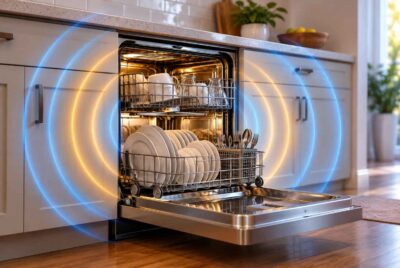
In some homes, a bedroom may share a wall with a refrigerator, electrical distribution panel, utility equipment, or another appliance that uses substantial electrical current.
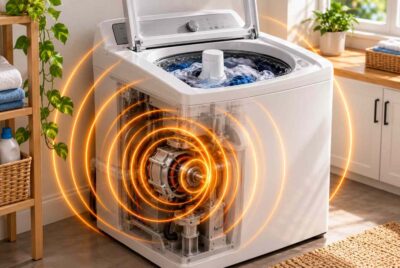
Electrical equipment can produce extremely low-frequency electric and magnetic fields. These fields behave differently from radiofrequency signals associated with wireless devices.
For example, ordinary walls may reduce certain electric fields, while low-frequency magnetic fields can pass through many common building materials. Magnetic field strength often decreases with distance from the source.
Importantly, the presence of an appliance behind a wall does not automatically mean that bedroom exposure is unusually high or unsafe. Equipment design, electrical current, wiring arrangement, and distance all influence the resulting field.
How to Fix This Mistake
Start by considering the layout of the rooms surrounding your bedroom. If a large electrical appliance or distribution panel sits immediately behind your headboard, you may prefer to move the bed to another wall if doing so is convenient.
There is no need to rearrange an entire bedroom simply because an electrical outlet or ordinary household wiring is nearby.
If you have a specific concern about unusually strong fields, an appropriate low-frequency magnetic field meter may help identify whether a nearby source produces a measurable difference.
Electrical panels and wiring should never be opened or modified as a do-it-yourself EMF reduction project. If you suspect an electrical fault or unsafe installation, contact a qualified electrician.
5. Leaving Electric Blankets and Heated Mattress Pads Running Unnecessarily
Electric blankets and heated mattress pads are popular during colder months. They can make a bed feel comfortable before sleep and provide warmth without heating an entire room.
These products use electrical current flowing through heating elements to generate warmth. When operating, they can also produce low-frequency electric and magnetic fields.
The characteristics of those fields vary by product design, electrical configuration, and operating settings. Some newer products may use different heating or control arrangements than older models.
However, the most clearly established safety concerns associated with electric bedding involve overheating, burns, damaged wiring, and improper use rather than proven harm from ordinary EMF exposure.
For this reason, any discussion of electric blanket EMF should begin with safe operation and the manufacturer’s instructions.
How to Fix This Mistake
If you enjoy a warm bed but do not need continuous heating, consider using an electric blanket to warm the bedding before getting in, provided the manufacturer’s instructions permit that use.
Some products include timers or automatic shutoff features that can make operation more convenient. Other models are specifically designed for overnight use, so it is important to follow the directions for your particular product.
Inspect electric bedding regularly for damage, worn fabric, exposed wires, or unusual heating. Avoid folding, bunching, or using the product in ways prohibited by its manufacturer.
If you prefer not to use electrically heated bedding, ordinary blankets, flannel sheets, and appropriate room temperature adjustments are alternatives.
Reducing unnecessary operation is a reasonable personal choice, but it should not be presented as a proven way to prevent EMF-related illness.
6. Positioning Smart Speakers and Wireless Devices Close to the Bed
Smart speakers, Bluetooth accessories, wireless baby monitors, and connected bedroom devices have made homes increasingly convenient.
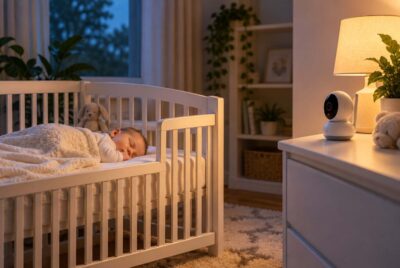
A smart speaker might play relaxing music, answer questions, control lights, or provide weather information. A wireless baby monitor can help parents observe a sleeping child without repeatedly entering the room.
These devices use different communication technologies, including WiFi, Bluetooth, and proprietary wireless systems. Their transmission characteristics depend on the product and how it operates.
Some devices transmit intermittently, while others maintain more frequent communication. A device’s advertised wireless range does not necessarily indicate how much exposure someone receives at a particular distance.
As with other household wireless equipment, typical exposures from compliant consumer devices are generally low.
The more practical question is whether a device needs to be positioned immediately beside someone’s head to perform its intended function.
How to Fix This Mistake
Consider moving smart speakers to a dresser or shelf farther from the bed. They can often perform their functions just as effectively without occupying valuable nightstand space.
Turn off unused Bluetooth accessories when convenient, and disconnect devices that serve no useful purpose overnight.
For baby monitors, follow the manufacturer’s placement instructions and keep the monitor outside the child’s crib or sleeping area. Proper placement is important for preventing cord entanglement and other physical safety hazards.
If you are choosing between wired and wireless devices, consider convenience, reliability, and your personal exposure preferences rather than assuming one option is automatically safer for your health.
7. Overlooking Chargers, Power Strips, and Bedside Wiring
Bedroom charging setups can become surprisingly complicated. A single outlet may supply a power strip connected to multiple chargers, lamps, clocks, and other accessories.
Electrical equipment and wiring can generate low-frequency electromagnetic fields when operating. The resulting fields depend on the amount of current flowing, the arrangement of conductors, and the distance from the source.
A charger plugged into an outlet is not necessarily producing the same field when idle as when actively charging a device. Different charger designs also have different electrical characteristics.
Although someone interested in EMF reduction may choose to move unnecessary electrical equipment away from the bed, electrical safety should be the primary consideration.
Overloaded outlets, damaged charging cables, counterfeit electrical accessories, and power strips used improperly can create genuine fire or shock hazards.
How to Fix This Mistake
Review the electrical devices connected near your bed and remove equipment that is no longer needed.
Avoid running extension cords beneath rugs or mattresses, and never cover charging equipment in ways that could trap heat.
Use reputable chargers and power strips that carry appropriate independent safety certification. Keep cords in good condition and replace damaged accessories.
When practical, move charging stations to a nearby dresser or another suitable location with adequate ventilation.
You do not need to unplug every bedside lamp or alarm clock to create a sensible bedroom environment. The objective is to eliminate unnecessary clutter and maintain safe electrical arrangements.
8. Buying EMF Protection Products Without Understanding What They Actually Do
One of the biggest mistakes people can make when trying to reduce electromagnetic exposure is purchasing products before understanding what they are designed to accomplish.
The EMF protection market includes shielding fabrics, phone accessories, specialty paints, stickers, pendants, and numerous other products.
Some products are intended to attenuate particular frequencies under specified testing conditions. Others make broad claims about neutralizing radiation, balancing energy, or protecting the entire body without providing convincing scientific evidence.
These claims should not be treated as interchangeable.
For example, a material that reduces radiofrequency transmission under controlled laboratory conditions may not reduce exposure in the same way when installed in a bedroom. Coverage, gaps, frequency range, reflections, and the location of wireless transmitters all influence performance.
Shielding materials can also interfere with cellular or WiFi connections. In some circumstances, a phone experiencing poor reception may increase its transmission power while attempting to maintain communication.
A product that changes a meter reading under one test condition is not necessarily proven to improve sleep or health.
How to Fix This Mistake
Before purchasing any EMF protection product, identify the source of exposure you are trying to address.
Determine whether the concern involves low-frequency magnetic fields, electric fields, or radiofrequency transmissions. These require different measurement approaches and may respond differently to shielding.
Look for clearly documented testing that identifies the relevant frequencies, test methods, and measured attenuation. Be cautious about products claiming to eliminate all EMF or prevent illnesses without reliable evidence.
It is usually more sensible to begin with simple changes such as increasing distance, repositioning equipment, or turning off unnecessary wireless functions.
Expensive shielding products are not a routine requirement for a healthy bedroom. Any decision to purchase them should be based on a specific, measurable objective rather than fear.
9. Measuring Bedroom EMF Incorrectly or Misunderstanding the Results
EMF meters can be useful tools for people who want to understand the electromagnetic environment in their homes. However, interpreting measurements correctly requires more than simply switching on a meter and watching the numbers.
Electromagnetic fields cover a wide range of frequencies, and different instruments are designed to measure different things.
A meter intended for extremely low-frequency magnetic fields may not measure WiFi transmissions. Similarly, a radiofrequency meter may not provide meaningful information about the magnetic field surrounding household electrical wiring.
Some consumer meters combine several measurement functions, but their accuracy, frequency coverage, and sensitivity can vary considerably.
Another common mistake is interpreting every detectable reading as evidence of danger. Modern measurement instruments can detect fields far below established exposure limits.
A numerical reading becomes meaningful only when you understand what is being measured, which units are being used, and how the result relates to an appropriate reference level.
How to Fix This Mistake
If you decide to measure your bedroom, begin by identifying the type of field you want to investigate.
For wireless routers and other radiofrequency sources, use equipment designed for the relevant frequencies. For household electrical equipment, a suitable low-frequency magnetic field meter may be more appropriate.
Take measurements consistently. For example, compare readings at the same location while a particular device is operating and after it has been switched off. Repeat measurements where practical, since wireless transmission levels can fluctuate.
Keep a record of the measurement location, device activity, units, and meter settings.
Avoid relying on a single peak reading or comparing numbers from different measurement methods without understanding their differences.
An EMF meter is not essential for most bedroom setups. However, for someone interested in identifying specific sources or comparing before-and-after changes, a properly selected instrument can provide useful information.
The most important consideration is choosing a meter that measures the type of electromagnetic field you actually want to investigate.
10. Focusing Only on EMF While Ignoring Other Important Bedroom Sleep Factors
Perhaps the most overlooked mistake is becoming so focused on electromagnetic exposure that other important aspects of the bedroom environment receive little attention.
Sleep quality is influenced by many factors, including room temperature, light, noise, stress, daily routines, and personal health conditions.
For example, bright light in the evening can interfere with the body’s natural sleep-wake cycle. A warm or noisy bedroom may make it more difficult to remain asleep. Frequent smartphone notifications can interrupt rest even when the phone is positioned several feet away.
These are well-established considerations that deserve attention when creating a comfortable sleeping environment.
By comparison, scientific evidence has not established that the low levels of EMF ordinarily encountered from household wireless devices cause sleep problems.
That distinction matters because it helps readers prioritize changes most likely to provide meaningful benefits.
How to Fix This Mistake
Begin by evaluating the bedroom as a complete sleeping environment rather than focusing exclusively on electronic equipment.
A comfortable mattress, appropriate bedding, limited nighttime noise, and effective light control can contribute to better sleep conditions.
Consider keeping the bedroom cool enough for comfort, reducing bright light before bedtime, and maintaining a consistent sleep schedule.
If a smartphone or tablet encourages late-night browsing, moving it away from the bed may be worthwhile primarily because it reduces distractions.
People who want to reduce EMF in bedroom spaces can incorporate their exposure preferences into these broader sleep improvements.
The objective should be a bedroom that feels comfortable, functions well, and supports restful sleep without creating unnecessary anxiety about everyday technology.
Affiliate Advertisement

A Simple Bedroom EMF Reduction Checklist
After reviewing these ten mistakes, you may be wondering where to begin. The good news is that most practical adjustments do not require expensive equipment or a complete bedroom redesign.
The following checklist brings together the simplest changes discussed throughout the article. These are optional exposure-reduction measures and general bedroom improvements, not medically necessary precautions for typical household EMF levels.
- Move your smartphone away from your pillow. A dresser or table across the room is often a convenient alternative.
- Review your WiFi router location. Consider placing it outside the bedroom if another location provides reliable coverage.
- Simplify your nightstand. Remove electronic devices that do not need to remain beside the bed.
- Check what is behind your headboard. Be aware of major electrical equipment on the opposite side of shared walls.
- Use electric bedding according to its instructions. Prioritize product safety and avoid unnecessary operation.
- Reposition wireless accessories. Keep smart speakers and similar equipment where they function conveniently without crowding the sleeping area.
- Organize chargers and electrical cords. Remove damaged accessories and avoid overloaded outlets.
- Question EMF protection claims. Look for meaningful technical evidence before spending money.
- Understand EMF measurements. Choose appropriate instruments and interpret readings in context.
- Prioritize healthy sleep habits. Pay attention to light, noise, temperature, and nighttime routines.
You do not need to complete every item at once. Start with the changes that are easiest for your household and evaluate whether the new arrangement remains practical.
Frequently Asked Questions About Bedroom EMF
How Can I Reduce EMF in My Bedroom Naturally?
The simplest approach is to increase the distance between your sleeping position and electronic devices that do not need to remain nearby.
You can move your phone away from the pillow, relocate unnecessary wireless equipment, and keep charging stations on a dresser instead of a nightstand.
Turning off unused wireless functions may also reduce transmissions from particular devices.
These changes generally cost nothing and do not require specialized shielding products. However, they should be viewed as optional exposure-reduction measures rather than proven ways to improve health.
Should I Turn Off WiFi at Night?
Turning off WiFi at night will stop radiofrequency transmissions from the router’s disabled wireless radios, although other wireless devices and external sources may continue operating.
For most households, turning off WiFi is not medically necessary. Typical residential WiFi exposure is generally well below established safety limits.
If you do not need an internet connection overnight and prefer to switch it off, doing so is a reasonable personal choice. Just remember that security equipment, smart home devices, and other connected services may depend on continuous connectivity.
Does Airplane Mode Stop All EMF From a Smartphone?
Airplane mode generally disables cellular communication, but it does not eliminate every electromagnetic field associated with a smartphone.
Depending on the device and its settings, WiFi and Bluetooth may remain enabled or can be switched back on. The phone’s internal electronics also continue operating while the device is powered.
Airplane mode is therefore useful for reducing certain wireless transmissions, but it should not be described as eliminating all EMF.
Do I Need an EMF Meter for My Bedroom?
Most people do not need an EMF meter to arrange a bedroom or follow established household safety guidance.
A meter may be useful if you have a specific source you want to investigate or if you enjoy measuring changes after repositioning equipment.
However, the instrument must be appropriate for the frequency and type of field being measured.
Remember that detecting an electromagnetic field does not automatically mean the exposure is unsafe.
Conclusion: Creating a Comfortable Bedroom With Less Unnecessary EMF Exposure
Creating a comfortable bedroom does not require eliminating every electronic device or purchasing expensive protection products.
Most of the common mistakes discussed in this article involve ordinary decisions about device placement, unnecessary equipment, electrical organization, and understanding how different technologies operate.
If your goal is to reduce EMF in bedroom environments, begin with straightforward adjustments such as moving your smartphone away from the pillow, reconsidering router placement, and keeping unnecessary electronics away from the bed.
At the same time, remember that everyday household EMF exposure is generally below established safety limits, and reducing it has not been shown to improve sleep or prevent illness.
A sensible bedroom setup balances personal preferences with reliable scientific information and established sleep practices.
Ultimately, the best bedroom is one that feels comfortable, minimizes distractions, supports good sleep habits, and allows you to enjoy modern technology without unnecessary concern.
Before You Go…
Get Weekly EMF Protection Tips
Enjoy this article? Join the EMFLuLu newsletter for simple weekly tips to reduce everyday EMF exposure from phones, WiFi routers, laptops, and smart home devices.
Try Our Free EMF Calculators
Curious how much EMF exposure you may experience each day?
These simple tools can help you estimate your exposure and identify possible problem areas in your home.
Try these free calculators:
Like this article? Pin it on Pinterest!

More to Explore