Smartphones have become an extension of daily life. Many people carry their phones in a front pants pocket, jacket pocket, or close to their body for most of the day without thinking twice about it. As public awareness around electromagnetic fields (EMF) continues to grow, more people are asking a specific and practical question: is it safe to carry your phone in your pocket. This question is not about fear or panic – it is about understanding how exposure works and whether small habit changes could make a meaningful difference.
Current science does not show definitive proof that normal phone use causes serious health problems. At the same time, research continues to study long-term exposure, especially when devices are kept directly against the body for extended periods. The goal of this article is to explain what EMF exposure from phones actually means, why distance plays a role, and how to make practical, balanced decisions based on available evidence.
What Type of EMF Radiation Comes From Smartphones?
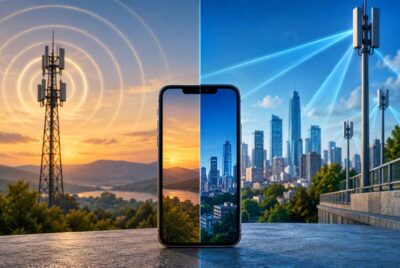
Smartphones emit radiofrequency (RF) radiation. This type of radiation is considered non-ionizing, which means it does not carry enough energy to damage DNA the way X-rays or gamma radiation can. Phones use RF signals to communicate with cell towers, WiFi routers, and Bluetooth devices.
Every phone sold must meet regulatory limits for Specific Absorption Rate (SAR), which measures how much RF energy the body absorbs. These limits are designed with safety margins built in. Still, SAR testing is done under specific laboratory conditions and does not always represent real-world carrying habits such as keeping a phone pressed tightly against skin all day.
Even when not actively in use, phones still communicate with networks. They periodically check for signals, receive notifications, and maintain data connections. This means low-level exposure exists anytime the device is powered on and connected.
Why Distance From the Body Matters for EMF Exposure
One of the most important concepts in EMF exposure is distance. RF energy weakens quickly as you move away from the source. This principle is simple: even moving a device an inch or two away from the body can reduce exposure significantly.
The key factor is direct contact versus small separation. A phone sitting tightly against skin creates the highest localized exposure area. If the phone is instead in a bag, on a desk, or even slightly away from the body, exposure drops quickly.
Phones also increase transmission power when signal is weak. For example, inside elevators, parking garages, or rural areas, your phone may boost output to maintain connection. If the phone is in a pocket during these moments, exposure may be higher than when signal is strong.
What Research Suggests About Carrying Phones Close to the Body
Scientific studies vary in conclusions. Large public health organizations generally state that there is no confirmed causal link between phone radiation and major diseases. At the same time, some smaller or early-stage studies suggest possible biological effects from long-term close exposure, including changes in cellular stress markers and reproductive metrics in lab settings.
It is important to interpret research carefully. Many studies use exposure levels higher than typical daily use. Others focus on animals or isolated cells rather than whole human populations. Because long-term data across decades is still developing, many experts suggest a precautionary approach rather than extreme avoidance.
This is why education around habits and exposure management is often recommended instead of eliminating phone use entirely.
Situations That Can Increase Pocket EMF Exposure
Before changing habits, it helps to understand when exposure is likely to increase. The following examples represent real-world scenarios where phones may transmit at higher power levels. The goal is awareness rather than worry.
- Poor signal environments
- Active streaming or hotspot use
- Long calls while phone is against the body
- Gaming or high-data apps running continuously
- Phone searching for signal while moving between coverage zones
Understanding these situations helps users make small adjustments when convenient, such as switching to airplane mode or moving the phone slightly away from direct skin contact.
Affiliate Advertisement
Practical Ways to Reduce Exposure Without Changing Your Lifestyle
Most people are not going to stop carrying phones. The realistic approach is to reduce unnecessary close exposure when possible. The suggestions below focus on simple habit shifts that do not require major lifestyle changes.
If you want to reduce exposure while still using your phone normally, consider these approaches:
- When sitting at a desk, place phone on table instead of pocket
- Use airplane mode when carrying phone for long periods without needing connectivity
- Avoid keeping phone directly against skin during long calls
- Use speakerphone or wired earbuds when possible
- Store phone in bag or jacket pocket when convenient
These are small adjustments that can reduce cumulative exposure without adding inconvenience.
Affiliate Advertisement
EMF Protection Products and When They May Make Sense
Some people prefer an added layer of protection, especially if they must carry their phone on their body for work or lifestyle reasons. Protection products generally fall into shielding or harmonizing categories. The goal is not to claim elimination of exposure but to potentially reduce direct body interaction with RF signals.
If someone wants to add protection while maintaining normal phone habits, these are commonly used product categories.
Shielding Phone Cases
DefenderShield EMF Protection Phone Case
These cases typically include shielding material designed to block RF radiation from one side of the device, usually the side facing the body. They allow the phone to still communicate with towers while reducing body-side exposure.
EMF Harmonizing Technology
EMF Harmony Mobile Phone Shield
These products focus on altering signal interaction rather than blocking it. Some users prefer this category because it does not interfere with signal strength or call quality.
Measurement and Testing Tools
Safe Living Technologies EMF Meter
Meters help users understand real exposure levels in their personal environment. This aligns well with an evidence-first mindset – measure first, then decide what changes are worth making.
Should You Stop Carrying Your Phone in Your Pocket?
For most people, the answer is not absolute. The better question is how often and under what conditions the phone is carried directly against the body.
If you occasionally carry your phone in your pocket, risk is likely very low based on current research. If you carry it tightly against skin for many hours daily, you might consider simple habit adjustments or protection accessories.
Understanding the safety concerns of carrying a phone in your pocket ultimately comes down to frequency, duration, and signal conditions. It is not a single yes-or-no answer, but rather a spectrum of exposure patterns.
The Balanced EMFLuLu Approach
A balanced viewpoint generally includes three ideas:
First, phones are essential tools and will remain part of modern life. Second, science has not proven major harm from normal use. Third, simple exposure reduction habits are easy and low cost.
This middle-ground approach helps readers avoid both unnecessary fear and total dismissal of emerging research.
Conclusion
Technology is not going away, and smartphones provide enormous benefits. The real goal is understanding how exposure works and making smart, low-effort adjustments if desired. When evaluating safety concerns of carrying a phone in your pocket, the biggest factor is how close and how long the device is against your body, especially during high transmission periods.
Most people do not need to make drastic changes. Small steps like creating slight distance, using airplane mode when possible, or using protection accessories can provide peace of mind while maintaining normal phone use. As research continues to evolve, staying informed and making practical choices remains the smartest long-term strategy.
Before You Go…
Get Weekly EMF Protection Tips
Enjoy this article? Join the EMFLuLu newsletter for simple weekly tips to reduce everyday EMF exposure from phones, WiFi routers, laptops, and smart home devices.
Try Our Free EMF Calculators
Curious how much EMF exposure you may experience each day?
These simple tools can help you estimate your exposure and identify possible problem areas in your home.
Try these free calculators:
Like this article? Pin it on Pinterest!


More to Explore