Many people assume that if they want to understand electromagnetic field (EMF) exposure in their home, they need to invest in expensive testing equipment. While professional meters can certainly provide detailed readings, they are not the only way to identify areas of concern. In fact, if you’ve been wondering how to test EMF levels at home without a meter, you can learn a surprising amount just by using simple observation techniques and a few practical experiments.
The reality is that most homes follow predictable patterns when it comes to EMF exposure. Devices like WiFi routers, smartphones, and electrical panels tend to create concentrated zones, and once you know what to look for, these areas become easier to identify. Understanding how to test EMF levels at home without a meter gives you the ability to make meaningful changes without spending hundreds of dollars on equipment.
In this guide, we’ll walk through practical, real-world methods you can use right away. These techniques won’t give you exact numbers, but they will help you identify high-exposure areas, understand your environment better, and take simple steps to reduce unnecessary EMF exposure in your daily life.
What Is EMF and Why Test It?
Before jumping into testing methods, it helps to understand what EMF actually is and why people are paying attention to it. EMFs are invisible areas of energy, often referred to as radiation, that are produced by electrical devices. They generally fall into two main categories: low-frequency EMFs, which come from wiring and household appliances, and radiofrequency (RF) EMFs, which are emitted by wireless devices like phones, routers, and Bluetooth equipment.
Testing or evaluating EMF exposure matters because of how closely these sources are integrated into everyday life. Many people sleep with their phones nearby, work within a few feet of routers, and spend hours surrounded by electronic devices. Even if you’re not trying to eliminate EMF exposure completely, identifying the highest exposure areas allows you to reduce unnecessary contact – especially in places like bedrooms where long-term exposure occurs.
Signs You May Have High EMF Levels in Your Home
While EMFs are not something you can see, your environment often provides subtle clues about where exposure may be higher. Paying attention to patterns in your home can be a useful starting point before trying any testing methods.
Some people notice that their sleep improves when they move devices farther away from their bed. Others find that certain rooms feel more “active” or stimulating, especially if multiple electronics are running at once. It’s also common to see high concentrations of devices in specific areas, such as home offices or entertainment centers, where routers, computers, and smart devices are all located together.
Another common indicator is proximity to infrastructure like breaker panels or smart meters, especially if these are located on walls adjacent to sleeping areas. While these observations are not definitive proof of high EMF levels, they help guide where to focus your attention when evaluating your home.
How to Test EMF Levels at Home Without a Meter
If you’re looking for practical ways to evaluate your environment, the good news is that there are several simple methods you can use right away. Learning how to test EMF levels at home without a meter is really about understanding patterns, experimenting with distance, and observing how your environment changes when certain devices are adjusted.
The Distance Test
One of the most reliable principles when it comes to EMF exposure is that it decreases rapidly with distance. Even moving a device a few feet away can significantly reduce exposure levels.
Try this: move your phone, router, or laptop farther away from your usual position and pay attention to how the space feels over time. For example, placing your phone across the room instead of on your nightstand can noticeably change your sleeping environment. This simple adjustment is one of the easiest ways to begin applying what you’ve learned about how to test EMF levels at home without a meter.
The Power-Off Test
Another effective method is to temporarily turn off devices or circuits and observe the difference. This is especially useful at night when your home is quieter and changes are easier to notice.
Start by turning off your WiFi router before bed and see if your sleep improves. You can also experiment by switching off specific breakers (safely and selectively) to reduce electrical activity in certain rooms. Many people are surprised at how much calmer a space feels when unnecessary electronics are powered down.
Using Your Phone’s Signal Strength as a Clue
Your smartphone can actually give you indirect insight into EMF activity. When your phone has a weak signal, it increases its transmission power to stay connected. This means higher EMF output.
Walk around your home and notice where your signal drops to one or two bars. These areas may actually produce higher EMF from your phone during use. Avoiding long calls or prolonged usage in these spots can be a simple adjustment that reduces exposure.
The AM Radio Method
This is one of the most underrated techniques and requires only a basic AM radio. Tune the radio to a frequency between stations so you hear static, then slowly move it around your home.
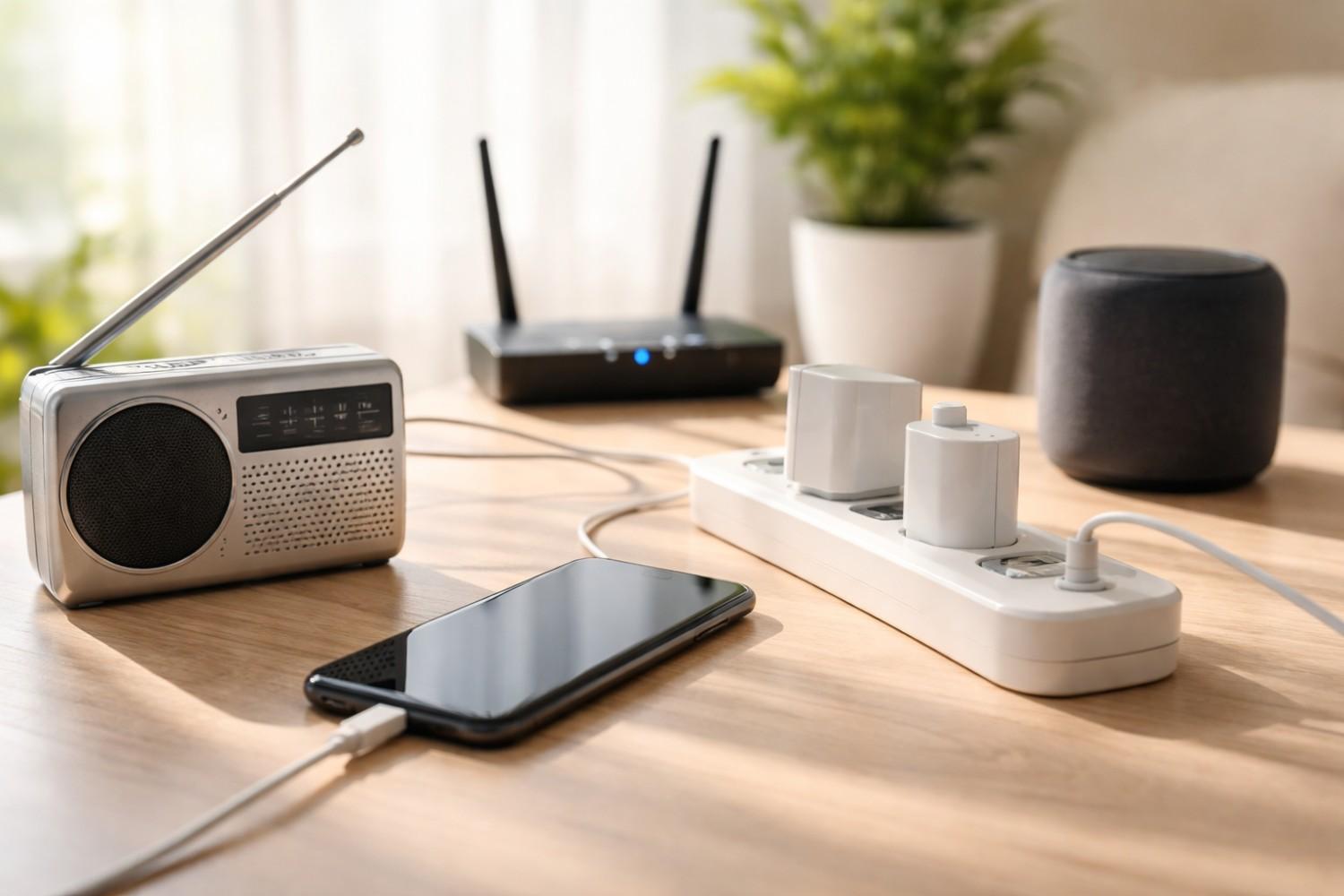
As you approach certain devices – like routers, chargers, or power strips – you may hear increased buzzing or interference. This doesn’t give a precise measurement, but it does help identify active electrical zones. It’s a surprisingly effective way to visualize what is otherwise invisible.
Mapping Your Home by Device Density
Another practical approach is to mentally map where your devices are concentrated. Areas with multiple electronics operating at once are more likely to have higher EMF levels.
Take note of places like your home office, where a computer, monitor, phone, and router might all be within a few feet of each other. Similarly, bedrooms often contain phones, chargers, and sometimes smart devices, all of which contribute to the overall environment. Identifying these clusters allows you to make smarter decisions about spacing and usage.
Most Common High-EMF Areas in a Home
Once you start paying attention, patterns become much easier to spot. Certain areas of the home consistently show higher levels of activity due to how we use technology.
Bedrooms are often one of the biggest concerns, mainly because of overnight exposure. Many people charge their phones next to their bed or keep devices within arm’s reach. Home offices are another hotspot, especially with multiple devices operating simultaneously for long periods.
WiFi routers are a major contributor as well, particularly when placed in central living areas or near sleeping spaces. Kitchens can also be overlooked, with appliances like microwaves and smart devices adding to the mix. Finally, exterior walls with smart meters can affect adjacent rooms, especially if beds are placed nearby.
Affiliate Advertisement

When You Might Actually Need a Meter
While these methods are effective for identifying general patterns, there are situations where a meter can be helpful. If you want precise measurements or are trying to optimize a specific area – like your sleeping environment – a meter can provide more detailed insight.
If you decide to go this route, a commonly used entry-level option is the TriField EMF Meter Model TF2. You can view it here.
This type of device can measure multiple types of EMF and give you a clearer picture of exposure levels. That said, many people find that the no-equipment methods covered in this article are enough to make meaningful improvements.
Simple Ways to Reduce EMF Without Measuring
Once you’ve identified potential high-exposure areas, the next step is making simple adjustments. The goal isn’t to eliminate technology, but to use it more intentionally.
Start by increasing distance wherever possible. Move your phone away from your bed, reposition your router, and avoid keeping devices directly on your body for extended periods. Turning off WiFi at night is another easy habit that can make a noticeable difference.
Airplane mode is a powerful tool as well, especially when you don’t need connectivity. Using it while sleeping or carrying your phone in your pocket can significantly reduce exposure. These changes are simple, cost nothing, and often provide the biggest benefit.
For those looking for additional options, products like the DefenderShield Phone Case can be explored here.
Similarly, some people look into solutions from EMF-focused brands such as:
EMF-Harmony or Safe Living Technologies.
Affiliate Advertisement
Limitations of Testing Without Equipment
It’s important to understand what these methods can and cannot do. Without a meter, you won’t get numerical readings or be able to compare exact exposure levels between different areas.
Instead, these techniques are designed to help you identify patterns and make informed decisions. They are especially useful for beginners who want to improve their environment without overcomplicating the process. For most households, this approach covers the majority of practical concerns.
Conclusion
By now, you should have a clear understanding of how to test EMF levels at home without a meter. While these methods don’t provide exact measurements, they offer something just as valuable – awareness. Once you begin observing how devices, distance, and usage patterns affect your environment, it becomes much easier to make simple adjustments that reduce unnecessary exposure.
The key takeaway is that you don’t need expensive tools to start improving your home. Small changes, like moving devices farther away or turning off WiFi at night, can have a meaningful impact. Over time, these habits add up and help create a more balanced living space.
Before You Go…
Get Weekly EMF Protection Tips
Enjoy this article? Join the EMFLuLu newsletter for simple weekly tips to reduce everyday EMF exposure from phones, WiFi routers, laptops, and smart home devices.
Try Our Free EMF Calculators
Curious how much EMF exposure you may experience each day?
These simple tools can help you estimate your exposure and identify possible problem areas in your home.
Try these free calculators:
Like this article? Pin it on Pinterest!
More to Explore