Smartphones have become part of everyday life. Most people carry them from the moment they wake up until they go to sleep at night. Phones are used for calls, texting, social media, navigation, streaming videos, checking email, and countless other daily tasks. Along with that convenience, more people have started asking questions about smartphone EMF exposure and whether certain habits create more exposure than others.
One of the most common questions people ask is whether texting is safer than calling when it comes to phone radiation exposure. The topic of texting vs calling EMF exposure has gained attention because many people now spend several hours per day interacting with their devices. Even small changes in phone habits may potentially reduce overall exposure throughout the day.
The answer is not completely black and white, but there are important differences between texting and voice calls that can affect how much radiofrequency energy your body is exposed to. Distance from the body, signal strength, call duration, and the way the phone communicates with cellular towers all play important roles.
This article will take a detailed look at how phones emit EMF radiation, how texting compares to calling, what factors increase exposure, and several practical ways to reduce unnecessary phone exposure without giving up the convenience of modern technology.
How Smartphones Produce EMF Radiation
Smartphones communicate wirelessly through radiofrequency (RF) electromagnetic fields. Whenever a phone sends or receives information, it emits RF energy in order to stay connected to nearby cellular towers, WiFi routers, or Bluetooth devices.
Phone radiation is not constant at the same strength all day long. The amount of energy emitted often changes depending on what the phone is doing. For example, a phone that is sitting idle in your pocket may emit relatively low levels compared to a phone actively streaming video, uploading files, or making a voice call.
Voice calls are especially important to understand because they usually involve continuous communication between the phone and the nearest cell tower. During a call, the phone constantly transmits and receives audio data in real time. Since the device is commonly held directly against the head during calls, the user’s exposure area becomes much closer to the source of transmission.
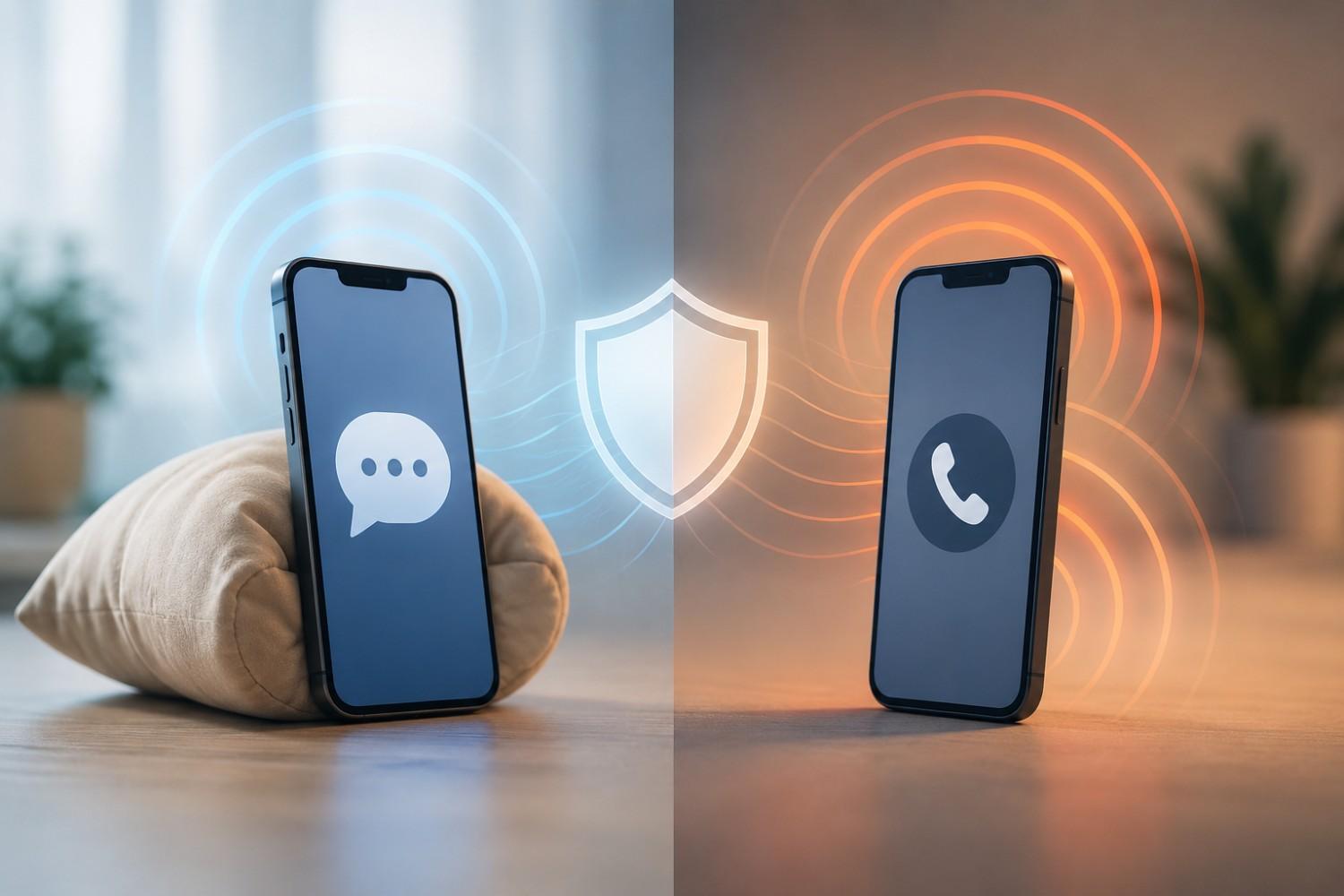
Texting works differently. Sending a text message usually involves short bursts of transmitted data instead of a continuous connection. A person may type a message, send it, then set the phone down or hold it farther away from the body. That difference in both duration and distance is one reason many people researching texting vs calling EMF exposure tend to view texting as the lower-exposure activity.
Still, it is important to remember that phones emit radiation during many activities beyond calling and texting. Streaming videos, gaming, social media scrolling, app updates, and background syncing can all contribute to overall phone exposure throughout the day.
Is Texting Safer Than Calling for EMF Exposure?
In general, texting is usually considered lower exposure than holding a phone directly against the head during long voice calls. The main reason comes down to proximity and duration.
When making a call, the phone is often pressed directly against the ear and side of the head for several minutes at a time. Since RF energy decreases with distance, keeping the device that close to the body may increase localized exposure compared to holding the phone farther away.
Texting changes several of those variables. Most people hold the phone farther from their head while texting. Messages are sent in shorter bursts rather than continuous transmission, and texting sessions are often broken up into shorter interactions throughout the day.
The discussion around texting vs calling EMF exposure also involves cumulative habits. Someone who spends two hours per day on speakerphone may experience different exposure patterns compared to someone making traditional phone calls with the device against the ear. Likewise, a person who texts heavily while resting the phone against their torso or lap may still maintain significant daily exposure even if they rarely make voice calls.
Another important point is that smartphones today perform far more tasks than simple calls and texts. A person may avoid voice calls but spend hours holding a streaming device close to the body while watching videos or using social media apps. In some situations, heavy data usage may produce meaningful RF activity as well.
For most people, though, reducing direct head exposure is one reason texting is often viewed as the safer option compared to long traditional phone calls.
Why Signal Strength Matters So Much
One factor that many people overlook is signal strength. A phone does not always emit the same amount of RF energy. Phones often work harder and increase transmission power when signal quality becomes weak.
This means your environment can have a major impact on exposure levels.
For example, phones may increase power output in areas such as:
- Elevators
- Parking garages
- Rural highways
- Basement rooms
- Large concrete buildings
- Moving vehicles
- Crowded event venues
When a phone struggles to maintain a stable connection, it may boost transmission levels to reconnect with nearby towers. This is one reason many EMF-conscious users try to avoid making long calls when signal bars are very low.
Interestingly, a short phone call in an area with excellent reception may potentially create less exposure than a lengthy streaming session in a poor-signal location. Duration and transmission intensity both matter.
Understanding signal strength is an important part of the texting vs calling EMF discussion because the phone’s operating conditions often influence exposure levels more than people realize.
Speakerphone, Earbuds, and Other Alternatives
Many people who want to reduce phone exposure look for practical alternatives to holding the phone directly against the head. The good news is that even small increases in distance may help lower exposure because RF energy weakens rapidly as distance increases.
Speakerphone is one of the simplest options. When using speakerphone, the device can sit several feet away instead of touching the head. Many people now use speakerphone for longer conversations while working at home or sitting at a desk.
Wired earbuds are another option some users prefer. Standard wired headphones create physical distance between the phone and the head, although the phone itself may still remain in a pocket or nearby location.
Some users prefer air tube headsets, which use hollow air tubes near the ear instead of metal wiring all the way to the earbuds. These products are marketed toward people trying to further minimize electrical conduction near the head.
One product sometimes used for this purpose is the DefenderShield Air Tube Headset.
Others choose phone cases designed to redirect part of the RF energy away from the body side of the phone during use. These products are not intended to completely eliminate radiation but are often used as part of broader exposure reduction habits.
DefenderShield offers various EMF Radiation Protection Phone Cases.
It is important to approach any EMF product with realistic expectations. No accessory should be viewed as a magic solution. Most practical exposure reduction comes from habits such as increasing distance, reducing unnecessary call time, avoiding weak signal areas, and limiting overnight phone exposure.
Common Phone Habits That May Increase EMF Exposure
Many people focus entirely on whether texting or calling is safer, but several everyday habits may have an even greater effect on overall exposure patterns.
One common example is sleeping with the phone directly beside the pillow. Phones continue communicating periodically even when not actively used. Notifications, background app updates, WiFi activity, and cellular syncing may continue during the night unless airplane mode is enabled.
Another habit involves carrying the phone directly against the body for long periods. Phones stored in pockets, waistbands, sports bras, or resting on the lap during streaming sessions may maintain close proximity for hours each day.
Using the phone in poor signal areas can also increase exposure because the device often boosts transmission power while searching for stronger connections.
Video calling and streaming sessions may also create longer periods of active wireless communication than many users realize. Someone who rarely makes phone calls but streams video content for several hours daily may still maintain substantial device usage overall.
Charging habits matter as well. Some people avoid resting phones directly against the body while charging, especially during heavy use sessions that may increase device temperature and activity levels simultaneously.
The goal is not to create fear around smartphones. Modern life relies heavily on wireless technology. Instead, awareness helps people make informed choices about habits that are easy to adjust.
Affiliate Advertisement

What Research Says About Everyday Phone Use
Research surrounding cellphone radiation continues to evolve. Scientists, health organizations, and regulatory agencies have studied RF exposure for many years, although opinions sometimes differ regarding long-term effects and interpretation of available data.
Some researchers focus on exposure limits established by regulatory agencies, while others advocate precautionary approaches that encourage reducing unnecessary exposure whenever practical.
One reason the topic remains complicated is because modern wireless technology changes rapidly. Earlier generations of phones operated differently than today’s smartphones, and new wireless technologies continue to develop over time.
For many consumers, the practical approach is moderation rather than panic. Reducing direct exposure where convenient may provide peace of mind without requiring major lifestyle changes.
This balanced perspective is why many people researching texting vs calling EMF exposure choose simple habits such as:
- preferring speakerphone
- texting instead of long calls
- avoiding weak signal areas
- turning on airplane mode at night
- keeping phones off the body when possible
These adjustments are generally easy to implement and do not interfere heavily with normal daily routines.
Practical Ways to Reduce Phone EMF Exposure
Fortunately, reducing everyday phone exposure does not require giving up your smartphone entirely. Small habit adjustments may help lower unnecessary exposure while still allowing full use of modern technology.
One of the simplest changes is using texting more often instead of holding the phone against the head for lengthy voice calls. Since distance plays a major role, even switching to speakerphone during long conversations may make a difference.
Many users also avoid carrying phones directly against the body whenever practical. Using a backpack, purse, desk surface, or nearby table creates more separation than keeping the device pressed against clothing all day.
Airplane mode at night is another popular strategy. Many people use their phones as alarm clocks, but enabling airplane mode while sleeping can disable most wireless transmissions during overnight hours.
Downloading content ahead of time may also help reduce long streaming sessions over cellular connections. Watching downloaded content in airplane mode eliminates the need for continuous wireless communication during playback.
Signal awareness can also be helpful. If your phone only has one signal bar, it may be working harder to maintain communication. Waiting until signal improves before making a long call may potentially reduce transmission intensity.
Finally, many people focus on balance rather than perfection. Wireless devices are part of modern life, and completely avoiding exposure is unrealistic for most households. Practical reduction strategies are often easier to maintain long term than extreme avoidance measures.
Conclusion
Smartphones are deeply integrated into modern life, and most people use them constantly throughout the day for communication, entertainment, and work. When comparing texting vs calling EMF exposure, texting is generally considered the lower-exposure option because it usually creates greater distance from the head and involves shorter transmission periods.
Still, the bigger picture matters more than a single activity. Signal strength, device placement, streaming habits, overnight phone use, and overall screen time can all influence daily exposure patterns. Simple adjustments such as using speakerphone, avoiding weak signal areas, and keeping phones away from the body when possible may help reduce unnecessary exposure without dramatically changing everyday life.
For many people, awareness and moderation provide a practical middle ground. Understanding how phones communicate and how different habits affect exposure allows users to make informed choices while still enjoying the convenience of modern technology.
Before You Go…
Get Weekly EMF Protection Tips
Enjoy this article? Join the EMFLuLu newsletter for simple weekly tips to reduce everyday EMF exposure from phones, WiFi routers, laptops, and smart home devices.
Try Our Free EMF Calculators
Curious how much EMF exposure you may experience each day?
These simple tools can help you estimate your exposure and identify possible problem areas in your home.
Try these free calculators:
Like this article? Pin it on Pinterest!
More to Explore