If you’ve been dealing with EMF sensitivity – also called electromagnetic hypersensitivity – you’ve probably already explored supplements like magnesium, vitamin C, melatonin, or herbal nerve-support blends. While supplements can absolutely play a supportive role, many people overlook the truth: your daily habits influence EMF-related symptoms far more than supplements ever could. In fact, daily lifestyle changes to reduce EMF sensitivity symptoms often deliver faster, more reliable relief because they address the environmental and biological stressors driving the discomfort in the first place.
This article goes deep into the lifestyle foundations that matter most – including sleep, distance from devices, nervous-system load, environmental triggers, blue light management, and home exposure zones – so you can lower symptom severity naturally and sustainably. And because many readers are transitioning away from fear-based EMF ideas into an action-based approach, every section includes clear, practical steps you can start today.
What Science and Doctors Say About EMF Sensitivity
Before jumping into lifestyle changes, it’s helpful to understand how the medical community views EMF sensitivity. While some doctors are cautious about formally diagnosing electromagnetic hypersensitivity, many acknowledge that people do experience real symptoms – headaches, fatigue, brain fog, anxiety, skin tingling, and difficulty sleeping – often triggered by device usage or high-tech environments.
Researchers commonly focus on two factors:
- Environmental load – the actual exposure level from WiFi routers, phones, Bluetooth, and smart appliances
- Biological load – the body’s stress response, sleep quality, inflammation levels, and nervous-system sensitivity
The current scientific thinking is that even if EMFs do not directly cause biological damage in every person, the combination of stress, poor sleep, blue light, and high device usage intensifies symptoms in those who are sensitive. Studies consistently show that improving sleep, lowering stress, adding distance from devices, and reducing nighttime blue light exposure significantly alleviates symptoms – even without supplements.
This is why lifestyle – not pills – must be the foundation.
Why Lifestyle Outweighs Supplements for EMF Symptoms
Supplements can be helpful. But they don’t fix:
- Poor sleep
- High screen time
- Constant proximity to electronics
- Stress-induced hypersensitivity
- Blue-light overload
- Chronic inflammation from lifestyle
- A noisy, device-dense home environment
They support, but they do not solve.
Lifestyle habits control the two biggest drivers of EMF sensitivity:
- Nervous-System Reactivity – A stressed, exhausted nervous system reacts more strongly to any stimulus – including EMF-related triggers. Improving sleep, lowering anxiety, and reducing blue light makes the nervous system more resilient.
- Environmental Exposure Zones – Small environmental changes – like increasing distance or shifting where you sit – reduce exposure levels dramatically, far more effectively than supplements ever could.
This is why the most meaningful EMF sensitivity improvements come from daily lifestyle changes, not bottles of capsules.
Daily Lifestyle Changes to Reduce EMF Sensitivity Symptoms
Below is a detailed breakdown of daily lifestyle changes that have been proven to lower EMF-related symptoms. Before each list, you’ll find an introductory paragraph explaining the logic and purpose behind the strategies.
Improve Your Bedroom Habits (Your #1 EMF Relief Zone)
Your bedroom is the most important space for EMF-sensitive individuals. Overnight is when your body repairs cells, lowers inflammation, and resets the nervous system. If EMF exposure, blue light, or device proximity interferes with sleep quality, symptoms intensify the next day.
How to Optimize Your Bedroom Environment
These steps create a low-EMF sleep sanctuary that reduces nighttime overstimulation:
- Keep your phone 6 feet away or in another room
Distance matters more than anything. If the phone must be in the room, place it on airplane mode and keep it across the room, not on your nightstand. - Turn off WiFi during sleep
Use a simple outlet timer or manually shut it off before bed. This gives your nervous system a nightly “recovery window” after 16 hours of daytime exposure. - Avoid charging electronics within 3–6 feet of your bed
Charging devices produce both EMF radiation and electric fields. Charge them in the kitchen, hallway, or office instead. - Use an EMF-shielding blanket for your lower body
A practical addition (especially for those in apartment buildings).- DefenderShield makes an EMF-shielding blanket that helps reduce localized EMF exposure during sleep.
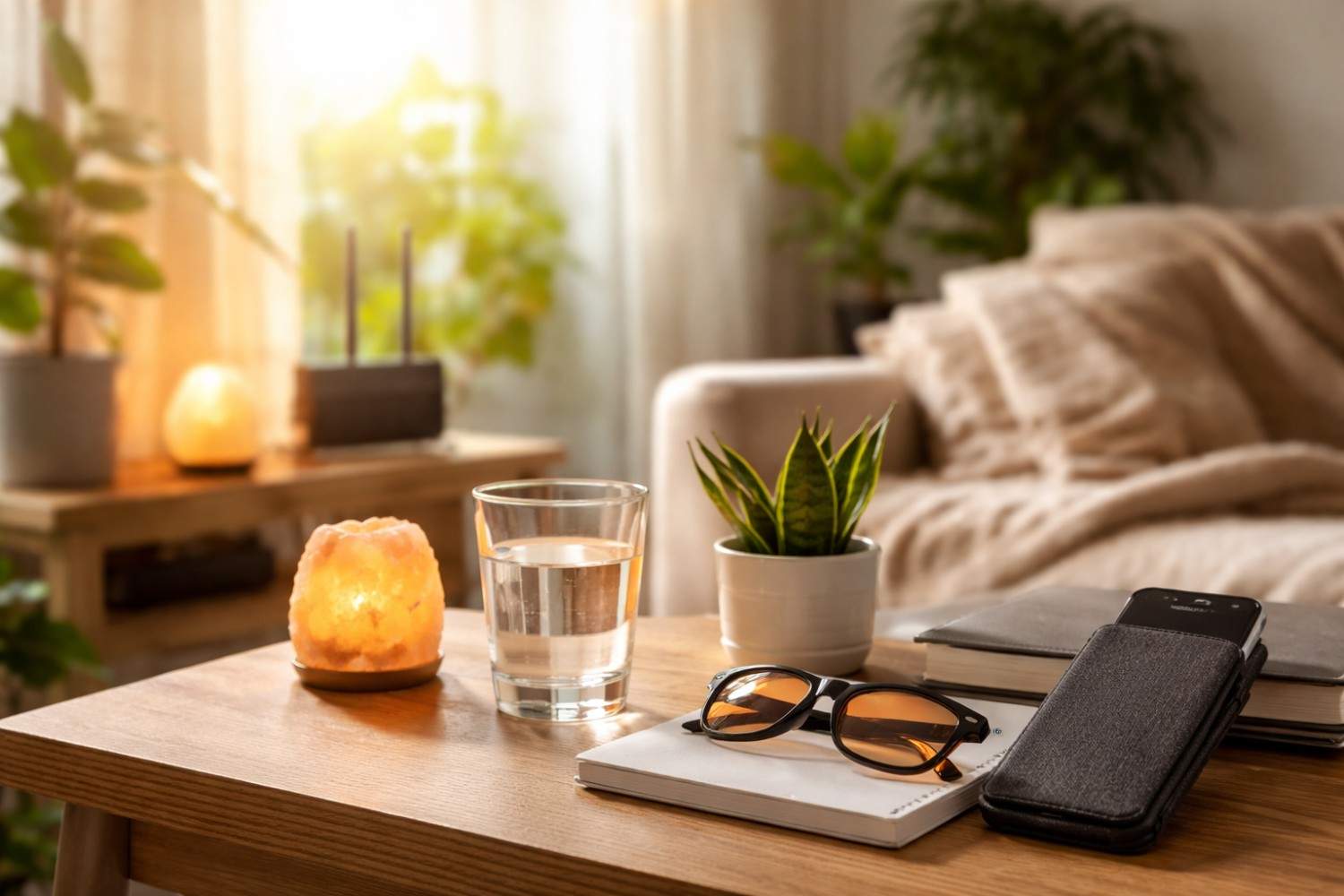
- Replace bright white LEDs with warm bulbs (2700K)
Blue light reduces melatonin, making the nervous system more reactive to electrical environments.
Use Distance and Duration, Not Just “Less Screen Time”
You don’t need to eliminate devices. You simply need to use them differently. What matters is how close and how long you stay near EMF sources.
Easy Distance-Based Improvements
These distance tips are some of the most effective daily lifestyle changes to reduce EMF sensitivity symptoms, because EMF intensity drops dramatically when you increase distance:
- Hold your phone at arm’s length – Never press the phone against your ear or face. Use speakerphone or a DefenderShield EMF-Free Air Tube Headset.
- Avoid placing your laptop directly on your lap – Laptops produce multiple forms of EMF.
Use:- A laptop stand
- A desk
- Or a DefenderShield Laptop EMF Shield
- Use an external keyboard when working at a desk – This keeps your torso and hands further away from the laptop’s EMF-producing components.
- Keep routers 10 feet away from where you sit – Moving your router even 3-5 feet further away significantly reduces exposure.
- Turn off Bluetooth when not in use – Bluetooth emits pulsed, short-range high-frequency signals that can increase symptoms in sensitive individuals.
Affiliate Advertisement
Reduce Nervous-System Overload (EMF Sensitivity Multiplier)
Many EMF-sensitive individuals don’t realize their symptoms skyrocket when the nervous system is already overwhelmed by stress, caffeine, poor sleep, or anxiety.
Before presenting a list of action steps, it’s important to explain why this matters:
A calmer nervous system perceives EMF exposure as less threatening, which reduces symptoms even if exposure levels remain the same. This is why many people notice improved tolerance after reducing stress.
Simple Nervous-System Support Habits
- Take a 3-minute breathing break twice per day – Inhale 4 seconds → hold 2 seconds → exhale 6–8 seconds. Longer exhales activate the relaxation response.
- Walk for 10 minutes daily – Outdoor movement regulates the vagus nerve and reduces sensitivity.
- Limit caffeine to mornings only – Stimulants increase EMF reactivity for some individuals.
- Perform 5 minutes of stretching at night – This signals your brain that it’s safe, reducing hyper-vigilance responses around electronics.
- Use EMF-Harmony’s “EMF Protection Pendant” or “Mobility+ Band” – These devices are designed to support the body’s energetic balance, which some EMF-sensitive individuals find calming during high-stress days.
Improve Home Exposure Zones (Effortless, High-Impact Fixes)
One of the most overlooked ways to lower symptoms is reorganizing where you sit, sleep, cook, or work relative to hidden EMF sources.
You don’t need to eliminate technology – you simply need to stop spending long periods in high-exposure pockets of your home.
Hidden Hotspots to Adjust
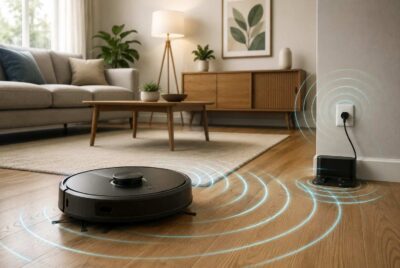
- Avoid sitting right next to your WiFi router – Move your desk or relocate the router.
- Do not place beds or couches against the smart meter wall – Even 3–4 feet of distance helps.
- Unplug unused devices and chargers – Chargers emit electric fields even when not powering anything.
- Avoid leaning against smart appliances – Refrigerators, dishwashers, and washer/dryer units have motor-generated EMF spikes.
- Create “low-tech recovery spaces” – A corner of your living room or bedroom where no electronics are operating nearby.
Affiliate Advertisement
Build a Daily Tech Hygiene Routine
Tech hygiene is a term used to describe a structured routine of reducing unnecessary EMF exposure without eliminating technology. This is one of the easiest daily lifestyle changes to reduce EMF sensitivity symptoms because it becomes habitual.
Daily Tech Hygiene Habits
- Put your phone on airplane mode during meals – Helps both EMF load and mental overstimulation.
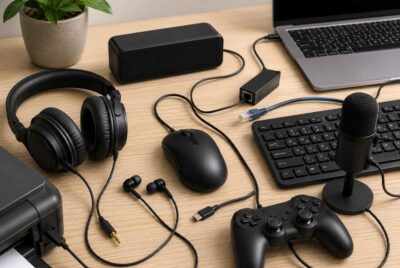
- Use wired accessories when possible – Wired mouse, wired keyboard, wired earbuds.
- Clean up your charging area – Keep chargers in one designated corner of the house—not in common living areas.
- Turn off hotspots you don’t use – (Bluetooth, smart TV WiFi, mobile hotspot).
Weekly Tech Hygiene Habits
- Audit your screen time – See where unnecessary hours come from.
- Organize office setup – Add distance. Move routers, towers, and power strips.
Monthly Tech Hygiene Habits
- Reevaluate home layout – Ensure no new devices were placed near beds or relaxation areas.
Reduce Blue Light (The Silent EMF Sensitivity Trigger)
Blue light directly affects melatonin, sleep quality, and the nervous system’s ability to recover from EMF-related stress. Many people think they have EMF sensitivity when they truly have blue light sensitivity.
Ways to Reduce Blue Light Exposure
- Use “Warm Mode” or night-shift on all devices – Switch screens to amber tones after 6 PM.
- Use soft, warm bulbs at night – 2700K bulbs mimic sunset lighting.
- Avoid screens 60 minutes before bed – Read, stretch, or journal instead.
- Try DefenderShield Blue Light Blocking Glasses – Excellent for evening device use or nighttime work.
Add Outdoor Time and Grounding
Grounding helps reset the body’s electrical state, reduce inflammation, and calm the nervous system – all of which improve EMF symptom tolerance.
Simple Grounding Options
- Walk barefoot on grass for 5 minutes – Quick and highly effective.
- Sit outdoors for 10–15 minutes – Sunlight restores circadian rhythms and reduces stress.
- Touch a tree or garden with bare hands – Any natural contact reduces static electrical buildup.
Improve Daily Diet and Hydration (No Supplements Required)
Inflammation increases EMF symptom severity. Diet plays a major role in how reactive the nervous system feels. These upgrades are supplement-free but very effective.
Anti-Inflammatory, Hydration, and Energy Habits
- Drink half your body weight in ounces of water – Hydration improves nerve conductivity and reduces fatigue.
- Limit processed foods – Ultra-processed foods increase inflammation.
- Eat whole-food meals – Fruits, vegetables, lean proteins, oats, quinoa, brown rice.
- Add electrolytes on screen-heavy days – Helps prevent fatigue, headaches, and dizziness.
The Role of Supplements (Helpful, But Never the Foundation)
Supplements can be the final 10% of relief – not the first 90%.
Helpful supplements include:
- Magnesium glycinate
- Vitamin C
- Omega-3 fatty acids
- NAC
- CoQ10
- B-complex vitamins
But these should be used after implementing daily lifestyle habits. Supplements can reduce inflammation and support nerves, but they do not replace proper sleep, device-distance habits, or blue light reduction.
Putting It All Together: A Simple Daily Routine
Morning:
- Open blinds, get natural sunlight
- Drink water
- Use your phone on speaker mode only
- Avoid caffeine after noon
Daytime:
- Keep devices at arm’s length
- Use an external keyboard
- Take a 10-minute outdoor break
- Turn off Bluetooth when not needed
Evening:
- Warm light only
- No screens 1 hour before bed
- Turn off WiFi
- Phone on airplane mode
Night:
- Phone far from bed
- EMF-shielding blanket if needed
- No electronics charging nearby
These routines combine multiple daily lifestyle changes to reduce EMF sensitivity symptoms into a simple, consistent rhythm that promotes healing and resilience.
Conclusion
You don’t need to live in fear of technology to feel better. By focusing on daily lifestyle changes to reduce EMF sensitivity symptoms, you can dramatically lower discomfort, support your nervous system, improve sleep, and create a healthier relationship with your devices. Supplements can help, but lifestyle habits will always be the most reliable, accessible, and long-lasting foundation for managing EMF sensitivity.
Before You Go…
Get Weekly EMF Protection Tips
Enjoy this article? Join the EMFLuLu newsletter for simple weekly tips to reduce everyday EMF exposure from phones, WiFi routers, laptops, and smart home devices.
Try Our Free EMF Calculators
Curious how much EMF exposure you may experience each day?
These simple tools can help you estimate your exposure and identify possible problem areas in your home.
Try these free calculators:
Like this article? Pin it on Pinterest!


More to Explore