As more homeowners turn to renewable energy, questions about EMF from solar panels have become increasingly common. Solar power offers lower electricity bills, reduced dependence on fossil fuels, and a smaller environmental footprint, but many people wonder whether installing a solar energy system also increases exposure to electromagnetic fields (EMFs). A quick internet search often produces conflicting opinions, making it difficult to separate scientific information from speculation.
The good news is that understanding EMF from solar panels is much easier once you know how a solar power system actually works. Solar panels, electrical wiring, and inverters all play different roles, and each contributes differently to electromagnetic fields. While every electrical device generates some level of EMF, not every source produces the same amount or presents the same level of exposure.
In this guide, we’ll explore how solar panel systems generate EMFs, where those fields originate, what scientific research currently tells us, and practical ways to minimize unnecessary exposure while continuing to enjoy the benefits of clean energy.
What Is EMF?
Before discussing solar energy specifically, it helps to understand what electromagnetic fields are.
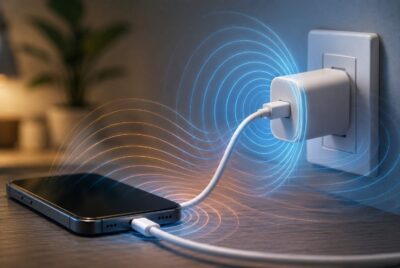
An electromagnetic field is created whenever electricity is generated, transmitted, or used. Every electrical appliance in your home produces some amount of EMF, including televisions, refrigerators, microwaves, hair dryers, laptops, and even the wiring hidden inside your walls.
Scientists generally classify EMFs into two broad categories:
- Electric fields, which are produced whenever voltage is present.
- Magnetic fields, which are produced when electrical current flows.
The electromagnetic fields generated by residential electrical systems and solar panels are considered non-ionizing radiation. Unlike ionizing radiation – such as X-rays or gamma rays – non-ionizing radiation does not carry enough energy to remove electrons from atoms or damage DNA directly.
Understanding this distinction is important because discussions about EMFs often become confusing when different types of radiation are grouped together. Solar power systems generate the same general category of EMF as countless other electrical devices found in everyday homes.
How a Solar Panel System Works
To understand where EMFs originate, it helps to know the major components of a residential solar system.
Solar panels contain photovoltaic (PV) cells that convert sunlight into direct current (DC) electricity. This electricity travels through wiring to an inverter, which converts the DC electricity into alternating current (AC) electricity used throughout your home.
A typical residential solar installation includes:
- Solar panels mounted on the roof or ground.
- DC wiring connecting the panels.
- A solar inverter.
- AC wiring connected to the home’s electrical panel.
- Utility meter and electrical service.
Each component can generate electromagnetic fields, but not all produce the same levels.
Do Solar Panels Actually Produce EMF?
One of the biggest surprises for many homeowners is that the solar panels themselves generally produce relatively low levels of electromagnetic fields.
Photovoltaic panels have no moving parts. They simply convert sunlight into electrical energy. Since they generate direct current electricity, the magnetic fields surrounding the panels themselves are typically quite small.
This means the roof-mounted panels are usually not the primary source of EMF within a solar energy system.
Instead, attention typically shifts to another important component—the solar inverter.
Why the Solar Inverter Is Usually the Largest EMF Source
Although people often focus on the panels, the inverter deserves more attention because it performs the most electrically complex task within the system.
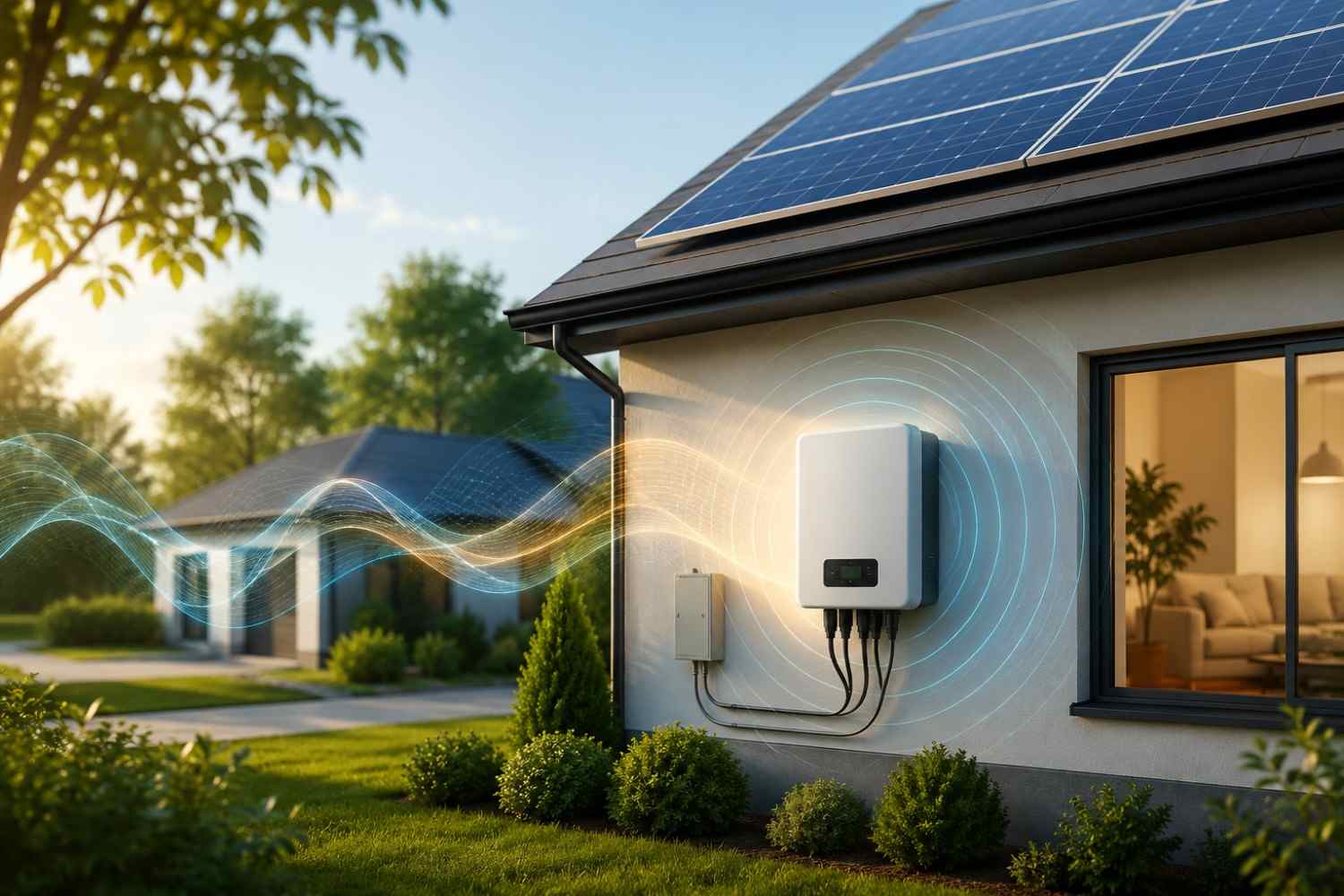
The inverter converts direct current into alternating current by rapidly switching electrical components on and off many thousands of times per second. This conversion process naturally creates stronger electromagnetic fields than the panels themselves.
Fortunately, there are several factors that reduce potential exposure.
First, most residential inverters are installed in garages, utility rooms, basements, or mounted on exterior walls rather than inside occupied living spaces.
Second, electromagnetic fields decrease rapidly as distance increases. Standing directly beside an inverter will produce higher measurements than standing several feet away.
Finally, homeowners typically spend very little time standing directly next to the inverter, making everyday exposure relatively limited.
Current measurements generally show that residential solar inverters produce localized EMFs that decline significantly with distance and are comparable to many common household electrical devices.
Comparing Solar EMF to Everyday Household Appliances
Numbers alone don’t always provide useful context. Comparing solar equipment with familiar household devices helps put things into perspective.
| Device | Relative EMF Potential |
| Hair dryer | High while operating nearby |
| Vacuum cleaner | High while in use |
| Microwave oven | Moderate to High near the appliance |
| Solar inverter | Moderate when standing close |
| Refrigerator | Low to Moderate |
| Television | Low |
| Roof-mounted solar panels | Generally Low |
One important lesson emerges from these comparisons: distance matters.
Many common household appliances produce stronger magnetic fields than roof-mounted solar panels, particularly while they are actively operating. Because most people spend only brief periods near these appliances, overall daily exposure remains relatively limited.
Does EMF From Solar Panels Reach Inside Your Home?
This question depends on several factors, including the design of the solar installation.
If the panels are mounted on the roof, the distance between the panels and occupied rooms already helps reduce exposure. Bedrooms on lower floors are naturally farther from the roof-mounted equipment.
The inverter location often has a greater influence. For example:
- A garage-mounted inverter usually places the strongest EMF source outside primary living areas.
- An exterior wall installation further increases separation.
- A basement installation may be below occupied rooms but still several feet away.
Electrical fields and magnetic fields decrease quickly with distance. Simply moving several feet away from a source can substantially lower measured field strength.
What Scientific Research Says
Discussions about EMFs can quickly become emotional, so it’s helpful to look at the available evidence.
Researchers have measured electromagnetic fields around residential photovoltaic systems for many years. Overall, studies generally find that:
- Solar panels generate relatively low electromagnetic fields.
- Solar inverters produce higher localized fields than the panels.
- Field strength decreases rapidly as distance increases.
- Typical residential exposure remains comparable to or below many everyday household appliances.
Organizations responsible for developing EMF exposure guidelines continue to recommend maintaining reasonable engineering practices while noting that residential solar systems generally operate well within accepted public exposure limits.
Scientific research continues in many areas related to electromagnetic fields, and recommendations may evolve as additional evidence becomes available. For now, current evidence has not shown that properly installed residential solar systems create unusually high EMF exposures compared with many other common electrical devices.
Affiliate Advertisement

Factors That Influence EMF Exposure
Not every solar installation is identical. Several variables influence the amount of electromagnetic field that someone may encounter.
These include:
- The location of the inverter.
- The size of the solar system.
- Electrical current flowing through the system.
- Distance from the equipment.
- Time spent near the source.
- Proper installation and wiring practices.
Rather than focusing solely on the presence of EMFs, these practical factors provide a much better understanding of actual day-to-day exposure.
Practical Ways to Reduce EMF Exposure
Many homeowners prefer taking simple, common-sense steps to reduce unnecessary EMF exposure without giving up the benefits of solar energy.
Fortunately, most recommendations involve thoughtful planning rather than expensive equipment.
If you’re designing or installing a solar system, consider placing the inverter in a garage, utility room, or on an exterior wall whenever practical. This naturally increases the distance between the primary EMF source and the areas where your family spends the most time.
Avoid placing beds, home offices, or favorite seating areas directly on the opposite side of an interior wall containing the inverter if another location is available.
Choose experienced, licensed installers who follow electrical codes and manufacturer recommendations. Proper wiring not only improves safety and system performance but also helps minimize unnecessary stray electromagnetic fields.
Routine maintenance is also worthwhile. Damaged wiring or improperly installed components should always be repaired promptly for both safety and system efficiency.
Finally, remember that reducing exposure often involves looking at your home as a whole. Spending less time immediately next to high-powered appliances, organizing electronics thoughtfully, and practicing sensible device use can often have a greater impact than worrying about roof-mounted solar panels.
Common Myths About Solar Panel EMF
The popularity of solar energy has also led to several persistent misconceptions. Looking at these myths individually helps separate facts from fiction.
Myth 1: Solar panels emit dangerous radiation.
Solar panels produce non-ionizing electromagnetic fields similar to many electrical devices found throughout modern homes. They do not emit ionizing radiation like X-rays.
Myth 2: Solar panels continue producing EMF all night.
Photovoltaic panels require sunlight to generate electricity. Without sunlight, they are not producing electrical power in the same way they do during daylight hours.
Myth 3: Living near a solar farm automatically creates dangerous EMF exposure.
Measurements around solar installations generally show that electromagnetic fields decrease rapidly with distance. Simply being near a solar installation does not necessarily result in high exposure levels.
Myth 4: The panels are the biggest EMF source.
In most residential systems, the inverter produces stronger localized electromagnetic fields than the panels themselves.
Should You Be Concerned?
Like many health-related topics, the answer depends on perspective.
If your goal is to reduce overall EMF exposure, there is nothing wrong with making thoughtful decisions about where electrical equipment is installed and how your home is organized.
At the same time, it’s helpful to recognize that solar energy systems exist within a house already filled with electrical devices. Hair dryers, vacuum cleaners, induction cooktops, microwaves, refrigerators, electrical panels, and household wiring all contribute to everyday electromagnetic fields.
For most homeowners, properly installed solar systems represent only one of many electrical technologies operating throughout the home.
Understanding the available evidence allows you to make informed decisions without unnecessary anxiety while continuing to enjoy the environmental and financial advantages that solar energy can provide.
Final Thoughts
Solar energy continues to grow in popularity for good reason. It can lower electricity costs, reduce carbon emissions, and increase energy independence. While questions about EMF from solar panels are understandable, current evidence suggests that properly installed residential systems generally produce electromagnetic fields comparable to many everyday household electrical devices, with the inverter typically generating the strongest localized fields. By understanding how solar systems work, maintaining appropriate distance from electrical equipment, and following good installation practices, homeowners can make informed decisions based on evidence rather than misconceptions.
Before You Go…
Get Weekly EMF Protection Tips
Enjoy this article? Join the EMFLuLu newsletter for simple weekly tips to reduce everyday EMF exposure from phones, WiFi routers, laptops, and smart home devices.
Try Our Free EMF Calculators
Curious how much EMF exposure you may experience each day?
These simple tools can help you estimate your exposure and identify possible problem areas in your home.
Try these free calculators:
Like this article? Pin it on Pinterest!

More to Explore