Walk into almost any home and you’ll find chargers plugged into outlets throughout the house – by the bed, behind the couch, in the kitchen, and near workspaces. Many of them sit idle for most of the day, quietly connected to power but not actively charging anything. As more people become aware of electromagnetic field (EMF) exposure, a common question starts to come up: do unused chargers emit EMF radiation when plugged in?
It’s a fair question, especially for those trying to create a lower-EMF environment at home. Chargers are small, easy to overlook, and often left plugged in around the clock. In this article, we’ll take a closer look at what’s really happening when a charger is plugged in but not in use, how much EMF it produces, and whether it’s something you actually need to worry about. The goal is not to create unnecessary concern, but to provide clear, practical information so you can make informed decisions.
What Happens When a Charger Is Plugged In but Not in Use?
To understand EMF exposure from chargers, it helps to first understand what a charger is doing when it’s plugged into the wall – even if it’s not connected to your phone or device.
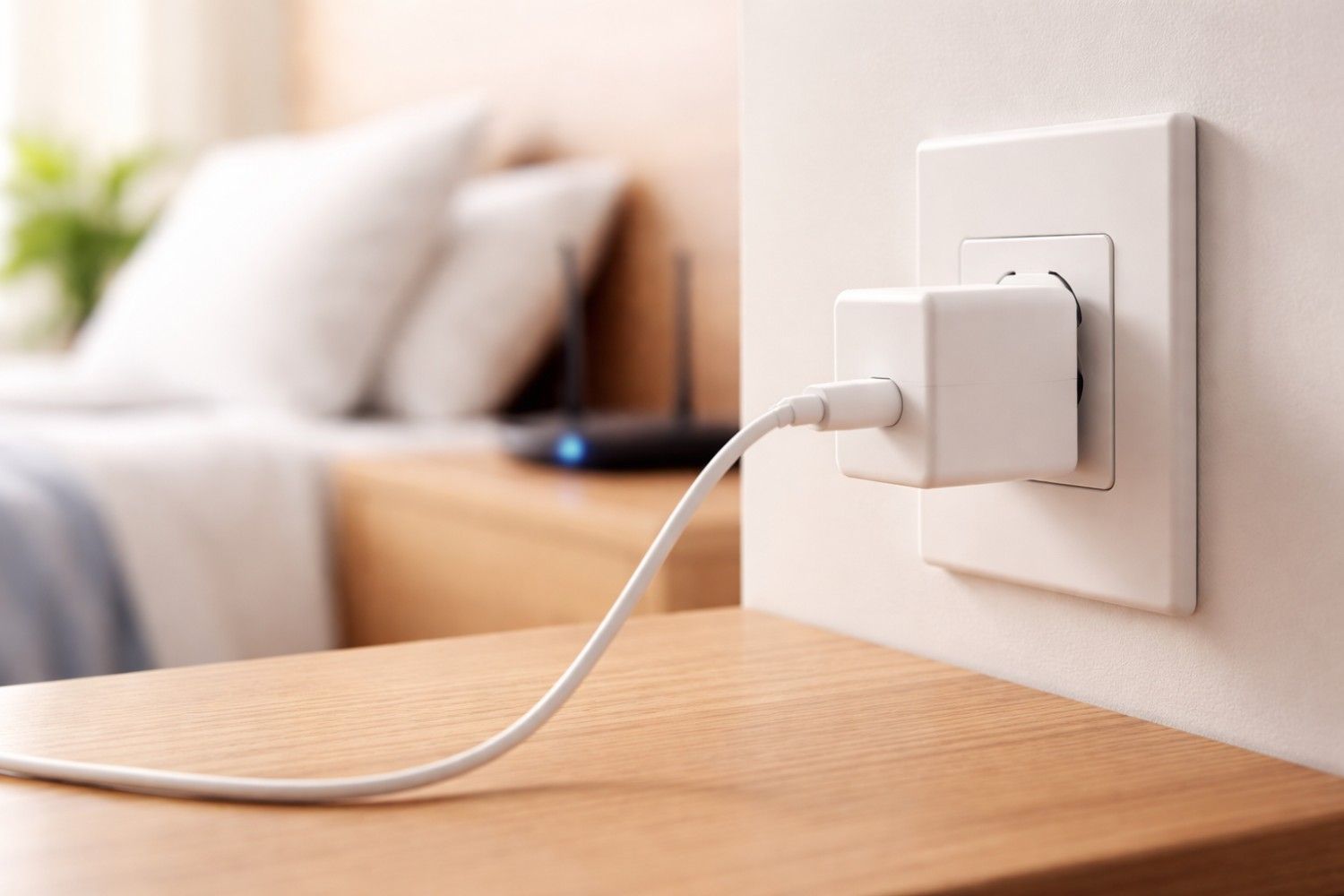
A charger is essentially a small power supply. When it’s plugged into an outlet, it is connected to your home’s electrical system and is receiving alternating current (AC) electricity. Inside the charger is a transformer that converts this high-voltage AC power into lower-voltage direct current (DC) power suitable for your device.
Even when nothing is plugged into the charger, that internal circuitry is still energized. This is why chargers can sometimes feel slightly warm, even when they’re not actively charging anything. This phenomenon is often referred to as “phantom load” or “vampire energy,” meaning the device is still drawing a small amount of electricity simply by being plugged in.
Because electricity is flowing through the charger’s internal components, it naturally generates a small electromagnetic field. This leads directly to the question many people are asking.
Do Unused Chargers Emit EMF Radiation When Plugged In?
The short answer is yes – unused chargers do emit EMF radiation when plugged in, but the level is extremely low.
The type of EMF produced by a charger falls into the category of low-frequency electromagnetic fields, similar to what you would find around most household wiring and appliances. These fields are created whenever electric current flows through a conductor.
In the case of an unused charger, the current is minimal. The device is not actively transferring energy to charge a battery, so the electromagnetic field it produces is significantly weaker than what you would see when a phone is charging or when a larger appliance is running.
It’s also important to understand that EMF strength drops off very quickly with distance. Even a few inches of separation can reduce exposure dramatically. So while the answer to “do unused chargers emit EMF radiation when plugged in” is technically yes, the practical exposure level is very small in most everyday situations.
How Charger EMF Compares to Other Household Devices
Understanding EMF levels in isolation doesn’t always give the full picture. It helps to compare chargers to other common devices in your home to see where they fall on the spectrum.
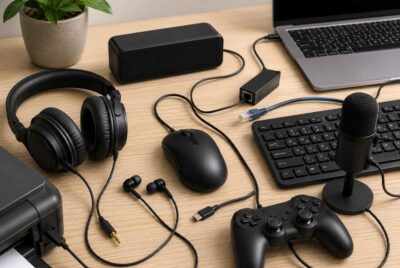
When you look at everyday electronics, chargers are actually among the lowest EMF contributors. A smartphone in active use, especially during a call or while streaming data, produces significantly higher levels of electromagnetic activity. WiFi routers emit continuous signals throughout the day, often at a moderate level. Laptops and tablets also produce measurable EMF, particularly when placed directly on your lap or used for extended periods.
An unused charger, by comparison, is producing a very small and localized electromagnetic field. It’s typically only measurable within a short distance from the outlet. Once you move even a foot or two away, the exposure becomes negligible.
This comparison helps put things into perspective. While chargers do emit EMF, they are not among the primary sources of exposure in most homes.
When Chargers Might Matter More Than You Think
Although the EMF from unused chargers is low, there are certain situations where they might be more relevant, particularly for individuals who are trying to reduce cumulative exposure as much as possible.
For example, a charger plugged in right next to your bed – especially on a nightstand within inches of your head – may be worth reconsidering. Even though the EMF level is low, the proximity and duration of exposure (several hours each night) can make people more mindful of its presence.
Another factor to consider is quantity. A single charger is unlikely to have any meaningful impact, but multiple chargers clustered together in one area can create a slightly higher combined field. This is still generally low, but it’s something to be aware of.
Build quality also plays a role. Lower-quality or off-brand chargers may not be as well shielded, which could result in slightly higher EMF emissions or electrical noise. While the difference is not usually dramatic, choosing well-made products can help reduce unnecessary exposure.
EMF Exposure in the Bedroom: A Closer Look
The bedroom is often the place where people focus most on reducing EMF exposure, and for good reason. Sleep is a time when the body is recovering and recharging, and minimizing unnecessary environmental factors can be beneficial for overall comfort and peace of mind.
When evaluating EMF sources in the bedroom, it’s helpful to look at the bigger picture. Chargers are just one piece of the puzzle. Phones, WiFi signals, smart devices, and nearby wiring can all contribute to the overall environment.
In reality, an unused charger is a relatively minor source. However, for those who prefer a more minimal setup, removing or relocating chargers away from the bed can be a simple step that contributes to a cleaner sleeping space.
If someone is particularly sensitive to EMF or simply prefers to reduce all possible sources, even small adjustments like this can provide reassurance and help create a more comfortable environment.
Simple Ways to Reduce EMF from Chargers
For those who want to take a practical approach to minimizing EMF exposure, there are several easy steps that can be implemented without significantly changing daily habits.
The goal here is not to eliminate every possible source, but to reduce unnecessary exposure in a simple and sustainable way. Many of these changes also have the added benefit of improving energy efficiency and reducing clutter.
One of the easiest steps is to unplug chargers when they are not in use. This completely eliminates both phantom energy use and any associated EMF. While it may not always be convenient to unplug every charger, doing so in key areas – like the bedroom – can make a noticeable difference.
Another effective approach is to increase distance. Keeping chargers a few feet away from where you sleep or spend long periods of time significantly reduces exposure. This is one of the simplest and most effective strategies.
Using a power strip is another practical option. By connecting multiple devices to a single strip, you can easily turn them all off at once, eliminating standby power and reducing EMF from multiple sources simultaneously.
Finally, choosing higher-quality chargers can provide additional peace of mind. Well-designed products tend to have better internal shielding and more consistent performance.
For those who want to go a step further and actually measure what’s happening in their environment, an EMF meter can be a useful tool. Safe Living Technologies offer many options to consider. Here is a link to view various EMF Meters offered.
These types of devices allow you to test different areas of your home and see how EMF levels vary based on distance and device usage. It can be an eye-opening way to understand where your biggest sources of exposure are.
Affiliate Advertisement

Optional Tools for Reducing EMF Exposure
While most people can manage EMF exposure with simple habit changes, some may be interested in additional tools designed to reduce or manage exposure.
These products are not necessary for everyone, but they can be helpful for those who want a more proactive approach.
For example, a protective phone pouch can reduce exposure when carrying your device close to your body. One option is the DefenderShield EMF Radiation Protection Cell Phone Pouch.
Another category includes plug-in filters designed to reduce electrical noise, sometimes referred to as “dirty electricity.” These can be used in areas with many electronic devices. An example is the Stetzerizer Microsurge Meter and Filter (link to amazon.com).
Again, these are optional tools. The most important steps are still the simplest ones: increasing distance, reducing unnecessary devices, and being mindful of placement.
Affiliate Advertisement

The Bigger Picture: Are Chargers Worth Worrying About?
When stepping back and looking at the overall EMF environment in a typical home, chargers are not among the most significant sources of exposure. They are small, low-power devices that produce minimal electromagnetic fields, especially when not in active use.
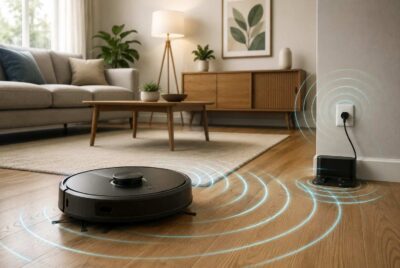
The more meaningful contributors tend to be devices that actively transmit or draw larger amounts of power, such as smartphones, WiFi routers, laptops, and smart home systems.
This doesn’t mean chargers should be ignored entirely, but it does suggest that they should not be the primary focus. If someone is just beginning to think about EMF exposure, it makes more sense to address the higher-impact sources first.
That said, reducing small sources like chargers can still be part of a broader, thoughtful approach. It’s about creating an environment that feels comfortable and intentional, rather than trying to eliminate every possible signal.
Conclusion
So, do unused chargers emit EMF radiation when plugged in? The answer is yes – but the amount is very low and generally not a major concern for most people.
Chargers do produce a small electromagnetic field because they remain connected to electricity even when not in use. However, the strength of that field is minimal, especially when compared to other common household devices. In most cases, simply increasing distance or unplugging chargers when convenient is more than enough to manage any potential exposure.
For those who want to take a more proactive approach, small changes like keeping chargers away from the bed or using a power strip can add up over time. The key is to focus on practical, sustainable habits rather than unnecessary worry.
By understanding how these everyday devices work, you can make informed decisions and create a home environment that aligns with your comfort level—without overcomplicating things.
Before You Go…
Get Weekly EMF Protection Tips
Enjoy this article? Join the EMFLuLu newsletter for simple weekly tips to reduce everyday EMF exposure from phones, WiFi routers, laptops, and smart home devices.
Try Our Free EMF Calculators
Curious how much EMF exposure you may experience each day?
These simple tools can help you estimate your exposure and identify possible problem areas in your home.
Try these free calculators:
Like this article? Pin it on Pinterest!

More to Explore