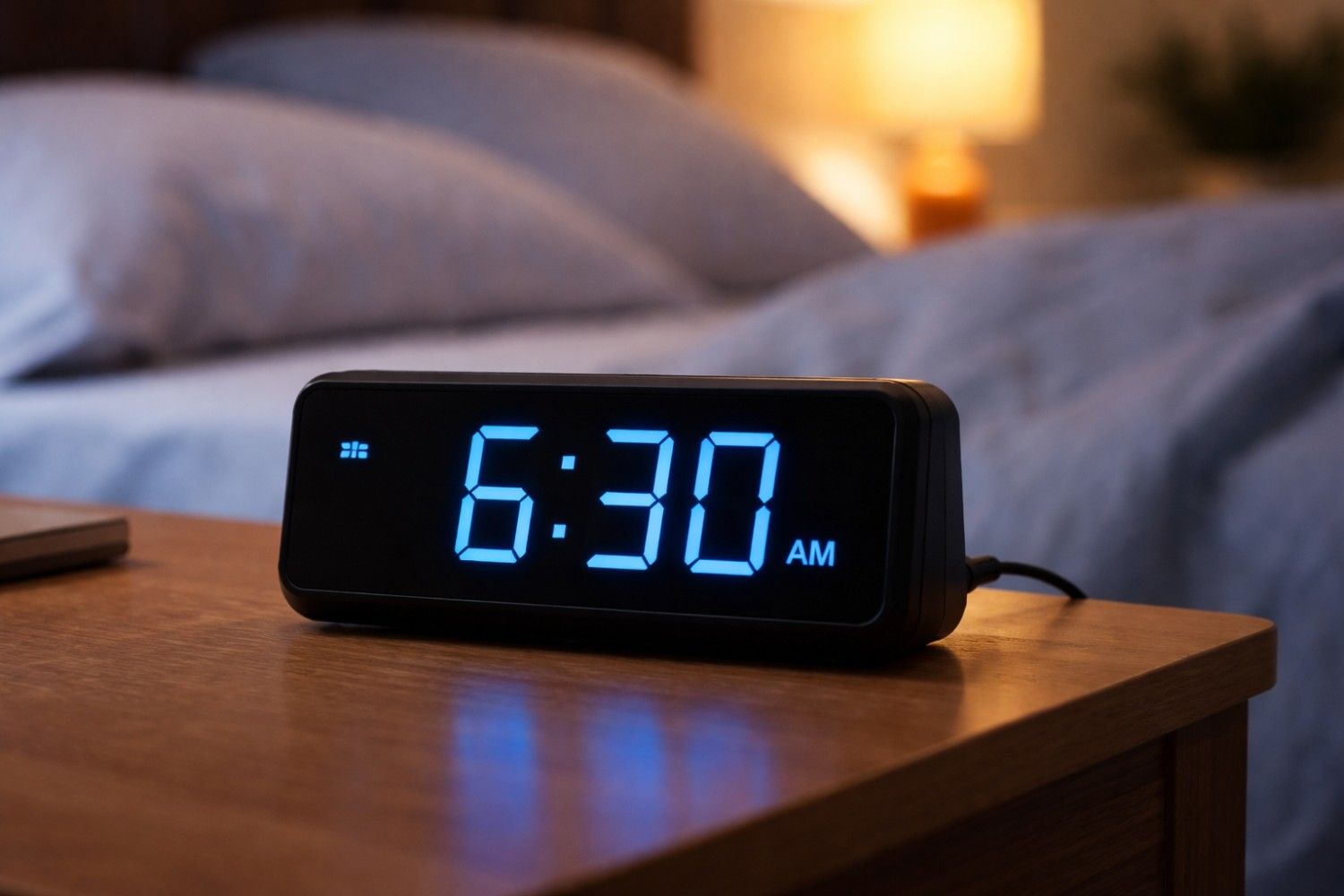
Most of us have an alarm clock sitting just a few feet – or even inches – from our head every night. It’s one of those everyday items we rarely think twice about. But as awareness around electromagnetic fields (EMF) grows, more people are starting to ask a simple question: do alarm clocks emit EMF radiation, and is that something we should be concerned about while we sleep?
The short answer is yes – alarm clocks do emit EMF radiation. However, the level and type of EMF can vary significantly depending on the kind of clock you’re using. In this article, we’ll break down what kind of EMF alarm clocks produce, how much exposure you’re actually getting, and whether it’s worth making changes to your sleep setup. The goal isn’t to create fear, but to give you a clear, practical understanding so you can make informed decisions.
What Is EMF Radiation? A Quick Refresher
Before getting into alarm clocks specifically, it helps to understand what EMF radiation actually is. EMF stands for electromagnetic fields, which are invisible areas of energy produced by electricity and wireless communication.
There are two main types of EMF that matter in everyday life. The first is low-frequency EMF, often called ELF (extremely low frequency). This type is produced by common household electrical devices – things like lamps, power cords, and yes, plug-in alarm clocks. The second type is radiofrequency (RF) radiation, which comes from wireless technologies such as WiFi, Bluetooth, and cell signals.
Both types are all around us, and in most cases, they are considered low-level exposures. The key difference lies in how strong the signal is and how close it is to your body for extended periods of time.
Do Alarm Clocks Emit EMF Radiation?
Let’s address the main question directly: do alarm clocks emit EMF radiation? Yes, they do – but the amount and type depend heavily on the design of the clock.
A standard plug-in digital alarm clock generates a small electromagnetic field because it draws continuous electrical current from the wall. This produces low-frequency EMF, typically at levels that are considered minimal, especially if the clock is placed a few feet away from your bed.
Battery-powered alarm clocks, on the other hand, produce significantly less EMF. Since they are not constantly connected to a power source, the electromagnetic field they generate is much weaker. For people who are looking to reduce exposure, this is often the simplest switch.
Smart alarm clocks introduce a different factor. These devices often include WiFi connectivity, Bluetooth, voice assistants, and even app syncing. Because of these features, they emit not only low-frequency EMF but also radiofrequency radiation. This combination can result in higher overall exposure, particularly if the device is sitting right next to your pillow.
So while the answer to “do alarm clocks emit EMF radiation” is clearly yes, the more important takeaway is that not all alarm clocks are equal.
How Much EMF Does an Alarm Clock Give Off?
Understanding how much EMF an alarm clock emits requires looking at both intensity and distance. Most plug-in alarm clocks produce measurable EMF levels within a few inches of the device, but those levels drop off very quickly as you move away.
This is due to a basic principle of physics: EMF strength decreases rapidly with distance. In practical terms, this means that moving your alarm clock just two or three feet away from your head can significantly reduce your exposure.
In real-world measurements, a standard digital alarm clock might show moderate readings right at the surface, but those readings often fall to near-background levels within a short distance. Battery-operated clocks, by comparison, tend to register very low readings even up close.
Smart alarm clocks are a bit different. Because they may continuously transmit signals (especially if connected to WiFi), they can create a more constant source of RF radiation. Even so, distance still plays a major role in reducing exposure.
The takeaway here is simple: proximity matters far more than the device itself. A higher-emitting device placed several feet away may result in less exposure than a low-emitting device placed inches from your head.
Is It Safe to Sleep Next to an Alarm Clock?
This is where things become more personal. For most people, sleeping next to a standard alarm clock is unlikely to pose any meaningful risk. The EMF levels produced by basic clocks are generally low and fall within typical household exposure ranges.
However, there are a few situations where it may be worth paying closer attention. If your alarm clock is positioned right next to your head, especially within arm’s reach on a nightstand, your exposure will be higher than if it’s placed across the room. If you’re using a smart alarm clock with wireless features, you may also be adding RF radiation into the mix.
Some individuals report sensitivity to EMF, experiencing symptoms like difficulty sleeping, headaches, or restlessness. While scientific consensus on EMF sensitivity is still evolving, it’s reasonable for individuals who notice patterns in their sleep to experiment with reducing exposure.
Another factor to consider is the combination of EMF and other sleep disruptors. For example, many digital clocks emit light, and blue light exposure at night is known to affect melatonin production. When combined with EMF concerns, this can make the sleep environment less ideal.
The bottom line is that while most alarm clocks are safe to use, small adjustments can improve your sleep environment with very little effort.
Which Alarm Clocks Produce the Highest EMF?
Not all alarm clocks are created equally, and some models introduce more EMF exposure than others. Understanding which types produce higher levels can help you make a better choice for your bedroom setup.
Smart alarm clocks tend to be at the top of the list. Devices that include WiFi connectivity, voice assistants, or app integration are constantly communicating with networks, which means ongoing RF radiation. If the device also includes Bluetooth speakers or charging ports, it may add additional EMF sources into one unit.
Alarm clocks that double as charging stations are another category to watch. These devices often include USB ports or wireless charging pads, both of which generate electromagnetic fields when in use.
Radio alarm clocks, especially older models, can also emit EMF due to continuous signal reception. While these are not necessarily high emitters, they do contribute to overall exposure.
By contrast, simple battery-powered analog clocks typically produce the lowest EMF levels. They operate without continuous electrical current and do not rely on wireless signals, making them a straightforward low-exposure option.
Affiliate Advertisement

Simple Ways to Reduce EMF from Alarm Clocks
If you’re interested in minimizing exposure, the good news is that you don’t need to overhaul your entire bedroom. A few small adjustments can make a noticeable difference.
One of the easiest steps is to increase the distance between your alarm clock and your bed. Moving it just a few feet away can dramatically reduce exposure due to the way EMF dissipates over distance.
Switching to a battery-powered alarm clock is another effective option. These clocks eliminate the need for constant electrical current, which significantly lowers EMF output.
If you prefer using a smart alarm clock, consider disabling unnecessary wireless features. Turning off Bluetooth or WiFi when not needed can help reduce RF radiation.
For those who want to go a step further, some people choose to measure EMF levels in their home. Devices like the ones sold by Safe Living Technologies allow you to see exactly what your exposure looks like in different areas of your bedroom.
EMF-Conscious Alarm Clock Alternatives
For those who prefer a simple solution, choosing a low-EMF alarm clock from the start can remove most concerns altogether.
Basic analog alarm clocks powered by batteries are one of the easiest and most reliable options. They do exactly what you need – wake you up – without introducing additional electrical or wireless exposure.
You can find a wide range of simple options here:
Analog Battery-Powered Alarm Clocks (Amazon)
These clocks are inexpensive, easy to use, and eliminate many of the variables associated with modern smart devices.
Another approach is to rely on your phone but modify how you use it. Placing your phone in airplane mode overnight and positioning it a few feet away can significantly reduce EMF exposure while still allowing it to function as an alarm.
For individuals who are especially mindful of EMF, combining a low-EMF alarm clock with general bedroom adjustments – such as reducing electronics near the bed – can create a more comfortable sleep environment.
Affiliate Advertisement

Who Might Want to Be More Careful?
While most people don’t need to be overly concerned about alarm clock EMF, there are certain groups who may prefer to take extra precautions.
Individuals who identify as EMF-sensitive often report improved comfort when reducing exposure, even if the exact cause is not fully understood. Light sleepers may also benefit from minimizing any potential disruptions in their environment, including both EMF and light sources.
Children are sometimes included in discussions about EMF because of their longer lifetime exposure. While evidence is still being studied, some parents choose to take a more cautious approach in bedrooms.
Finally, anyone with multiple electronic devices near their bed – phones, tablets, smart speakers, and alarm clocks – may want to reduce overall exposure simply by creating a less cluttered sleep space.
Conclusion
So, do alarm clocks emit EMF radiation? Yes, they do – but in most cases, the levels are low and manageable. The type of alarm clock you use and how close it is to your body play a much bigger role than the device itself.
For most people, there’s no need for drastic changes. However, simple steps like moving your alarm clock a few feet away, switching to a battery-powered model, or limiting wireless features can significantly reduce exposure with minimal effort.
At the end of the day, this is about awareness and balance. You don’t need to eliminate every source of EMF in your home, but making small, thoughtful adjustments – especially in the place where you sleep – can help create a more comfortable and intentional environment.
Before You Go…
Get Weekly EMF Protection Tips
Enjoy this article? Join the EMFLuLu newsletter for simple weekly tips to reduce everyday EMF exposure from phones, WiFi routers, laptops, and smart home devices.
Try Our Free EMF Calculators
Curious how much EMF exposure you may experience each day?
These simple tools can help you estimate your exposure and identify possible problem areas in your home.
Try these free calculators:
Like this article? Pin it on Pinterest!

More to Explore