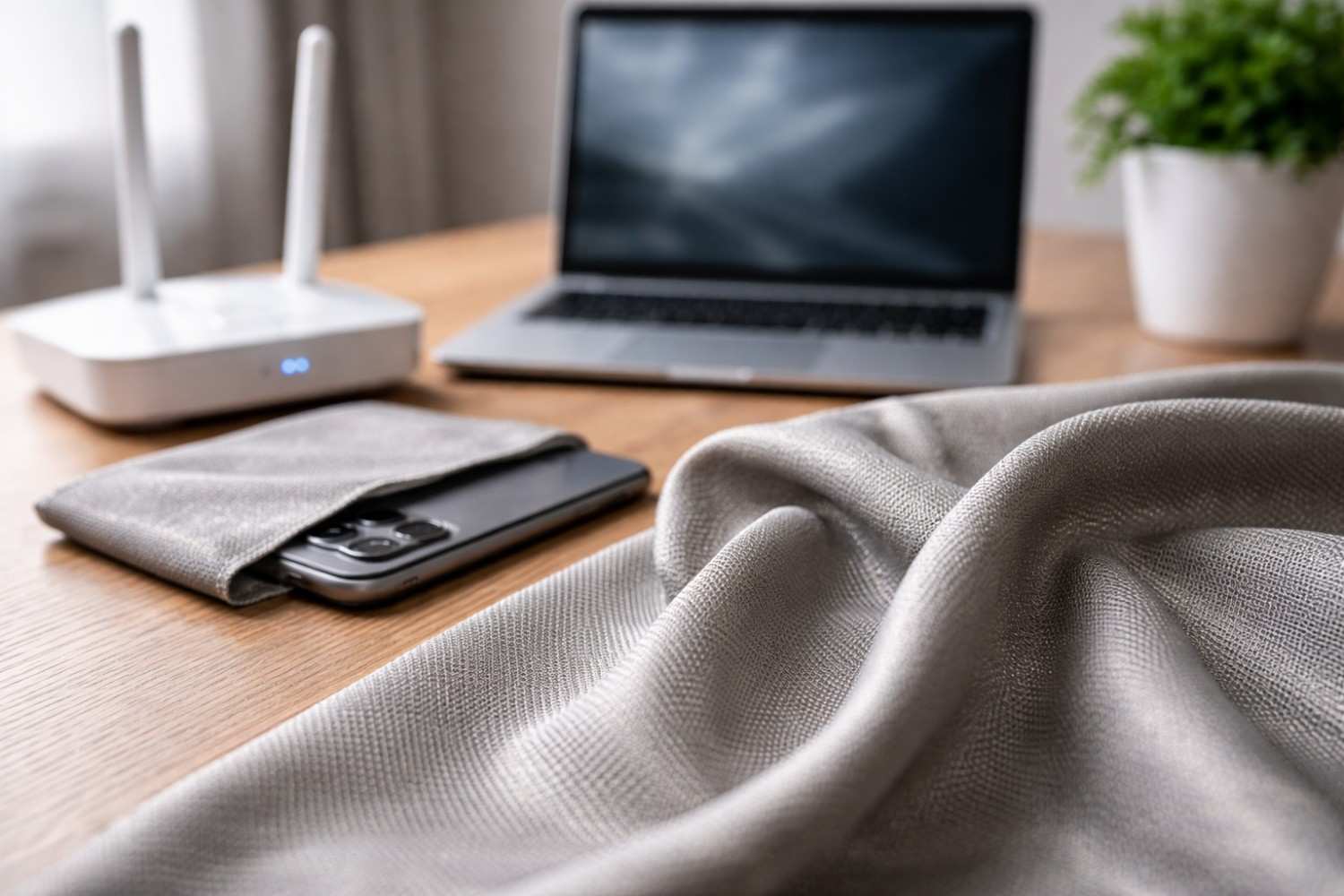
Wireless technology is everywhere today. Smartphones, WiFi routers, Bluetooth devices, smart home gadgets, and laptops all rely on radiofrequency (RF) signals to communicate. As people become more aware of electromagnetic fields (EMF), many begin looking for ways to reduce exposure in their homes and daily routines. One solution that frequently appears in discussions about EMF protection is shielding fabric – textiles designed to block or reduce wireless radiation.
That leads to a common and important question: does EMF blocking fabric actually work, or is it mostly marketing? These fabrics are used in products such as laptop pads, bed canopies, curtains, phone pouches, and clothing. Manufacturers often claim significant reductions in wireless radiation, but many people wonder whether those claims hold up outside of laboratory testing.
The reality is more nuanced than a simple yes or no. In many situations, shielding fabric can reduce radiofrequency radiation when used correctly. However, its effectiveness depends on factors such as material quality, how it is used, and the specific type of electromagnetic signal involved. Understanding how shielding fabrics function can help you decide whether they are worth using in your own environment.
This guide explains how EMF blocking fabrics work, what scientific testing shows, where they are most useful, and what limitations you should be aware of before relying on them.
What Is EMF Blocking Fabric?
EMF blocking fabric – often called shielding fabric – is a textile woven with conductive metal fibers designed to interact with electromagnetic waves. These fabrics are typically made using very thin strands of metals such as silver, copper, stainless steel, or nickel blended into traditional textiles like cotton or polyester.
The conductive fibers allow the material to reflect or absorb certain types of electromagnetic radiation, particularly radiofrequency signals used in wireless communication. These fabrics are often flexible and can be sewn into many different types of products, from curtains and clothing to laptop shields.
Several everyday products incorporate shielding fabric technology. Laptop pads designed to sit between a computer and your body often contain layers of conductive material. Phone pouches may use shielding fabric to block radiation from one side of the device. Some people even install EMF-reducing curtains around beds or near routers.
A commonly used example is the DefenderShield EMF Radiation Protection Laptop Pad. This type of product places shielding fabric between the body and the electronic device to reduce direct exposure from wireless signals or internal electronics.
While the idea may sound complex, the basic concept behind shielding fabrics is rooted in well-established principles of physics.
How EMF Shielding Fabric Works
To understand whether shielding fabric can reduce EMF exposure, it helps to first understand how electromagnetic waves interact with conductive materials. When radiofrequency energy encounters metal or other conductive surfaces, several things can happen.
In many cases, the energy is partially reflected away from the material. Conductive materials can act as a barrier that redirects the signal rather than allowing it to pass directly through. This reflection is one of the primary ways shielding fabrics reduce radiation levels on the protected side of the material.
Another mechanism involves absorption. Some portion of the electromagnetic energy may be absorbed by the conductive fibers and dissipated as heat. Although the amount of heat produced is extremely small, the process still reduces the amount of signal that continues through the fabric.
These principles are similar to the concept of a Faraday cage, a structure made of conductive material that blocks external electric fields. While shielding fabric is not a complete Faraday cage, it can partially replicate that effect by creating a barrier between a radiation source and the surrounding environment.
Shielding effectiveness is usually measured in decibels (dB). The higher the decibel rating, the greater the reduction in signal strength. For example, a fabric rated at 20 dB may reduce radiation by roughly 90 percent under controlled testing conditions. Materials rated around 40 dB can reduce signals by approximately 99 percent.
Because shielding fabrics vary widely in quality and design, these values can differ significantly from one product to another.
Scientific Testing of EMF Shielding Fabrics
When manufacturers claim that shielding fabric reduces radiation, those claims are typically based on laboratory measurements. Testing is usually conducted using specialized equipment such as spectrum analyzers and signal generators.
During these tests, researchers measure how much of a radiofrequency signal passes through a sample of shielding fabric. By comparing the signal strength before and after the barrier, they can calculate the material’s attenuation level, which indicates how much radiation was reduced.
Many high-quality shielding fabrics demonstrate significant attenuation in controlled environments. Laboratory results frequently show reductions between 30 and 60 decibels, depending on the material and frequency tested.
However, real-world conditions often differ from laboratory environments. Wireless signals rarely travel in perfectly straight lines. They bounce off walls, floors, ceilings, and nearby objects, which means radiation can reach a person from multiple directions.
Because of this, shielding fabric may reduce exposure on one side of the material but not eliminate it entirely. This distinction is important when evaluating whether shielding fabrics are useful in everyday settings.
The question does EMF blocking fabric actually work is best answered by considering both laboratory performance and real-world use. In controlled conditions, many shielding fabrics clearly reduce radiofrequency signals. In real environments, the results depend heavily on how the material is used.
Situations Where Shielding Fabric Can Be Useful
Shielding fabrics tend to work best when they are placed directly between a radiation source and the part of the body you want to protect. In these cases, the material acts as a directional barrier that reflects or absorbs a portion of the signal.
Understanding the situations where shielding fabrics are most helpful can make a significant difference in how effective they are.
One common application involves laptop computers. Laptops often contain WiFi transmitters and internal components that produce electromagnetic fields while operating. Because laptops are frequently used on a person’s lap, shielding fabric can help reduce exposure from below the device.
Products such as the DefenderShield EMF Radiation Protection Laptop Pad place a shielding layer between the laptop and the user’s body. The barrier helps block radiation traveling downward while still allowing the laptop to function normally.
Phone pouches are another common use of shielding fabric. These pouches often block radiation from one side of the phone while leaving the other side open so the device can still maintain signal connectivity.
Bed canopies and curtains also incorporate shielding fabric. Some individuals use these installations to reduce exposure from nearby cell towers or routers while sleeping.
Although shielding fabrics may reduce radiation in these scenarios, their effectiveness depends on proper placement and sufficient coverage.
Affiliate Advertisement
Situations Where Shielding Fabric Has Limitations
While shielding fabrics can reduce radiofrequency radiation in certain conditions, they are not a universal solution. Understanding their limitations helps prevent unrealistic expectations.
One important limitation involves incomplete coverage. Electromagnetic radiation behaves somewhat like light. If a barrier only covers part of the area, signals can still reach the protected space from other directions.
For example, placing shielding fabric under a laptop may reduce radiation from below the device but does not block signals from the screen side or surrounding environment.
Another limitation relates to the type of electromagnetic field being measured. Most shielding fabrics are designed to block radiofrequency radiation used in wireless communication. They are generally less effective against low-frequency magnetic fields produced by electrical wiring or household appliances.
Quality differences also play a significant role. Some inexpensive products marketed as EMF shielding may contain very small amounts of conductive material, resulting in minimal signal reduction. Reliable shielding fabrics usually provide laboratory test data indicating their attenuation level.
Understanding these limitations helps clarify expectations when evaluating the question does EMF blocking fabric actually work. The answer depends greatly on how and where the material is used.
Simple Ways to Test Shielding Fabric at Home
Many people who purchase shielding fabrics want to confirm whether the material is working as intended. Although professional laboratory equipment provides the most accurate measurements, there are simple ways to observe the effect at home.
One approach involves using an RF meter to measure wireless radiation levels before and after placing shielding fabric between the meter and a radiation source such as a WiFi router.
A widely used meter is the Safe and Sound Pro II RF Meter. By positioning the meter near a router and then placing shielding fabric between the router and the meter, users can often observe a measurable reduction in signal strength.
Another informal test involves checking mobile phone signal strength. Wrapping shielding fabric around part of the phone may reduce the signal bars displayed on the device. While this method is not highly precise, it can demonstrate how conductive materials affect wireless signals.
These types of simple experiments help illustrate how shielding fabrics interact with radiofrequency energy.
Affiliate Advertisement

Are EMF Shielding Fabrics Safe?
Shielding fabrics themselves are generally passive materials. They do not generate electromagnetic fields or emit radiation. Instead, they interact with signals already present in the environment.
Most shielding textiles use materials such as silver, copper, or stainless steel fibers woven into fabric. These metals are widely used in electronics and medical devices and are generally considered safe when incorporated into textiles.
However, some people may have sensitivities to certain metals such as nickel. If a fabric contains nickel fibers and is used directly against the skin, it could potentially cause irritation for individuals with metal allergies.
In most applications such as curtains, laptop pads, or phone pouches, the shielding material is enclosed within layers of fabric and does not directly contact the skin.
Practical Tips for Using Shielding Fabric Effectively
Because shielding fabrics function as directional barriers, proper placement is one of the most important factors determining their effectiveness. Using them strategically often produces better results than simply adding shielding material randomly throughout a room.
First, it helps to place shielding fabric directly between you and the radiation source. When the barrier sits in the direct path of the signal, it can reflect or absorb a significant portion of the radiation.
Second, adequate coverage improves performance. Small pieces of shielding fabric may reduce radiation locally but allow signals to enter from other directions. Larger barriers such as curtains or bed canopies provide more complete protection.
Finally, shielding fabrics work best when combined with simple exposure-reduction habits. Increasing distance from wireless devices, limiting unnecessary wireless use, and placing routers away from sleeping areas can often reduce exposure more effectively than shielding alone.
Conclusion
So, does EMF blocking fabric actually work?
In many cases, yes. Laboratory testing shows that high-quality shielding fabrics can significantly reduce radiofrequency radiation when placed between a signal source and the area being protected. These materials rely on well-understood physical principles involving conductive metals that reflect or absorb electromagnetic waves.
However, shielding fabrics are not a perfect solution for every situation. Their effectiveness depends on factors such as coverage area, placement, signal frequency, and the quality of the material itself. They may reduce radiation from one direction while still allowing signals to reach you from others.
For individuals looking to reduce everyday exposure from devices like laptops, smartphones, and routers, shielding fabrics can be a useful tool when used thoughtfully. When combined with practical habits such as increasing distance from devices and minimizing unnecessary wireless activity, they may help lower overall exposure in a manageable and realistic way.
Understanding how these materials work allows consumers to make informed decisions rather than relying solely on marketing claims.
Before You Go…
Get Weekly EMF Protection Tips
Enjoy this article? Join the EMFLuLu newsletter for simple weekly tips to reduce everyday EMF exposure from phones, WiFi routers, laptops, and smart home devices.
Try Our Free EMF Calculators
Curious how much EMF exposure you may experience each day?
These simple tools can help you estimate your exposure and identify possible problem areas in your home.
Try these free calculators:
Like this article? Pin it on Pinterest!

More to Explore