You don’t need fancy gadgets or specialized equipment to get a sense of what’s happening in your home when it comes to electromagnetic fields. If you’ve ever wondered how to test EMF levels at home without a meter, you’re not alone. Many people want to evaluate their exposure before committing to an EMF reader – or simply want to better understand whether their environment could be contributing to headaches, sleep issues, or general discomfort. Luckily, with a little observation, household tech, and some simple DIY techniques, you can gather clues about EMF hotspots and take meaningful steps toward reducing exposure – without spending a dime on equipment.
You can learn how to test EMF levels at home without a meter using simple, often free tools and techniques. These DIY EMF testing methods won’t give you lab-grade precision, but they will help you identify potential hotspots and understand where EMF exposure might be a concern in your house. This guide is designed to show you exactly how to test EMF levels at home without a meter using items you likely already have – and take smart steps to protect yourself without spending a dime.
With that in mind, let’s look at why EMF testing matters, how to detect invisible exposure on your own, and what to do once you’ve found a problem.
Why You Might Want to Test EMFs at Home
Many people become interested in EMF testing after experiencing unexplained symptoms – poor sleep, headaches, brain fog – or simply after learning more about EMF exposure from online sources, health experts, or documentaries. Even if you’re skeptical of health claims, there’s value in knowing where strong EMF signals exist in your living spaces, so you can adjust and reduce any unnecessary exposure.
For example, you might notice that your Wi-Fi router is placed right next to where you sleep – or your microwave is blasting high EMF levels only a foot away from your kitchen workspace. If you’re concerned about your exposure, knowing how to test EMF levels at home without a meter is a great way to begin gathering actionable information.
Why You Don’t Need a Professional EMF Meter (At First)
Professional EMF meters are great for detailed analysis, but they can be costly – ranging anywhere from $100 to over $300 for reliable readings. While they provide precise numbers, their accuracy comes with a learning curve and a price point that not everyone wants to commit to.
Before you spend money on one, it’s helpful to learn how EMFs behave and how they can be detected indirectly – using things like audio interference, compass reactions, or smartphone app sensors. These DIY methods can go a surprisingly long way in helping you map out where EMF exposure is strongest in your home. From there, you can decide whether a professional meter is worth the investment.
Let’s explore several ways to detect EMF without buying a device – starting with what’s already right in your pocket.
DIY Methods to Test EMF Levels at Home Without a Meter
Many people assume that you need a dedicated EMF meter to test exposure. But you really don’t. The following section introduces a variety of practical methods using everyday items. While they’re not as accurate as dedicated equipment, they’re incredibly helpful for finding areas where EMF levels are high enough to warrant a change.
Method 1: Use Smartphone Apps to Detect EMF
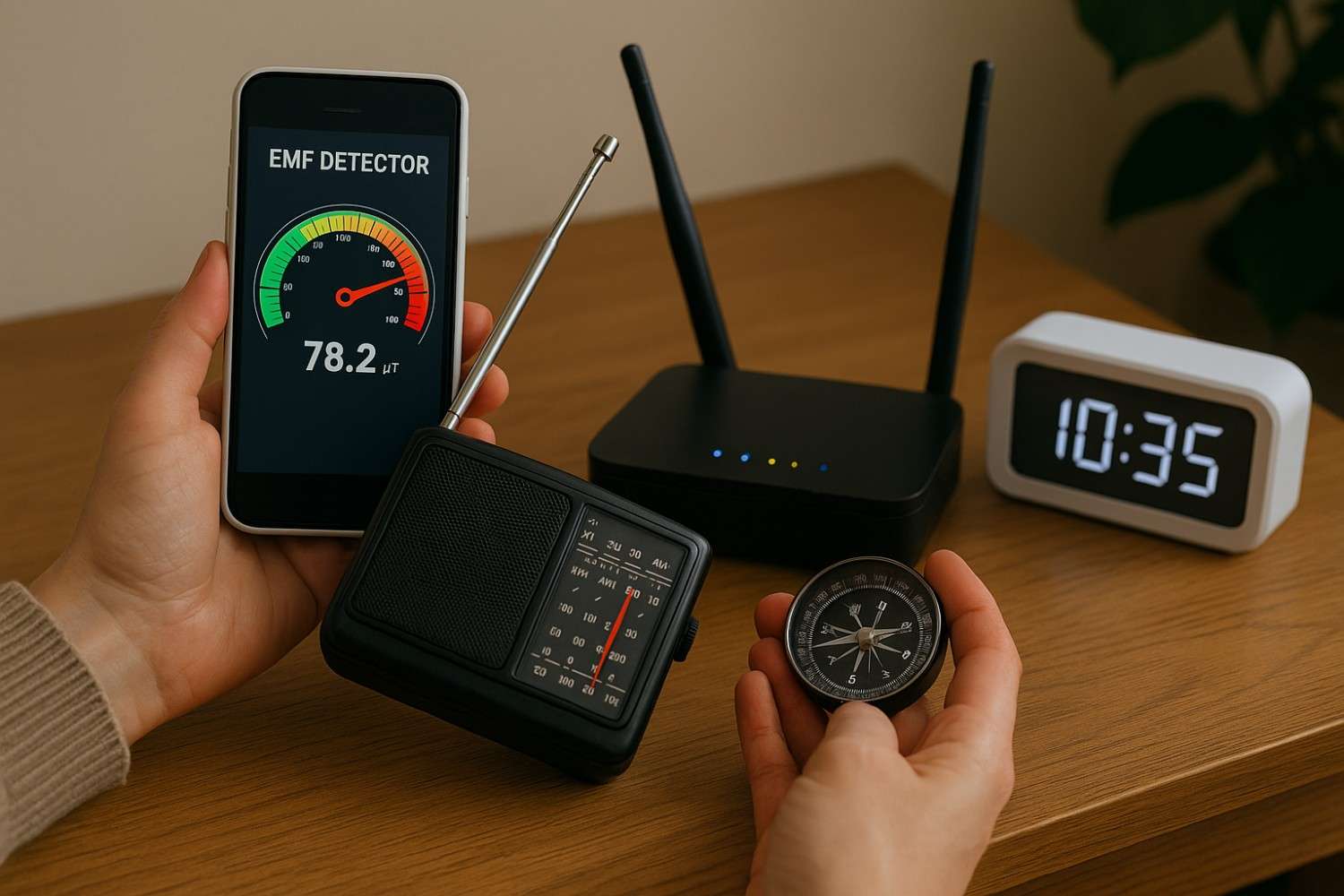
Your smartphone can do more than check emails – it contains magnetic and electrical sensors that some apps can access to detect EMF-like activity. While these are not the same as specialized sensors in EMF meters, they allow your phone to act as a basic scanner.
How to do it:
- Download a free EMF detection app such as ElectroSmart, EMF Detector – Radiation Meter, or Radiation Detector. These apps typically use the phone’s magnetometer or other sensors.
- Open the app and follow its instructions for scanning.
- Move slowly throughout your house, especially near electronics, routers, smart devices, and walls that might hide electrical wiring.
- Watch for persistent spikes – these can indicate strong EMF fields or electrical irregularities.
While these apps are not a replacement for professional equipment, but they can give you a sense of relative EMF activity and help you identify dangerous hotspots – even if you’re just testing out how to test EMF levels at home without a meter.
Affiliate Advertisement

Method 2: Detect EMF With a Portable AM Radio
This method uses an old-fashioned trick: sound interference. Since EMFs tend to interfere with radio frequencies, an AM radio can become a basic EMF detector.
How to do it:
- Turn on a portable AM radio and tune it to a blank station (somewhere around 530–600 kHz usually works).
- Hold the radio near potential EMF sources – Wi-Fi routers, laptops, fluorescent lights, televisions, electrical panels, phone chargers, etc.
- Listen for static, buzzing, crackling, or changes in pitch. A sudden increase in noise often corresponds to elevated EMF signals.
This method works well for identifying areas of interference, especially in older homes or cluttered environments. It’s also excellent for testing microwave leakage – just place the radio near the door while the microwave is running (but don’t stand close to any microwave that’s running).
Method 3: Use a Compass to Detect Magnetic Fields
This timeless method is simple but effective. EMFs – particularly from wiring and appliances – can disrupt magnetic fields. A basic compass can detect this disruption.
How to do it:
- Get a magnetic compass (can be purchased or borrowed for just a few dollars).
- Hold it in your hand and walk slowly through your home.
- Watch how the needle behaves. If the needle spins or reacts unpredictably near a power cord, outlet, or electronic device, that’s evidence of a magnetic field disturbance.
Closely notice areas around circuit breaker panels, large entertainment systems, or behind walls where wiring clusters.
Method 4: Watch for Bulb Flickering or Dimming
Sometimes EMFs cause visible changes in your lighting. This method requires close observation of incandescent or fluorescent bulbs.
How to do it:
- Turn on various lights in your home, especially in older fixtures.
- Slowly walk throughout your home with the lights on while other appliances (like microwaves or printers) are turned on.
- Watch for flickering or dimming – this may show electrical interference or EMF spikes from nearby devices.
Though it doesn’t measure EMFs directly, this method can clue you into overloaded or unshielded electrical sources.
Method 5: Audio-Based Detection Using Sound Frequency Apps
Even without a radio, you can use apps designed to detect audio signals and frequencies. Certain spectrum analyzer apps can pick up electromagnetic interference through unexpected frequency jumps or white noise spikes.
How to do it:
- Download an app like Spectroid or Frequency Analyzer (typically free).
- Walk through your house with it open, placing your phone near high-EMF devices like power strips, computer towers, gaming consoles, or digital clocks.
- Watch for sudden peaks in the graph, unexpected frequency clusters, or loud speaker interference.
This is a great companion method if you’re already using the smartphone EMF detector apps.
Affiliate Advertisement
High EMF Hotspots in Most Homes (Where to Test First)
Before testing everywhere, start with known EMF hotspots in most homes. These are areas where electrical devices or signals are usually strongest, making them the best places to learn how to test EMF levels at home without a meter.
Here are the most common ones:
- Wi-Fi routers and networking gear: Place at least 5–10 feet away from bedrooms and desks if possible.
- Microwave ovens: Even when off, they have transformers that emit fields.
- Home offices: Laptops, printers, dual monitors, chargers, wireless keyboards, and Bluetooth devices all contribute to exposure.
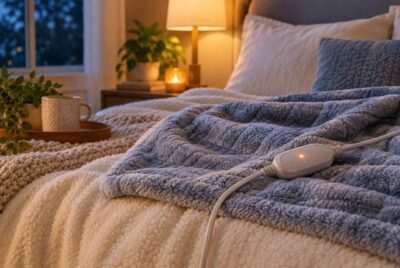
- Bedrooms: Phone chargers, smart light bulbs, electric blankets, bed frames with power strips… these make sleeping more risky.
- Breaker panels and wiring locations: Behind walls near bedrooms or kitchens.
Knowing these typical hotspots allows you to quickly put DIY techniques to use where they’ll be most helpful and immediately actionable.
What To Do If You Detect High EMF Levels
Finding high EMF in your home isn’t a reason to panic – it’s a reason to act. Once you’ve identified problem areas using the methods above, here’s how to reduce your exposure:
- Increase distance: Even just moving a device 3–6 feet away from your body drastically cuts EMF exposure.
- Rearrange rooms: Relocate routers and chargers away from sleeping and sitting zones.
- Turn off devices when not in use: Especially at night or during long stretches of non-use.
- Use shielding materials: EMF blocking curtains, fabrics, wall paint, or router shields can help in intense areas.
- Repair or replace old wiring: If flickering or buzzing persists, call a licensed electrician.
These practices craft a healthier environment, especially if you’re now more aware of how to test EMF levels at home without a meter.
Conclusion
Learning how to test EMF levels at home without a meter is empowering – and it proves that you don’t need expensive tools to understand your environment better. Whether you use a smartphone app, an AM radio, a compass, or simply look for electrical interference, these DIY methods help you identify EMF problem areas and begin addressing them right away.
As EMF awareness continues to grow, more people are turning to DIY methods before investing in professional solutions. While accurate readings will eventually require a proper EMF meter, these simple big-picture approaches can reduce your exposure today – often for free.
Before You Go…
Get Weekly EMF Protection Tips
Enjoy this article? Join the EMFLuLu newsletter for simple weekly tips to reduce everyday EMF exposure from phones, WiFi routers, laptops, and smart home devices.
Try Our Free EMF Calculators
Curious how much EMF exposure you may experience each day?
These simple tools can help you estimate your exposure and identify possible problem areas in your home.
Try these free calculators:
Like this article? Pin it on Pinterest!

More to Explore