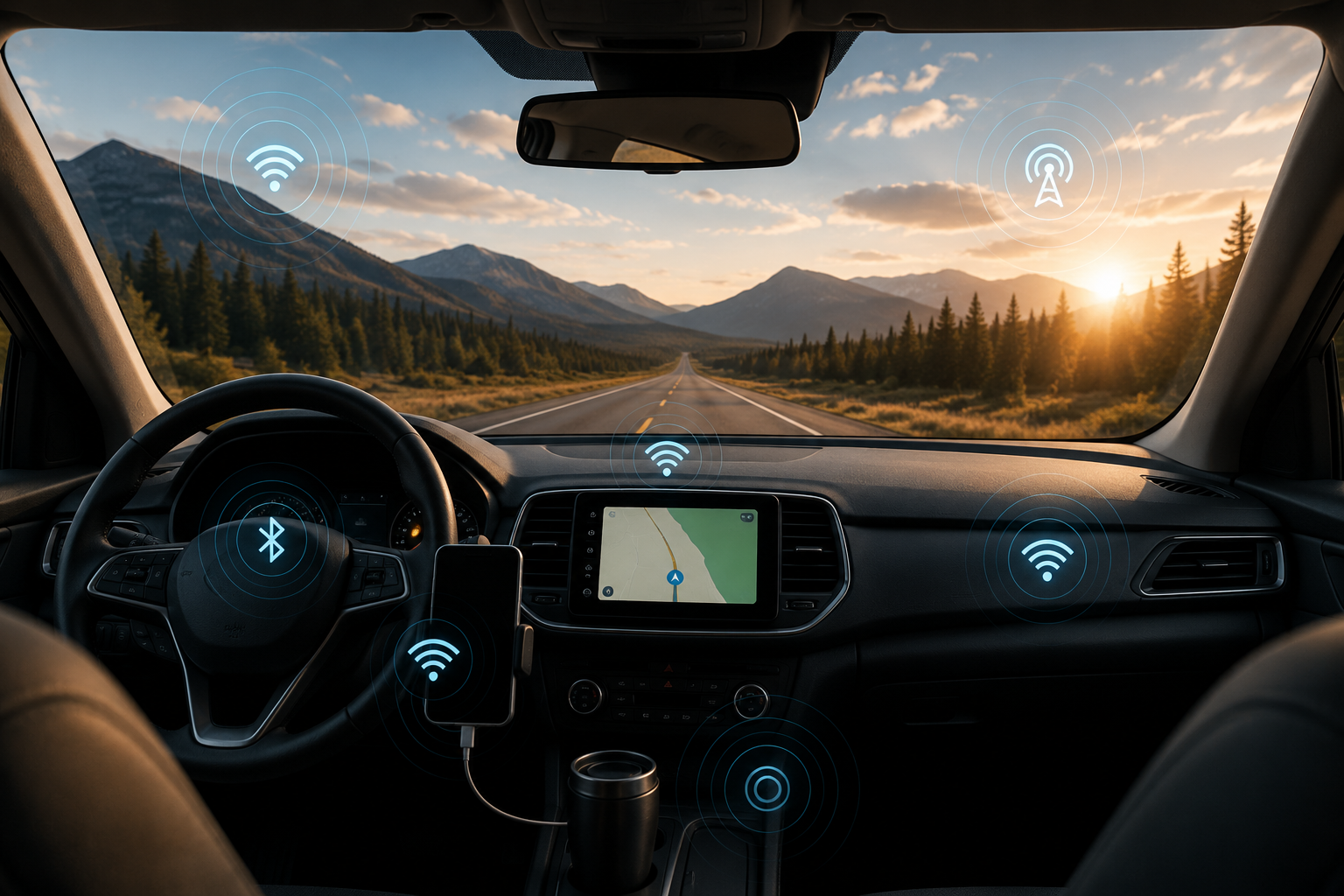
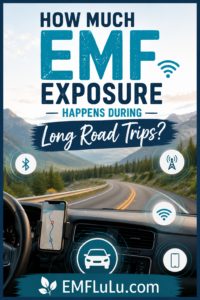
Modern road trips are very different from the long drives people took twenty or thirty years ago. Today, many vehicles are filled with wireless technology. Smartphones constantly communicate with cell towers, GPS systems stay active for hours, Bluetooth devices remain connected during the entire drive, and passengers often stream music or videos through mobile networks. Even vehicles themselves now include advanced electronics, wireless systems, and in some cases, large electric battery systems.
As a result, more people have started asking questions about road trip EMF exposure and whether spending several hours inside a vehicle may increase their overall daily exposure to electromagnetic fields. Some travelers simply want to understand what devices contribute the most exposure, while others are looking for practical ways to reduce unnecessary EMF exposure without turning a family road trip into a stressful experience.
The good news is that understanding road trip EMF exposure does not have to become overly technical or fear-based. In many situations, simple adjustments may help reduce unnecessary exposure while still allowing you to enjoy modern conveniences like navigation apps, streaming music, and hands-free communication. The goal is not panic. The goal is awareness, balance, and making informed choices that fit your lifestyle.
What Counts as EMF Exposure During a Road Trip?
When people think about EMF exposure in a vehicle, they often focus only on smartphones. Phones certainly play a major role, but they are only one part of the picture. A modern vehicle may contain multiple overlapping sources of electromagnetic activity operating at the same time.
Cell phones are one of the biggest contributors because they continuously connect to nearby towers while sending and receiving data. Navigation apps, text messages, streaming services, and social media apps all increase activity levels on the device. During long drives, especially through rural areas with weaker signals, phones may increase transmission power to maintain a connection.
Bluetooth systems also contribute to overall exposure. Many vehicles now use wireless systems for audio, calls, syncing contacts, and connecting smart devices. In addition, some vehicles include built-in WiFi hotspots that remain active during the entire drive.
Passengers may add even more wireless activity by using tablets, wireless earbuds, smart watches, gaming devices, or laptops connected to mobile hotspots. Even charging systems and vehicle electronics create low levels of electromagnetic fields inside the cabin.
The important thing to understand is that exposure is often influenced by two major factors: distance and duration. A device placed directly against the body for six hours creates a very different situation than a device sitting several feet away on a dashboard mount.
Why Cars Can Create Unique EMF Conditions
Vehicles are unique environments because they are enclosed spaces packed with electronics. Unlike being outdoors where wireless signals can spread freely, a vehicle contains metal surfaces, windows, wiring systems, and multiple active devices operating close to passengers.
Many families now take road trips with several smartphones active at once. Children may stream videos on tablets while another passenger uses a hotspot for work. Meanwhile, the vehicle’s own Bluetooth and navigation systems continue running in the background.
This does not automatically mean dangerous levels of exposure are occurring, but it does explain why some people become curious about road trip EMF exposure during long drives. The combination of multiple active devices in close proximity may increase overall exposure compared to spending a few minutes using a phone at home.
Duration also matters. A short commute to work is very different from an eight-hour drive across several states. Even people who are not especially concerned about EMFs may prefer to reduce unnecessary device usage during long trips simply to lower screen fatigue and constant wireless activity.
Another factor involves signal strength. Phones often increase transmission power when traveling through rural areas with weaker cellular coverage. Ironically, people sometimes experience higher phone-related EMF output when signal bars are low rather than high.
Smartphones May Be the Largest Contributor
For most travelers, smartphones are probably the biggest contributor to road trip EMF exposure. Phones are constantly communicating with nearby towers, especially when navigation apps, music streaming, video playback, or hotspot functions are active.
Many people also keep phones directly against the body during long drives. Phones may sit in pockets, against the leg in a car seat, or tucked beside the body for hours at a time. Small changes in placement may help reduce direct exposure considerably.
One practical adjustment is using a dashboard phone mount rather than carrying the phone in a pocket during the trip. Another simple strategy is downloading maps, playlists, or podcasts ahead of time. Offline content may reduce the amount of continuous data transmission needed during travel.
Some travelers also choose to activate airplane mode whenever the phone is not needed. For example, if children are watching downloaded movies on a tablet, airplane mode may allow the device to function without continuously searching for wireless connections.
People who want an additional layer of protection sometimes look into EMF-blocking accessories. One widely discussed option is the DefenderShield Universal EMF Radiation Protection Pouch available through DefenderShield. Products like this are often used by people who prefer not to carry active phones directly against the body during long periods of travel.
It is important to remember that no accessory replaces good habits. Distance still plays a major role. Simply moving a phone away from the body often reduces exposure more effectively than people realize.
Bluetooth and Wireless Vehicle Systems
Bluetooth technology has become standard in many vehicles. Drivers use Bluetooth for hands-free calling, music streaming, navigation syncing, and smart assistant functions. Many newer cars also include wireless Apple CarPlay or Android Auto systems that stay connected automatically whenever the vehicle is running.
Bluetooth generally operates at lower power levels than cellular communication, but exposure may still become continuous during a long trip. Some drivers prefer to disable Bluetooth functions they are not actively using, especially on longer drives.
Wireless vehicle hotspots are another growing source of wireless activity inside vehicles. These systems allow passengers to connect laptops, tablets, and gaming devices during travel. While convenient, they also add another constant wireless signal source inside the cabin.
Many people interested in reducing unnecessary exposure choose wired alternatives whenever possible. Using a wired charging cable rather than wireless syncing systems may reduce some background wireless activity. Wired headphones may also reduce reliance on Bluetooth earbuds during long periods of use.
The goal does not have to be eliminating all technology. Most readers are simply looking for practical habits that make sense without creating inconvenience.
Electric Vehicles and EMF Concerns
Electric vehicles have become increasingly popular, and with that popularity has come more discussion about EMFs inside EVs. Unlike traditional gasoline-powered vehicles, electric vehicles use large battery systems, high-current electrical components, and regenerative braking systems.
Some studies and independent measurements have shown elevated magnetic field readings in certain areas of some electric vehicles. Exposure levels can vary significantly depending on the vehicle design, battery placement, shielding, and electrical systems used by the manufacturer.
At the same time, it is important to avoid broad assumptions. Not every EV produces identical readings, and not all measurements indicate unusually high exposure. Research in this area continues to evolve.
Some individuals who are especially interested in measuring their own environment choose to use RF or EMF meters during travel. One commonly discussed device is the Safe and Sound Pro II RF Meter from Safe Living Technologies. Devices like this allow users to measure wireless signals from phones, WiFi systems, and other RF sources during real-world conditions.
For many people, though, practical habit adjustments are likely more realistic than constantly monitoring readings. Limiting unnecessary wireless device usage, creating distance from active devices, and taking occasional breaks from screens may already help reduce overall exposure levels during long drives.
Does Longer Exposure Matter More?
One reason this topic receives attention is because road trips involve extended periods of exposure. A five-minute phone call at home is very different from spending eight or ten hours surrounded by active electronics inside a vehicle.
Some people report headaches, fatigue, brain fog, or general discomfort after very long drives. It can be difficult to determine exactly what causes those symptoms because many other factors may contribute. Poor sleep, dehydration, stress, posture issues, extended screen time, and mental fatigue may all play a role alongside possible EMF concerns.
This is one reason balanced discussions are important. Not every symptom automatically points to EMF exposure. Long travel days place stress on the body in multiple ways.
Still, many people prefer to take a cautious and practical approach. If reducing unnecessary wireless exposure is easy to accomplish, some travelers feel it simply makes sense to do so. Turning off unused wireless systems, keeping phones away from the body, and reducing continuous streaming may help create a more comfortable travel experience overall.
The idea behind reducing road trip EMF exposure is often about minimizing unnecessary exposure where practical rather than living in fear of every electronic device.
Affiliate Advertisement

Practical Ways to Reduce Road Trip EMF Exposure
There are several realistic steps travelers may take if they want to lower unnecessary wireless exposure during long drives. Most of these adjustments are simple and do not require major lifestyle changes.
Before a long trip, downloading maps, playlists, audiobooks, and movies ahead of time may reduce constant data transmission. Offline content also improves convenience in areas with poor signal coverage.
Using a dashboard mount instead of carrying a phone against the body is another easy improvement. Many people keep phones pressed against the leg or stored in clothing pockets during long drives without realizing how close the device remains for hours.
Some travelers prefer wired headphones rather than Bluetooth earbuds during extended listening sessions. Others disable Bluetooth or WiFi functions whenever they are not actively needed.
Families traveling with children may benefit from airplane mode on tablets after movies or games have been downloaded in advance. This allows entertainment without constant wireless communication.
People interested in additional protective products sometimes explore accessories from companies like EMF Harmony. Some travelers also look into simple wired accessories, dashboard mounts, or RF meters available through Amazon.
The key is avoiding obsession. Most readers are not looking to remove every electronic device from their vehicle. They simply want reasonable ways to reduce unnecessary exposure during very long periods of travel.
Should Most People Be Worried?
It is easy to find alarming headlines online about EMFs, especially when discussing modern vehicles and wireless technology. Unfortunately, some articles create fear without offering balanced or practical information.
The reality is that electromagnetic exposure has become part of everyday life for most people. Smartphones, WiFi networks, Bluetooth devices, smart appliances, and wireless communication systems are now common almost everywhere.
That does not mean people should ignore concerns entirely. Awareness is reasonable. Understanding where exposure comes from may help people make practical adjustments that fit their comfort level.
For many individuals, the best approach may involve moderation. Keeping devices away from the body when possible, limiting unnecessary wireless activity, and taking breaks from screens during long trips are sensible habits regardless of someone’s views on EMFs.
It is also worth remembering that stress itself can affect how people feel physically. Constantly worrying about every signal or electronic device may create anxiety that becomes more harmful than the technology itself.
Balanced information is often more useful than extreme opinions on either side of the discussion.
Conclusion
Modern vehicles contain far more wireless technology than cars from previous decades. Smartphones, Bluetooth systems, WiFi hotspots, navigation apps, tablets, and electric vehicle systems may all contribute to road trip EMF exposure during long drives.
For most people, practical awareness is likely the best approach. Simple habits such as keeping phones away from the body, reducing unnecessary wireless activity, downloading content ahead of time, and taking occasional breaks from screens may help lower unnecessary exposure without making travel stressful or inconvenient.
As interest in road trip EMF exposure continues growing, more travelers are beginning to pay attention to how much technology surrounds them during daily life. Fortunately, reducing unnecessary exposure often involves small and realistic changes rather than extreme measures.
Before You Go…
Get Weekly EMF Protection Tips
Enjoy this article? Join the EMFLuLu newsletter for simple weekly tips to reduce everyday EMF exposure from phones, WiFi routers, laptops, and smart home devices.
Try Our Free EMF Calculators
Curious how much EMF exposure you may experience each day?
These simple tools can help you estimate your exposure and identify possible problem areas in your home.
Try these free calculators:
Like this article? Pin it on Pinterest!

More to Explore