
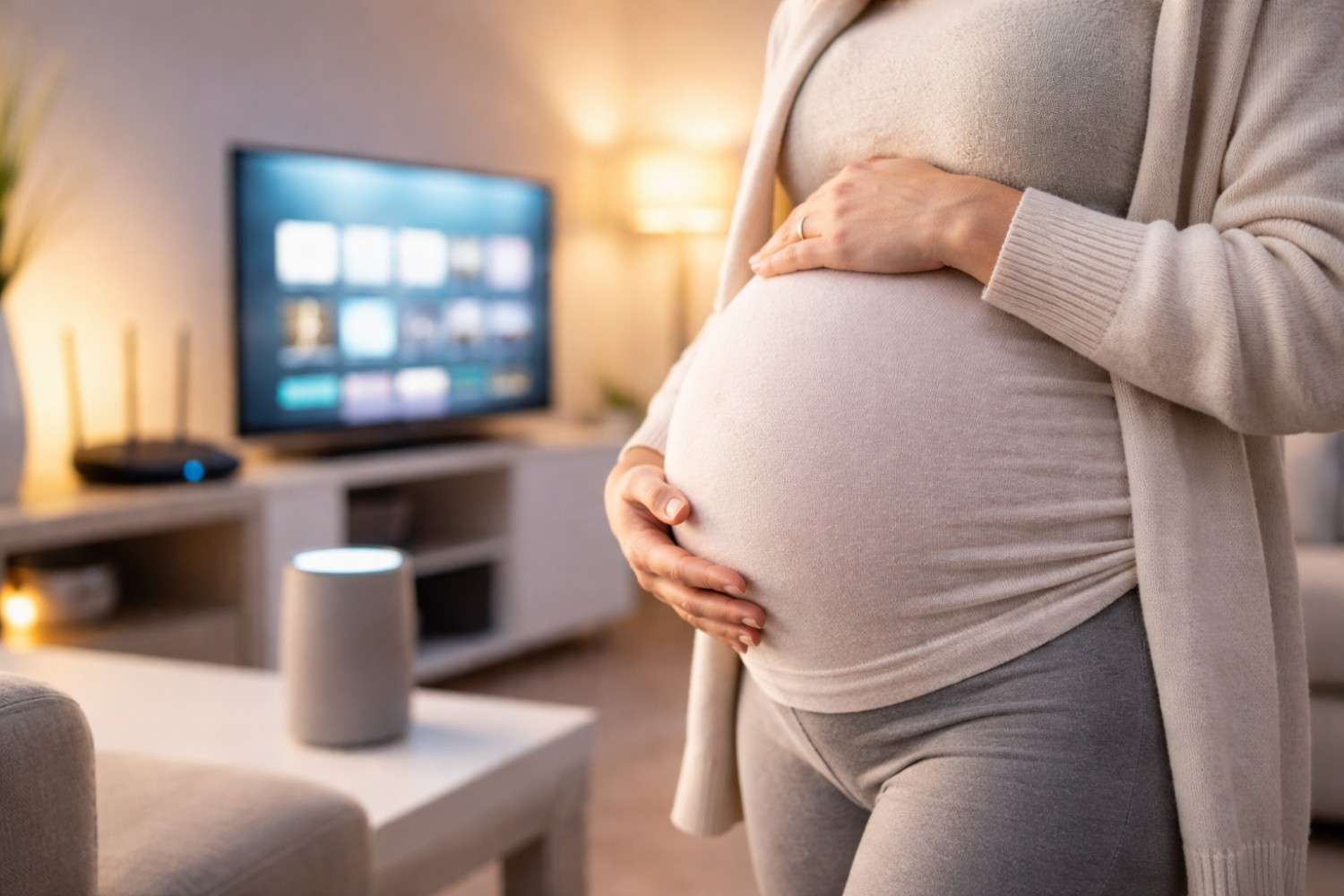
Modern homes are increasingly filled with wireless technology designed to make everyday life easier and more efficient. Smart TVs stream content without cables, lighting systems respond to voice commands, thermostats adjust automatically, and WiFi networks connect everything seamlessly. While these conveniences offer clear benefits, many expecting mothers naturally ask an important question: Is EMF exposure safe during pregnancy in smart homes filled with wireless devices that operate continuously in the background?
Electromagnetic fields, or EMF, are present in nearly every home, regardless of whether it is considered “smart.” Refrigerators, electrical wiring, and wireless routers all produce some level of electromagnetic energy. In smart homes, the number of wireless transmitters increases, which can lead to understandable questions about safety during pregnancy. The good news is that most EMF exposure in residential environments remains low, and simple adjustments can further reduce exposure without sacrificing modern comfort.
This guide explains where EMF exposure comes from in smart homes, what research currently suggests, and how expecting mothers can create a comfortable, low-exposure environment using practical, realistic steps.
Understanding EMF in Modern Smart Homes
Electromagnetic fields are produced whenever electricity flows or wireless signals are transmitted. In smart homes, EMF comes from both wired electrical systems and wireless communication devices. Understanding these sources helps clarify where exposure originates and how it can be managed.
Wireless EMF, also known as radiofrequency EMF, comes from devices that communicate through WiFi, Bluetooth, or other wireless signals. This includes routers, smart TVs, wireless baby monitors, smart lighting hubs, and voice assistants. These devices send signals periodically to maintain connectivity, even when they are not actively being used.
In addition to wireless EMF, extremely low frequency EMF comes from household wiring, appliances, and electrical systems. These fields are typically strongest very close to the source and weaken rapidly with distance.
One important characteristic of EMF is that exposure decreases dramatically as distance increases. Moving even a few feet away from a wireless device can significantly reduce exposure levels. This principle forms the foundation for many practical EMF reduction strategies during pregnancy.
What Research Says About EMF and Pregnancy
Scientific research into EMF exposure and pregnancy is ongoing, and current evidence does not establish a clear causal link between typical residential EMF exposure and pregnancy complications. Most homes operate well within international safety guidelines, which are designed with wide safety margins.
That said, many health professionals and families follow what is known as the precautionary principle. This approach encourages reducing unnecessary exposures when doing so is simple and does not disrupt normal life. This perspective does not assume danger, but recognizes that minimizing unnecessary exposure is a reasonable step for peace of mind.
Understanding whether is EMF exposure safe during pregnancy in smart homes often leads families to focus on simple environmental adjustments rather than eliminating technology altogether. Smart homes can remain fully functional while still providing a comfortable and thoughtfully arranged environment for expecting mothers.
It is also important to remember that EMF exposure is not unique to smart homes. Traditional homes without smart devices still contain electrical wiring, appliances, and other EMF sources. The key difference in smart homes is the presence of wireless transmitters, which can be easily managed through thoughtful placement.
Common EMF Sources in Smart Home Living Areas
Smart homes contain several devices that communicate wirelessly, and understanding their relative contribution to EMF exposure helps prioritize where adjustments may be helpful.
WiFi routers are typically the strongest continuous wireless transmitters in most homes. They operate 24 hours per day, sending signals throughout the house to maintain internet connectivity. Routers emit higher levels of EMF than most individual devices because they must communicate with multiple devices simultaneously.
Smart TVs also emit wireless signals when connected to WiFi. These signals increase when streaming content and decrease when the television is idle. Because televisions are often placed in bedrooms or living rooms where people spend extended time, positioning them appropriately can reduce unnecessary proximity.
Smart lighting systems communicate with central hubs or routers. While the signal strength is typically low, these systems operate continuously in the background. Voice assistants and smart speakers also transmit signals periodically, especially when waiting for voice activation commands.
Wireless baby monitors and smart home security systems contribute additional EMF sources. These devices are usually low power, but they operate continuously, which makes placement important.
Despite the number of devices present, distance remains the most important factor influencing exposure levels.
Practical Ways to Reduce EMF Exposure During Pregnancy
Reducing EMF exposure in smart homes does not require removing devices or abandoning modern conveniences. Instead, small placement adjustments and mindful habits can significantly reduce unnecessary exposure while preserving full functionality.
The most effective step is increasing distance between the body and wireless transmitters. For example, placing WiFi routers several feet away from sleeping areas can substantially reduce exposure during overnight rest. Even moving a router from a bedside table to a nearby shelf across the room can make a meaningful difference.
Another helpful adjustment involves minimizing direct contact with wireless devices. Phones, tablets, and laptops emit EMF when transmitting data, and keeping these devices slightly away from the abdomen during pregnancy can reduce proximity exposure. Using tables or desks rather than resting devices directly on the body is a simple and effective habit.
Turning off wireless functions when not needed can also reduce continuous exposure. Many families choose to turn off WiFi routers at night, especially if internet access is not needed while sleeping. This step does not affect device performance during the day and can reduce overnight wireless transmission.
Wired connections offer another option for reducing wireless exposure. Ethernet cables can connect devices directly to the internet, allowing WiFi to be used less frequently or selectively. Many modern routers allow both wired and wireless connections simultaneously.
For mothers seeking an additional layer of reassurance, shielding products designed specifically for pregnancy may provide extra comfort.
One example is the DefenderShield Pregnancy EMF Radiation Protection Belly Band, which is designed to block a wide range of EMF radiation while remaining comfortable and flexible.
This belly band uses laboratory-tested shielding materials that help reduce EMF exposure from common devices such as phones, laptops, and nearby wireless transmitters. It is lightweight and designed specifically for pregnancy, allowing expecting mothers to continue using devices while maintaining an additional protective barrier. Many mothers choose to wear it when working at a computer, using a phone, or spending time in connected environments.
Affiliate Advertisement

Creating a Low-EMF Bedroom Environment During Pregnancy
Bedrooms are especially important because they represent the longest continuous exposure period during sleep. Creating a comfortable, low-exposure sleeping environment can improve peace of mind and promote restful sleep.
Moving WiFi routers away from the bedroom is one of the simplest adjustments. Placing the router in a central location outside the bedroom allows it to provide full home coverage while reducing direct overnight proximity.
Phones and tablets should ideally be placed on nightstands rather than directly next to the body. Enabling airplane mode during sleep can stop wireless transmission entirely while still allowing the device to function as an alarm clock.
Smart lighting hubs and smart speakers can also be placed a few feet away from the bed. These devices typically emit low power signals, but increasing distance further reduces exposure.
These adjustments do not require removing smart home features, but instead optimize their placement.
Understanding Which Devices Matter Most
Not all smart home devices contribute equally to EMF exposure. Devices that transmit continuously and remain close to the body tend to contribute more than those used occasionally or placed farther away.
WiFi routers and phones are usually the most significant contributors due to their transmission frequency and proximity. Laptops and tablets can also contribute when used directly against the body.
In contrast, smart thermostats, lighting switches, and smart plugs emit very low levels of EMF and are typically mounted on walls away from direct contact. Their contribution to overall exposure is relatively small.
Understanding these differences helps families prioritize practical adjustments without unnecessary concern.
Many families find that once they understand device placement and distance principles, creating a comfortable smart home environment becomes straightforward and manageable.
Affiliate Advertisement

Smart Home Safety and Peace of Mind During Pregnancy
For most families, smart homes remain safe and comfortable environments throughout pregnancy. Wireless devices operate within established safety standards, and exposure levels decrease rapidly with distance.
Understanding whether isEMF exposure safe during pregnancy in smart homes often leads to simple placement improvements that enhance comfort without reducing the benefits of modern technology.
Shielding products such as the DefenderShield Pregnancy EMF Radiation Protection Belly Band can provide additional reassurance, particularly for mothers who frequently use wireless devices or work in connected environments.
The goal is not to eliminate technology, but to use it thoughtfully.
Simple steps such as moving routers away from sleeping areas, avoiding direct device contact, and using wired connections when possible can significantly reduce exposure while maintaining convenience.
Conclusion
Smart homes offer incredible convenience, efficiency, and comfort, and they can remain safe environments throughout pregnancy. Understanding device placement, wireless transmission, and simple exposure reduction strategies allows families to create a balanced and comfortable home environment.
For most households, answering the question is EMF exposure safe during pregnancy in smart homes leads to practical adjustments rather than drastic changes. Increasing distance from wireless devices, optimizing device placement, and using optional shielding products can all contribute to a greater sense of comfort and peace of mind.
Modern technology and pregnancy can coexist safely. With thoughtful awareness and simple adjustments, expecting mothers can continue enjoying the benefits of smart homes while creating an environment that feels supportive, comfortable, and reassuring.
Before You Go…
Get Weekly EMF Protection Tips
Enjoy this article? Join the EMFLuLu newsletter for simple weekly tips to reduce everyday EMF exposure from phones, WiFi routers, laptops, and smart home devices.
Try Our Free EMF Calculators
Curious how much EMF exposure you may experience each day?
These simple tools can help you estimate your exposure and identify possible problem areas in your home.
Try these free calculators:
Like this article? Pin it on Pinterest!


More to Explore


