
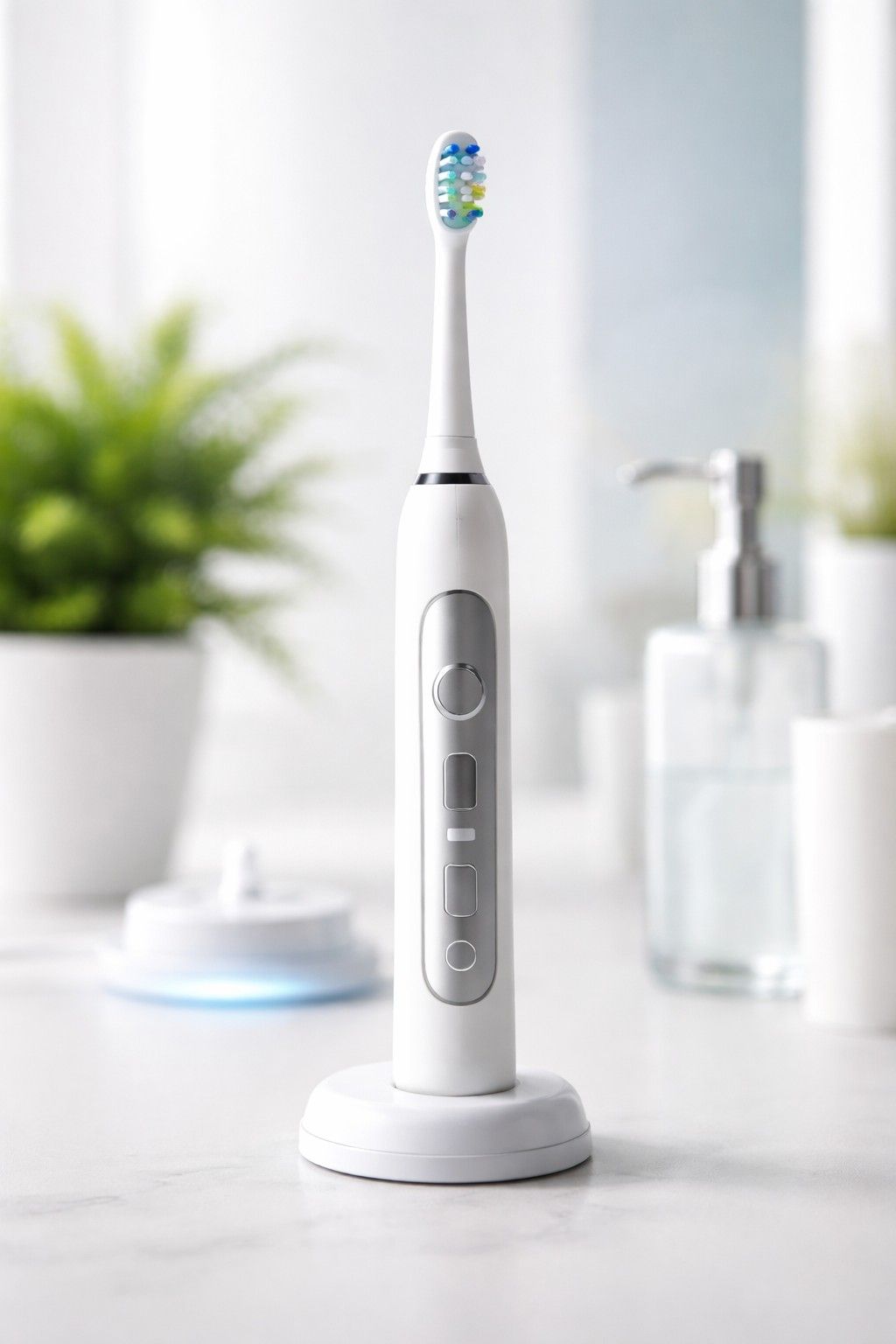
Electric toothbrushes are a modern convenience – faster brushing, more consistent pressure, and better long-term dental outcomes. But as awareness of electromagnetic fields grows, many people wonder whether these toothbrushes produce significant EMF radiation and, more importantly, what you can do to limit exposure. If you’ve ever asked yourself how to reduce EMF exposure from electric toothbrushes, you’re not alone. Electric motors, inductive charging bases, and Bluetooth-enabled features all generate small amounts of EMF that most people never think about.
While electric toothbrushes aren’t the biggest EMF source in your home, they place a motorized device directly against your face – something worth exploring if you’re EMF-sensitive or simply intentional about reducing unnecessary exposures. The good news? With a few simple steps and a better understanding of how these devices work, you can dramatically lower your EMF contact without sacrificing dental health.
This in-depth guide looks at what types of EMF electric toothbrushes emit, how strong these fields are, which models produce more or less exposure, and exactly how to reduce EMF exposure from electric toothbrushes in practical, science-based ways.
What EMF Do Electric Toothbrushes Emit?
Electric toothbrushes generate two forms of EMF:
- Low-frequency magnetic fields (LF-EMFs)
- Radiofrequency (RF) signals—but only in Bluetooth models
Understanding the difference is key to knowing what matters for exposure.
Magnetic Fields from the Motor (Most Significant Source)
Every electric toothbrush contains a small motor that powers its oscillating or sonic movements. When the motor spins or vibrates, it creates a magnetic field. These fields are strongest within one to two inches of the device. Because you hold the toothbrush very close to your face, this is the main exposure people question.
RF Radiation from Bluetooth Connectivity
Many newer toothbrushes – like Sonicare Connected or Oral-B SmartSeries – include Bluetooth chips that sync brushing data with mobile apps. These models emit small bursts of RF radiation, similar to what fitness trackers or smartwatches emit. RF exposure is typically low, but it is unnecessary for brushing.
Inductive Charging Bases
Most electric toothbrushes use a wireless/inductive charging base. The base transfers power from a coil in the stand to a coil inside the toothbrush.
This process generates EMF even when the toothbrush is not charging unless the base is unplugged.
Together, these sources create low-intensity EMF fields – not nearly as high as cell phones or WiFi routers – but close proximity and daily usage make it worth optimizing.
Are Electric Toothbrushes Safe? What Research Says
At this time, researchers have not identified electric toothbrush EMF as harmful. Studies on EMF from small appliances show the same pattern:
- Exposure is brief
- Intensity is low
- Magnetic fields decay rapidly with distance
- Risk increases only with long-term, high-intensity exposure—which toothbrushes don’t produce
However:
- Some people experience electromagnetic hypersensitivity (EHS)
- Some households prefer limiting EMF from ALL sources, even small ones
- Bluetooth models add an unnecessary RF layer
- Wireless charging bases generate continuous EMF when left plugged in
So while electric toothbrushes are generally safe, reducing exposure is simple, quick, and beneficial – especially for EMF-conscious families.
How to Reduce EMF Exposure From Electric Toothbrushes
If you want to know exactly how to reduce EMF exposure from electric toothbrushes, the great news is that most solutions are easy, inexpensive, and don’t require buying a new toothbrush. Even small adjustments – like changing how you power on the brush or where you store the charger – can significantly reduce your daily exposure.
Choose a Non-Bluetooth Toothbrush
Before exploring advanced mitigation tools, the simplest solution is to remove unnecessary RF emissions entirely. Most EMF exposure from high-frequency sources in toothbrushes comes from Bluetooth connectivity.
How to do this effectively:
- When shopping for a new toothbrush, look for models labeled “No Bluetooth” or “Basic” or without any “smart” features.
- If you currently own a Bluetooth model, check the manufacturer settings – many allow you to disable Bluetooth permanently.
- Anything marketed as a “Smart” or “App-Connected” toothbrush should be avoided if EMF is a concern.
This alone eliminates one entire category of EMF exposure.
Power the Brush On Before Bringing It to Your Mouth
The motor’s magnetic field temporarily spikes during startup. Bringing the brush to your mouth before it reaches full speed increases your exposure.
How to do it:
- Hold the toothbrush about 4–6 inches away from your face.
- Press the power button.
- Let the brush reach full vibration (usually 1–2 seconds).
- Bring it to your teeth only after it stabilizes.
This single habit change reduces the strongest moment of EMF output.
Unplug Wireless Charging Bases When Not in Use
Inductive charging bases emit EMFs anytime they’re plugged in, even if the toothbrush is fully charged or not sitting on the base.
How to do it:
- After your toothbrush charges fully (usually overnight once per week), unplug the base.
- Store the toothbrush separately (upright or on a drying rack).
- Plug the charging base back in only when needed.
- If you brush in the morning and night, charge the toothbrush while you’re not in the room – this prevents ambient exposure.
This strategy reduces the constant EMF emissions from inductive coils.
Affiliate Advertisement

Keep Charging Bases Away From Where You Stand
Many bathrooms have limited counter space. But if your toothbrush charger sits right next to where you stand every morning – for shaving, makeup, or brushing teeth – it can add to cumulative exposure.
How to fix placement:
- Move the charger to the opposite side of the bathroom counter.
- If you have a medicine cabinet outlet, store the charger inside the cabinet and close the door.
- If space is limited, use a small extension cord so the charger can sit farther from your body.
Distance is your strongest EMF-reduction tool.
Use Lower-Power Brushing Modes
Some toothbrushes have multiple settings:
- Clean
- White
- Polish
- Gum Care
- Sensitive
- Deep Clean
The strongest EMFs occur on high-powered vibration modes.
How to reduce EMF through brushing mode:
- Choose Sensitive or Gum Care modes
- These modes produce less vibration and therefore lower magnetic field intensity
- You still get excellent cleaning, especially with fluoride toothpaste and proper technique
Small adjustment, meaningful reduction.
Limit Brushing Time to Recommended Durations
Over-brushing not only harms enamel – it exposes you to extra EMF. The American Dental Association recommends 2 minutes per brushing session.
How to implement:
- Use the built-in timer
- Don’t restart the cycle out of habit
- If you’re brushing for freshness, use mouthwash instead
This lowers cumulative exposure over the years.
Store Electric Toothbrushes Away From Sleeping Areas
Some people plug toothbrush chargers into bedrooms, especially in small apartments or shared bathrooms. This extends exposure unnecessarily.
How to adjust:
- Keep toothbrushes and chargers in the bathroom only
- Never place them on bedside tables
- If the bathroom is extremely small, unplug the charger between uses
This prevents overnight magnetic fields in your sleep environment.
Affiliate Advertisement
The Best Low-EMF Electric Toothbrush Options
Not all electric toothbrushes are equal in terms of EMF output. If you prefer a low-EMF brush without going fully manual, choosing the right design has a big impact.
Before listing specific types, here’s a quick introduction to help readers understand why some toothbrushes emit less EMF than others: models without Bluetooth, without induction charging, and with smaller motors typically produce the lowest levels. By selecting wireless-free, simple models, users can dramatically reduce exposure while keeping the benefits of powered brushing.
Philips Sonicare 1100 Power Toothbrush
Why it’s low-EMF
-
Entry-level Sonicare with no Bluetooth
-
Minimal electronics compared to smart models
-
Lower overall motor complexity
Best for: Minimalists looking for the simplest powered Sonicare option.
Find on Amazon: Philips Sonicare 1100 Power Toothbrush
Oral-B Pro 1000 (Basic Series)
Why it’s low-EMF
-
No Bluetooth, no app, no wireless features
-
Traditional oscillating-rotating motor
-
Proven cleaning without RF emissions
Best for: People who want strong plaque removal without smart technology.
Find on Amazon: Oral-B Pro 1000 (Basic Series)
Oral-B Vitality CrossAction (Basic Model)
Why it’s low-EMF
-
No Bluetooth or smart sensors
-
Simple charging base
-
Fewer electronics than higher-end Oral-B models
Best for: Budget-friendly low-EMF electric brushing.
Find on Amazon: Oral-B Vitality CrossAction (Basic Model)
Battery-Powered Oral-B Pulsar (AA Battery Model)
Why it’s very low-EMF
-
Uses AA batteries instead of charging base
-
No induction charging field
-
Smaller motor = lower EMF output
Best for: Those who want the lowest possible EMF while keeping powered brushing.
Find on Amazon: Battery-Powered Oral-B Pulsar (AA Battery Model)
Important EMF Reminder
No electric toothbrush is completely EMF-free. However, avoiding Bluetooth, smart sensors, and inductive charging eliminates the largest contributors to unnecessary exposure. For many households, these low-EMF options strike the best balance between oral health and EMF awareness.
EMF Myths About Electric Toothbrushes
There are several common misconceptions about EMF exposure from electric toothbrushes. Before understanding how to protect yourself, it’s important to clear these up.
Below is an overview of myths that readers often encounter online, paired with explanations so you can maintain a balanced, science-based perspective.
Myth #1: Electric toothbrushes emit harmful RF radiation all the time
Truth: Only Bluetooth-enabled models produce RF radiation – and only intermittently. Standard models emit zero RF.
Myth #2: The magnetic field from the motor penetrates deeply into the brain
Truth: Magnetic fields weaken dramatically with distance. Moving the brush just one inch away before turning it on reduces the exposure by a significant degree.
Myth #3: Electric toothbrushes produce stronger EMF than smartphones
Truth: Phones, WiFi routers, smartwatches, and Bluetooth headphones all produce far more consistent EMF. Toothbrushes produce brief, low-intensity magnetic fields.
Myth #4: Manual toothbrushes are always the best choice
Truth: Electric brushes provide better plaque removal and gum care. The goal is mitigation, not fear or sacrifice.
When Additional EMF Protection May Be Helpful
Most people don’t need advanced protection. However, several groups may benefit from reducing EMF in small appliances like electric toothbrushes:
Groups that benefit:
- Individuals with EMF sensitivity or EHS
- Children (higher sensitivity to environmental stressors)
- People with pacemakers (consult your cardiologist)
- Households with many smart devices
- Anyone optimizing their sleep environment
Conclusion
Electric toothbrushes are useful, effective tools for oral health, and most of their EMF emissions are low. But with small daily adjustments, you can reduce your exposure significantly – especially if you’re mindful about magnetic fields, Bluetooth, and charging bases.
Before You Go…
Get Weekly EMF Protection Tips
Enjoy this article? Join the EMFLuLu newsletter for simple weekly tips to reduce everyday EMF exposure from phones, WiFi routers, laptops, and smart home devices.
Try Our Free EMF Calculators
Curious how much EMF exposure you may experience each day?
These simple tools can help you estimate your exposure and identify possible problem areas in your home.
Try these free calculators:
Like this article? Pin it on Pinterest!

More to Explore


