
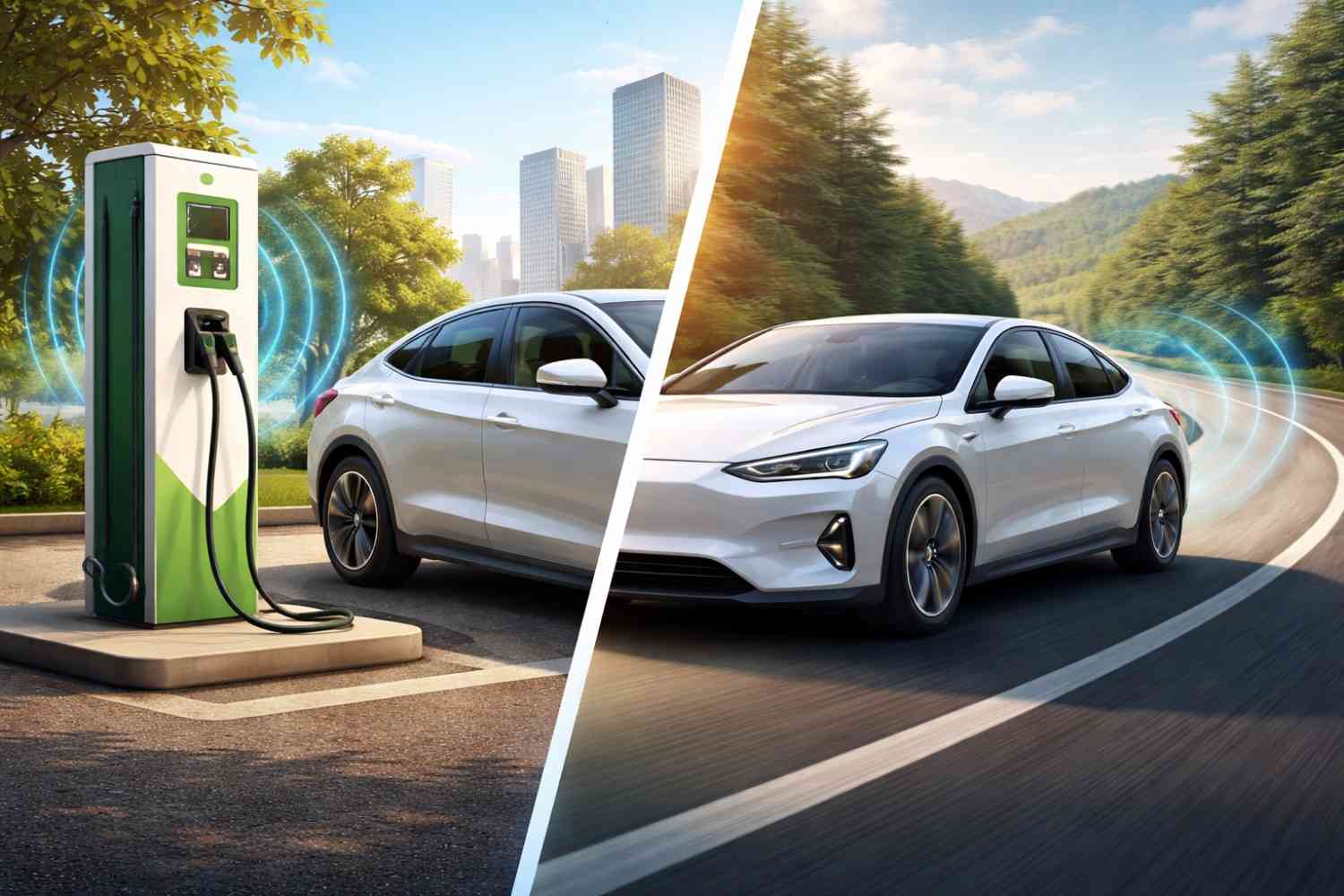
Electric vehicles have quickly moved from niche products to mainstream transportation. With quieter operation, fewer moving parts, and zero tailpipe emissions, EVs offer many advantages over traditional gasoline vehicles. However, because electric vehicles rely on high-voltage battery systems, electric motors, and charging equipment, many owners naturally wonder about electromagnetic field exposure. One of the most common questions is how EMF radiation levels in electric vehicles while driving vs charging compare, and whether either situation produces meaningful exposure differences. Understanding where EMF originates, how exposure varies, and what practical steps can be taken helps EV owners make informed decisions without unnecessary concern.
This article provides a clear, evidence-based look at EMF sources in electric vehicles, compares exposure during driving and charging, and explains how simple adjustments and optional mitigation tools can help reduce overall electromagnetic exposure in everyday EV use.
Understanding EMF Sources Inside Electric Vehicles
All electrical systems produce electromagnetic fields whenever current flows through wires or components. Electric vehicles operate using significantly larger electrical currents than most household devices, which means they naturally generate measurable EMF during both operation and charging.
The primary EMF sources inside electric vehicles include several major components working together to move and control electrical energy.
The battery pack is the largest electrical component in the vehicle. It stores large amounts of direct current (DC) electricity, and during driving, that current flows continuously to power the motor. Because current flow is directly related to EMF strength, the battery system produces measurable electromagnetic fields, especially during acceleration.
High-voltage cables connect the battery pack to the inverter and motor. These cables carry significant current and can produce localized EMF, although they are typically shielded and routed beneath the vehicle floor.
The inverter converts DC electricity from the battery into alternating current (AC) used by the motor. This conversion process involves rapidly switching electrical currents, which can create additional electromagnetic activity.
The electric motor itself produces EMF as it converts electrical energy into mechanical rotation. Motor EMF levels vary depending on speed, load, and acceleration.
Finally, charging cables and charging stations produce EMF whenever electricity flows into the vehicle during charging.
The most important factor affecting EMF exposure is distance. Electromagnetic field strength drops rapidly as distance increases from the source. Even small increases in distance can significantly reduce exposure levels.
EMF Radiation While Driving an Electric Vehicle
When an electric vehicle is in motion, electricity flows continuously from the battery pack to the motor. This flow varies depending on speed, acceleration, terrain, and driving style. Accelerating uphill or rapidly increasing speed typically requires more current, which increases EMF temporarily. Maintaining a steady cruising speed generally requires less current and produces more stable EMF levels.
The physical layout of electric vehicles plays an important role in limiting driver exposure. Most EV battery packs are located beneath the floor of the vehicle, enclosed within protective shielding and structural barriers. This design places distance between occupants and the primary electrical components.
The driver and passengers are usually positioned above the battery pack, separated by multiple layers including the vehicle frame, flooring materials, insulation, and air space. This physical separation significantly reduces direct EMF exposure compared to being immediately adjacent to electrical components.
Electric motors are typically mounted near the vehicle axles, further increasing distance from occupants. High-voltage cables are routed through protected channels and designed to minimize electromagnetic leakage.
Studies measuring EMF inside electric vehicle cabins have generally found that exposure levels remain within typical background ranges found in many everyday environments. EMF levels inside EVs are often comparable to those produced by common household appliances such as refrigerators, laptops, and home electrical wiring.
Because driving sessions can last for extended periods, exposure during driving tends to be continuous but moderate. The duration of exposure is longer, but the intensity is typically limited by distance and shielding.
EMF Radiation While Charging an Electric Vehicle
Charging an electric vehicle introduces a different EMF environment because electrical current flows through external cables and charging equipment. Charging systems transfer electricity from a home charger or public charging station into the vehicle’s battery pack.
Charging cables carry significant current, particularly during faster charging sessions. This current produces measurable electromagnetic fields in the immediate vicinity of the cable and charging connector.
However, EMF exposure during charging depends almost entirely on proximity. Standing directly next to the charging cable while current flows will result in higher exposure than standing several feet away. Even a short distance dramatically reduces exposure strength.
Most charging sessions occur while the driver is outside the vehicle, connecting the charging cable and then stepping away. Unlike driving, where occupants remain inside the vehicle continuously, charging exposure is usually brief and intermittent.
Public charging stations may involve higher power levels, especially fast chargers, but exposure duration is typically limited to the time spent plugging in and unplugging the cable.
Because charging exposure is temporary and easily avoided by maintaining distance, it generally represents a smaller portion of overall daily EMF exposure compared to extended driving periods.
Comparing EMF Radiation Levels While Driving vs Charging
When comparing EMF radiation levels in electric vehicles while driving vs charging, it is important to consider both exposure intensity and exposure duration. These two factors work together to determine total exposure.
Driving produces continuous electromagnetic activity because electricity constantly flows from the battery to the motor. Although the EMF intensity is generally moderate due to shielding and distance, the duration of exposure can be longer, especially during extended commutes or road trips.
Charging can produce higher localized EMF levels near the charging cable itself, but exposure duration is typically brief. Once the vehicle is plugged in, drivers usually move away from the immediate charging area, reducing exposure significantly.
Distance plays a major role in determining actual exposure. Sitting inside the vehicle during driving places occupants farther from many electrical components compared to standing directly beside a charging cable.
In practical terms, total exposure during driving may exceed charging exposure simply because driving occurs more frequently and for longer periods. Charging exposure is typically short and easily minimized through simple awareness and positioning.
Understanding EMF radiation levels in electric vehicles while driving vs charging helps EV owners focus on realistic exposure patterns rather than isolated situations.
Affiliate Advertisement

Real-World EMF Measurements Inside Electric Vehicles
Independent EMF measurements conducted in electric vehicles provide useful perspective on actual exposure levels. Testing has shown that electromagnetic fields inside EV cabins typically remain within ranges commonly encountered in everyday environments.
Measurements taken near vehicle floors, seats, and steering wheels generally show modest EMF levels that vary depending on vehicle model, driving conditions, and measurement location. Areas directly above major electrical components may show slightly elevated readings, but distance and shielding reduce exposure significantly.
Charging cables can produce measurable EMF when actively carrying current, especially at close range. However, stepping even a few feet away reduces exposure rapidly.
Many modern electric vehicles are designed with electromagnetic compatibility standards in mind. Manufacturers incorporate shielding, cable routing strategies, and electrical system designs intended to limit electromagnetic interference and maintain safe operation.
Overall, real-world measurements indicate that EMF exposure inside electric vehicles remains within expected ranges for modern electrical environments.
Practical Ways to Reduce EMF Exposure in Electric Vehicles
For individuals who prefer to minimize EMF exposure whenever possible, several simple adjustments and optional mitigation tools can help reduce exposure during everyday electric vehicle use. These approaches focus primarily on increasing distance from EMF sources and supporting a more balanced electromagnetic environment inside the vehicle.
Maintaining distance from active charging cables is one of the simplest and most effective strategies. After connecting the charging cable, stepping several feet away significantly reduces exposure because EMF strength decreases rapidly with distance.
Limiting unnecessary time spent sitting inside the vehicle while charging can also reduce exposure. Most charging systems allow drivers to remain outside the vehicle during charging sessions.
Certain EMF-focused vehicle accessories are designed to support electromagnetic balance inside vehicle environments. These products do not physically block EMF but are designed to support biological resilience and electromagnetic harmony.
One example is the EMF Harmony Electric Vehicle Protection System.
This system is designed specifically for electric vehicles and works continuously to support a more balanced electromagnetic environment inside the vehicle cabin. It installs easily and does not require power or maintenance.
Another option is the EMF Harmony Car Harmonizer.
This compact device is designed to help support reduced biological stress associated with electromagnetic exposure inside vehicle environments. It operates passively and can be placed inside the vehicle cabin.
These products are optional tools that some EV owners choose to incorporate into their overall EMF awareness strategy.
Affiliate Advertisement

Is EMF Exposure in Electric Vehicles a Health Risk?
Current scientific understanding has not established definitive health risks associated with typical EMF exposure levels encountered inside electric vehicles. Most measured exposure levels fall within ranges considered common in modern electrical environments.
Many everyday devices produce electromagnetic fields, including household wiring, appliances, smartphones, and WiFi systems. Electric vehicles represent one part of this broader electromagnetic landscape.
Individual sensitivity, comfort level, and awareness vary widely. Some people prefer to minimize EMF exposure whenever practical, while others focus primarily on overall vehicle safety and performance.
Understanding EMF radiation levels in electric vehicles while driving vs charging allows drivers to make informed choices based on accurate information rather than assumptions.
Conclusion
Electric vehicles rely on large battery systems, electric motors, and charging equipment, all of which naturally produce electromagnetic fields. Both driving and charging generate EMF, but exposure levels vary depending on distance, duration, and proximity to electrical components.
Driving typically produces moderate EMF exposure over longer periods, while charging may produce higher localized EMF levels at close range but for shorter durations. Distance from EMF sources remains the most important factor in determining actual exposure.
Understanding EMF radiation levels in electric vehicles while driving vs charging allows EV owners to make informed, practical decisions while continuing to enjoy the many benefits of electric transportation. Simple awareness, positioning, and optional mitigation tools can help support a balanced electromagnetic environment and provide additional peace of mind.
Before You Go…
Get Weekly EMF Protection Tips
Enjoy this article? Join the EMFLuLu newsletter for simple weekly tips to reduce everyday EMF exposure from phones, WiFi routers, laptops, and smart home devices.
Try Our Free EMF Calculators
Curious how much EMF exposure you may experience each day?
These simple tools can help you estimate your exposure and identify possible problem areas in your home.
Try these free calculators:
Like this article? Pin it on Pinterest!

More to Explore


