
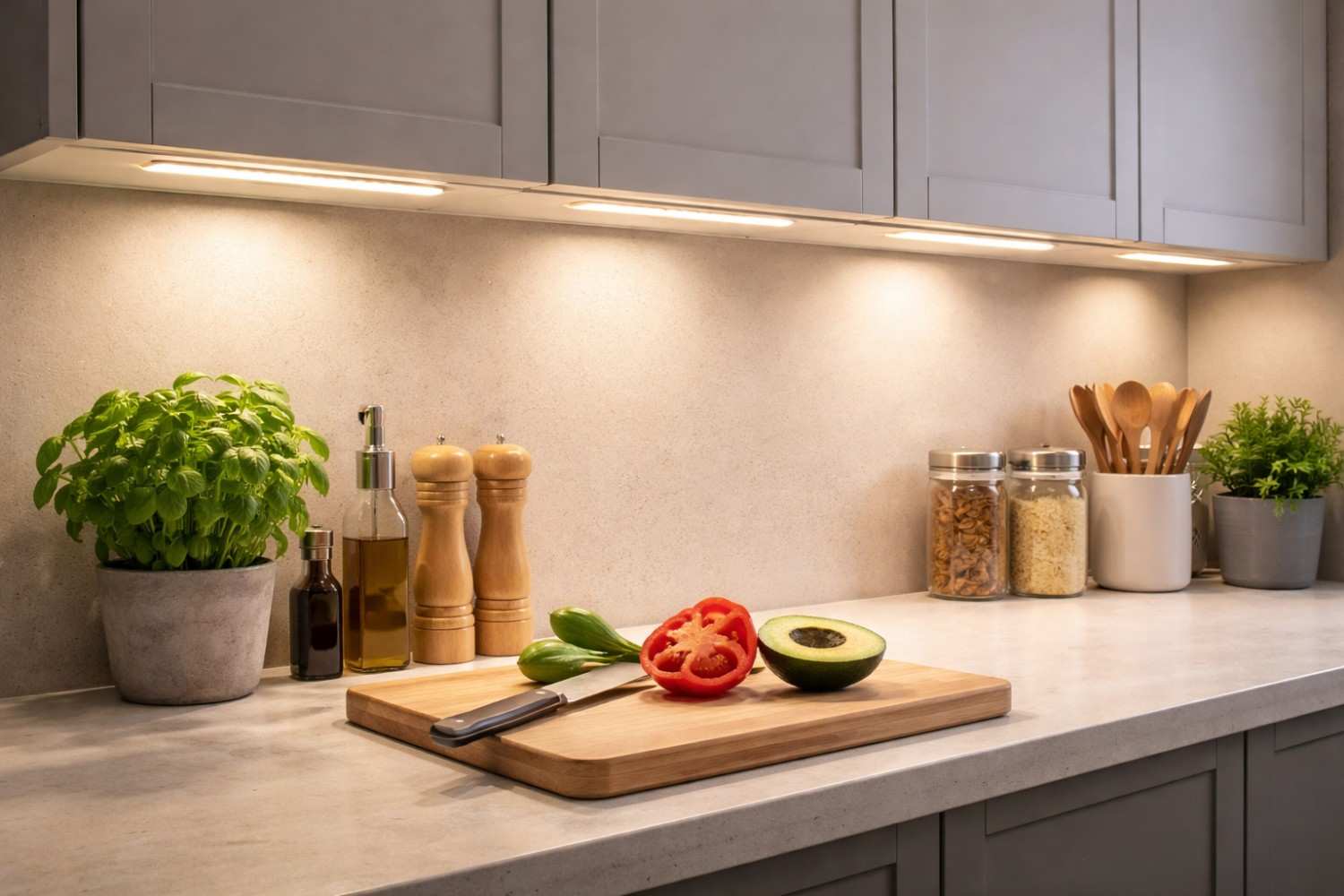
Under cabinet lighting has become a standard feature in modern kitchens. It provides focused illumination for food preparation, enhances visibility, and improves the overall appearance of the space. Because these lighting systems are installed directly above countertops – where people spend significant time preparing meals—many homeowners are beginning to ask whether these fixtures produce electromagnetic fields and whether that exposure matters. Understanding EMF exposure from under cabinet lighting in kitchen environments can help you make informed decisions about lighting placement, product selection, and overall exposure reduction.
Electricity powers nearly every function in a modern kitchen, and wherever electricity flows, electromagnetic fields are present. Under cabinet lighting is no exception. The important questions are how much EMF is produced, where it originates, and whether simple steps can reduce exposure while maintaining the convenience and functionality that these lighting systems provide.
This article explains exactly how under cabinet lighting produces EMF, how different lighting types compare, where exposure actually comes from, and practical ways to reduce EMF levels in your kitchen if desired.
What Is EMF and Where It Comes From
Electromagnetic fields, commonly referred to as EMF, are invisible energy fields produced whenever electricity moves through a wire or electronic device. These fields are present throughout the home, generated by appliances, wiring inside walls, and lighting fixtures.
There are two primary categories of EMF found in household environments:
Low-frequency EMF is produced by electrical systems, wiring, and devices connected to household power. This includes refrigerators, lighting systems, outlets, and power supplies.
Radiofrequency EMF is produced by wireless communication technologies such as WiFi routers, cell phones, and Bluetooth devices.
Under cabinet lighting produces primarily low-frequency EMF. This type of EMF originates from the electrical current flowing through the wiring, power supply, and lighting components. The amount of EMF produced depends heavily on the lighting type, power supply design, and proximity to the source.
One important principle to understand is that EMF strength decreases rapidly with distance. Even moving a short distance away from a source can significantly reduce exposure levels.
Types of Under Cabinet Lighting and Their EMF Levels
Not all under cabinet lighting systems produce the same amount of EMF. The design, electrical components, and installation method all influence exposure levels. Understanding the differences can help you choose safer and more efficient lighting options.
LED Under Cabinet Lighting
LED lighting is now the most common choice for under cabinet installations. LED systems are energy efficient, long-lasting, and generally produce relatively low EMF levels.
The primary source of EMF in LED systems is the power driver or transformer that converts household voltage into the lower voltage required by LED strips or fixtures. The LED lights themselves produce minimal EMF, but the driver can generate measurable electromagnetic fields, especially at close distances.
High-quality LED systems typically use better shielding and more efficient drivers, which can help reduce unnecessary EMF emission.
Fluorescent Under Cabinet Lighting
Fluorescent lighting was widely used in kitchens before LED technology became dominant. These systems use ballasts to regulate electrical current. Ballasts can produce higher EMF levels than LED drivers, particularly in older installations.
If your kitchen still uses fluorescent under cabinet lighting, EMF levels may be slightly higher compared to modern LED systems. Replacing fluorescent lighting with LED alternatives can improve energy efficiency and reduce EMF output.
Halogen and Xenon Lighting
Halogen and xenon under cabinet lights were once popular due to their bright, warm illumination. These systems operate at higher temperatures and require transformers, which can generate EMF.
While still found in some kitchens, these lighting types are less common today and are gradually being replaced by LED options.
Plug-In Versus Hardwired Lighting Systems
Plug-in under cabinet lighting systems often include external power adapters that sit on the countertop or behind cabinets. These adapters can produce localized EMF, especially when placed near food preparation areas.
Hardwired systems, installed directly into the home’s electrical wiring, typically produce less localized EMF exposure because the wiring and power components are often concealed behind walls or cabinets.
Where EMF Exposure Actually Comes From in Lighting Systems
Many people assume the light fixture itself is the main source of EMF, but in most cases, the highest EMF levels come from the power supply or driver. This component regulates voltage and converts electricity into a usable form for the lighting system.
Understanding EMF exposure from under cabinet lighting in kitchen installations requires recognizing that the power supply is usually the primary source of electromagnetic fields, not the LED strip or fixture itself.
The main EMF sources in under cabinet lighting systems include:
- The power driver or transformer, which converts household current into lower voltage for lighting operation.
- Electrical wiring behind walls, which carries current to the lighting system.
- Power adapters used in plug-in lighting systems.
- Junction boxes and electrical connections.
EMF strength decreases dramatically with distance. Measurements taken directly against a power supply may show higher readings, while readings taken just one or two feet away are often significantly lower.
Because under cabinet lighting is typically mounted above head height or behind cabinetry, actual exposure at countertop level is usually much lower than measurements taken directly at the power source.
Real-World Exposure Levels and Risk Perspective
Most modern LED under cabinet lighting systems produce relatively low EMF levels compared to other common kitchen appliances. Devices such as microwave ovens, induction cooktops, and refrigerator compressors often produce higher electromagnetic fields during operation.
Understanding EMF exposure from under cabinet lighting in kitchen settings requires placing it in context. Lighting systems are typically stationary and mounted at a distance from the body, while appliances such as phones and tablets are used much closer to the body for extended periods.
EMF exposure from lighting is also intermittent. Lights may be used for a few hours per day, while exposure from other devices such as phones may occur throughout the entire day.
The key takeaway is that modern LED lighting systems generally produce low EMF levels, especially when installed properly with drivers positioned away from direct contact areas.
Affiliate Advertisement

Practical Ways to Reduce EMF Exposure From Under Cabinet Lighting
If you want to minimize EMF exposure in your kitchen, there are several effective and straightforward steps you can take. These steps focus on increasing distance from EMF sources, selecting high-quality equipment, and identifying higher-emission components.
The following recommendations are practical, affordable, and easy to implement in most kitchens.
Choose High-Quality LED Lighting Systems
Modern LED lighting systems are designed to operate efficiently with minimal electromagnetic interference. Choosing well-built systems with quality drivers helps reduce unnecessary EMF emission.
Avoid extremely cheap lighting systems with poorly designed power supplies. Higher-quality products often include better electrical shielding and improved voltage regulation.
Position Power Supplies Away From Direct Contact Areas
Power drivers are the primary EMF source in most lighting systems. Increasing distance from these components can significantly reduce exposure.
If installing new lighting, position the power supply inside a cabinet, behind a wall, or above cabinet level rather than directly above food preparation surfaces.
Even small increases in distance can make a measurable difference in EMF levels.
Measure EMF Levels to Identify Sources
Measuring EMF levels in your kitchen provides valuable information and peace of mind. EMF meters allow you to identify specific areas with higher electromagnetic fields.
One reliable and widely used option is the TriField EMF Meter Model TF2
This meter measures magnetic, electric, and radiofrequency fields and is commonly used in residential environments to identify EMF sources.
Another excellent option is the Safe Living Technologies Safe and Sound Pro II RF Meter.
This professional-grade meter provides highly accurate measurements and is designed specifically for residential EMF testing.
Using a meter allows you to confirm that lighting systems produce relatively low EMF compared to other household devices.
Affiliate Advertisement

How to Test EMF Levels in Your Own Kitchen
Testing EMF levels in your kitchen can provide reassurance and help you identify areas where exposure is highest. This process is simple and requires only a handheld EMF meter.
Start by turning your under cabinet lighting on and holding the EMF meter near the power supply or driver. Take note of the reading. Then move the meter away from the power supply and observe how quickly levels decrease.
Next, measure EMF levels at countertop level, where you normally stand while preparing food. You will likely find that EMF levels are significantly lower compared to measurements taken directly at the driver.
You can also test EMF levels with the lighting turned off. This helps identify other sources of EMF, such as wiring inside walls or nearby appliances.
This testing process helps provide a realistic perspective on actual exposure levels.
When You Should Consider Changing Your Lighting System
Most modern LED lighting systems are efficient and produce relatively low EMF levels. However, there are situations where upgrading lighting may be beneficial.
Older fluorescent systems with ballasts may produce higher EMF compared to modern LED systems.
Lighting systems with poorly positioned power supplies directly above work areas may increase localized exposure.
Outdated plug-in systems with large external transformers may produce higher EMF compared to newer hardwired systems.
Upgrading to a modern LED system with a well-designed driver and proper installation can improve efficiency while minimizing EMF output.
Conclusion
Under cabinet lighting is a useful and widely installed feature in modern kitchens. Like all electrical systems, it produces electromagnetic fields as electricity flows through its wiring and components. Understanding EMF exposure from under cabinet lighting in kitchen environments helps homeowners make informed decisions about lighting installation, placement, and equipment selection.
In most cases, modern LED under cabinet lighting produces relatively low EMF levels, especially when compared to larger appliances and personal electronic devices. The primary source of EMF is typically the power supply or driver rather than the light fixture itself, and exposure decreases significantly with distance.
By selecting high-quality lighting systems, positioning power supplies thoughtfully, and using EMF meters to identify sources, homeowners can easily manage and reduce EMF exposure while maintaining the functionality and appearance of their kitchen lighting.
With proper understanding and simple precautions, under cabinet lighting can be used safely and effectively in any modern kitchen.
Like this article? Pin it on Pinterest!

More to Explore


