
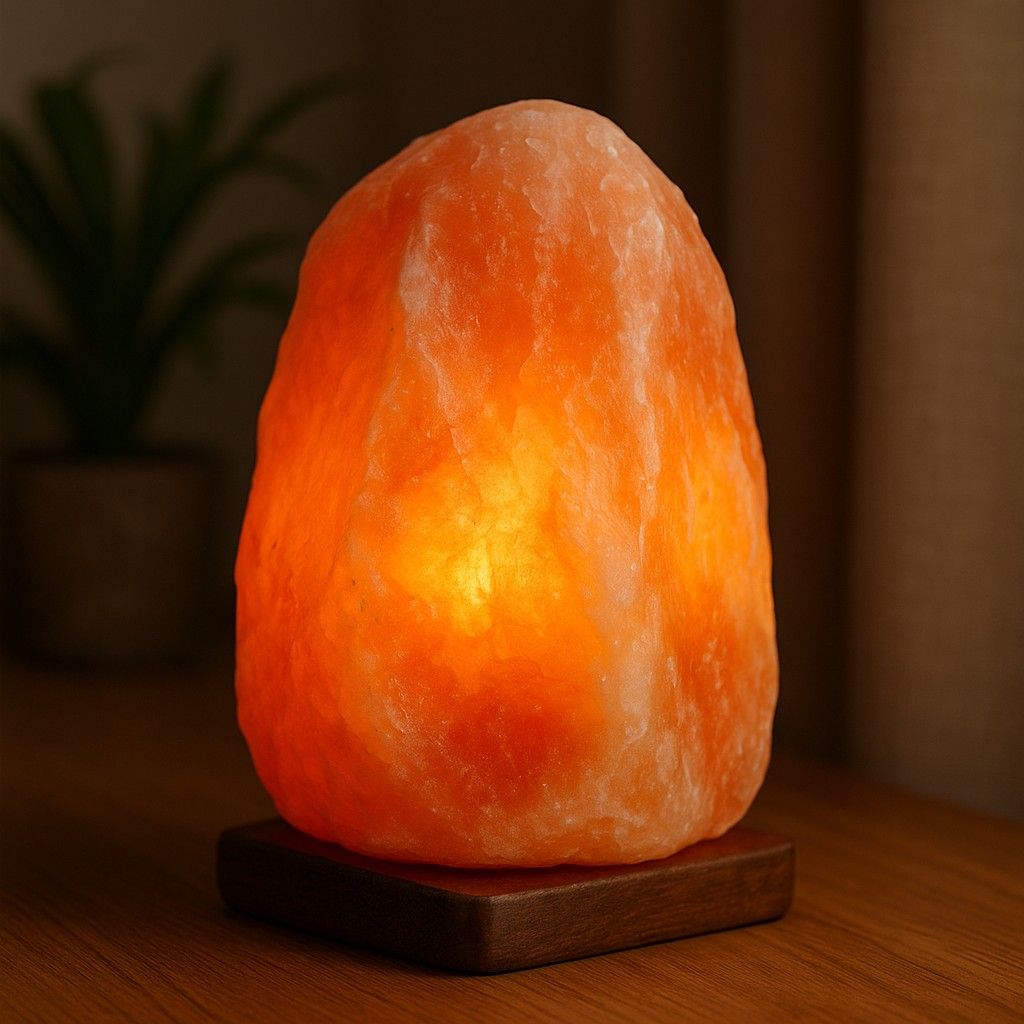
With rising concerns about EMF exposure, many people are turning to natural remedies to try to counteract unseen radiation. Among the most popular of these remedies are Himalayan salt lamps, marketed as natural air purifiers that emit negative ions capable of neutralizing harmful EMFs. But do salt lamps protect against EMF?
This article explores that very question. We’ll unpack how these lamps work, what the science says about their ability to block electromagnetic radiation, and whether they actually do anything for you in that regard. Along the way, we’ll also highlight what salt lamps can offer and introduce real-world measures you can take to protect your home from EMFs safely and affordably. Let’s break down the facts from the fiction.
What Are Salt Lamps, and How Do They Work?
Salt lamps are decorative lights carved from blocks of Himalayan pink salt. They typically house a small lightbulb that gently heats the salt from within, creating a warm, orange-pink glow. These lamps are often marketed as wellness tools that can cleanse the air, improve mood, and support sleep, among other benefits.
The underlying theory is that heating the salt causes it to release negative ions, which then latch onto positively charged particles (like dust, allergens, and supposedly EMFs), neutralizing them. This idea, while appealing, is where scientific reality begins to diverge from marketing claims – especially when considering the EMF question.
Do Salt Lamps Protect Against EMF? The Science Behind the Claim
Let’s get straight to the point: do salt lamps protect against EMF? The short answer is – there is no peer-reviewed scientific evidence that Himalayan salt lamps block or absorb EMF radiation.
EMFs are a form of energy emitted by electrical and wireless devices. They include both low-frequency non-ionizing radiation (like Wi-Fi signals) and high-frequency ionizing radiation (like ultraviolet light). EMFs travel in waves and pass through most physical objects without interruption unless specifically blocked by conductive or shielding materials – like certain fabrics, metals, or grounded barriers designed for that purpose.
Himalayan salt lamps, on the other hand, are made mostly of sodium chloride. They do not have the electrical conductivity or specific density required to act as EMF blockers. The negative ions they produce are too few in number to have any meaningful interaction with electromagnetic fields.
Studies by the American Cancer Society and other research-based organizations have made clear that although salt lamps provide aesthetic and environmental benefits, their EMF-shielding capabilities are not supported by science. That’s not to say they’re useless – just that their true power lies elsewhere.
Why Do People Believe Salt Lamps Block EMF?
If salt lamps protecting against EMF is not scientifically supported, then why do so many people believe they work? The answer is rooted in psychology, aesthetics, and the desire for natural solutions to modern problems.
Salt lamps offer a calming ambient glow and have a soothing effect that many users sincerely experience. They’re associated with nature, purity, and simplicity – qualities people crave in our device-saturated world. The negative ion theory adds a scientific-sounding layer, making the claim feel plausible to those who want to believe in gentle, natural fixes.
Additionally, when people talk about “feeling better” around salt lamps, it may not be EMF reduction – it could be improved mood, stress relief, or placebo effect. These benefits are real, even if they are not related to EMF blocking.
What Salt Lamps Can Do: Legitimate Benefits
Even though salt lamps don’t block EMFs, this doesn’t mean they don’t have value. They can improve certain aspects of your home environment. Let’s explore some genuine benefits supported (to varying degrees) by current understanding.
Below are some of the key control and environmental benefits Himalayan salt lamps may offer in daily life. It’s important to understand what they can do so you can use them for the right reasons and in the right way.
- Create Ambient, Calming Light: Salt lamps emit a soft, warm glow that supports relaxation, especially when used in place of harsher LED or fluorescent lighting. This makes them perfect for bedrooms, meditation spaces, and living rooms.
- Support Snowball Mood Benefits: Even if salt lamps don’t neutralize EMFs, their gentle light can help reduce stress in the evening. This helps diminish the overstimulation caused by screens, especially at night.
- May Attract Water Vapor: Salt is hygroscopic (attracts moisture), so salt lamps may slightly reduce airborne dust and pollen. Though minimal, this effect can help mildly with air freshness.
Remember: none of these benefits involve EMF reduction. However, they do play a role in general wellness and environmental comfort.
Affiliate Advertisement

Myths vs. Reality: EMF Facts and Fiction About Salt Lamps
With marketing claims everywhere, it’s easy to fall for myths about natural solutions. Let’s break down what’s been said about salt lamps in relation to EMF and what’s actually true.
Myth #1: Salt Lamps Shield You from EMF Radiation
Reality: They don’t. Salt lamps do not contain materials capable of absorbing or blocking electromagnetic waves. For EMF shielding to be effective, you need barriers made from conductive or specialized materials, typically grounded in specific ways.
Myth #2: Negative Ions from Salt Lamps Neutralize EMFs
Reality: While salt lamps do emit negative ions, the amount is very small – nowhere near the level needed to counteract EMF. Negative ions have beneficial properties in certain contexts, but EMF protection isn’t one of them.
Myth #3: Salt Lamps Purify the Air of Radiation
Reality: This is a misunderstanding. Salt lamps can subtly attract dust or moisture, but they do not have the physical properties to alter or neutralize electromagnetic radiation.
What to Do Instead: Realistic EMF Protection Methods
You might still love your salt lamp – and that’s perfectly fine – but if your goal is to reduce EMF exposure, curious phrases like “do salt lamps protect against EMF” won’t get you far. Instead, here are practical steps that genuinely help.
The practices shared below do not require expensive equipment, and they do not ask you to abandon modern conveniences. They focus on managing exposure sensibly by modifying behavior and environment. Let’s walk through practical EMF mitigation techniques you can apply today.
1. Increase Distance from Devices
How to do it: Keep smartphones, routers, laptops, and other electronics 2–10 feet away from your body when not in use. For example, don’t sleep with your phone on your nightstand – keep it across the room or in a drawer. When watching TV, sit several feet away instead of directly in front of the screen.
2. Turn Devices Off or Use Airplane Mode
At night, unplug your Wi-Fi router or use a timer to automatically shut it off. Enable airplane mode on phones and tablets while sleeping or reading offline. Reduce prolonged exposure during inactive times.
3. Hardwire Whenever Possible
Use Ethernet cables for computers or smart TVs instead of wireless signals. This not only cuts down EMF in the home but also improves internet stability and speed.
4. Use EMF-Shielding Fabrics or Paint
Companies like EMF-Harmony and DefenderShield offer validated products. You can apply EMF-blocking paint to walls or use shielding curtains to reduce exposure in sleeping areas.
5. Ground Yourself or Your Space
Spend time outdoors barefoot, or use grounded devices (like grounding mats) at home. Grounding may help the body discharge excess electrical charge (though effects vary and should be used cautiously at first).
Affiliate Advertisement
Should You Still Use a Salt Lamp?
Absolutely – just for the right reasons. Salt lamps can play a valuable role in mood, atmosphere, and aesthetic wellness. They’re comforting, beautiful, and can remind you to unplug and wind down. They simply shouldn’t be used as a primary EMF reduction strategy.
Think of them like candles – not powerful, but soothing. If you combine your salt lamp with actual EMF-reducing habits, you’ll get the best of both worlds.
Conclusion
So, do salt lamps protect against EMF? Not in any measurable or meaningful way. But salt lamps are not useless. They still offer tangible benefits – relaxation, aesthetic comfort, and gentle atmospheric support. The key is knowing what they do and do not do. Real EMF protection comes from smarter device usage, increased distance, grounded solutions, and occasional use of shielding products.
Salt lamps deserve a place in your home – but as decoration and wellness aids, not as EMF-blockers. Keep yours glowing, but pair it with real habits that reduce exposure and protect your health.
Before You Go…
Get Weekly EMF Protection Tips
Enjoy this article? Join the EMFLuLu newsletter for simple weekly tips to reduce everyday EMF exposure from phones, WiFi routers, laptops, and smart home devices.
Try Our Free EMF Calculators
Curious how much EMF exposure you may experience each day?
These simple tools can help you estimate your exposure and identify possible problem areas in your home.
Try these free calculators:
Like this article? Pin it on Pinterest!

More to Explore


