
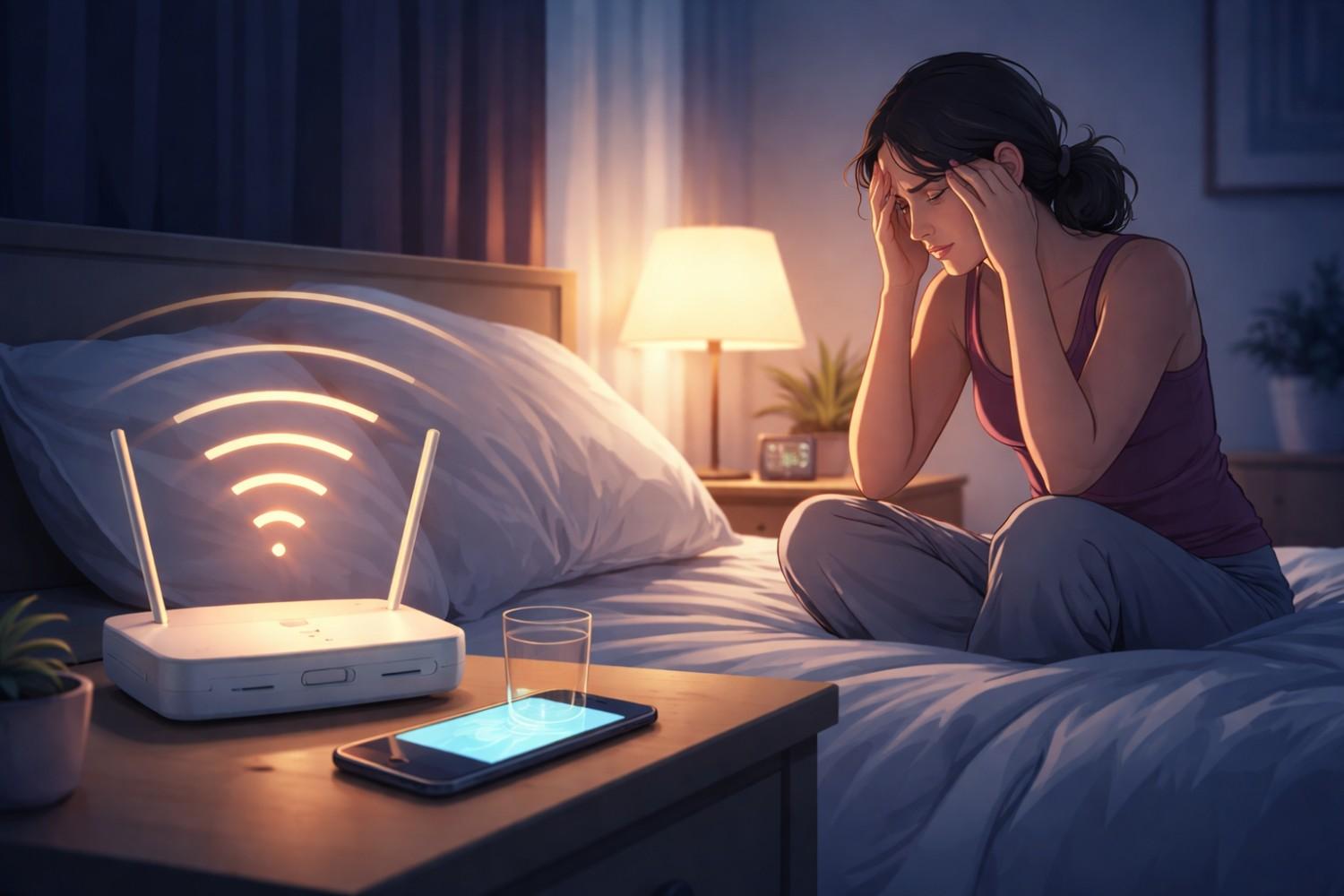
Stress and anxiety have become almost universal experiences in modern life. Many people attribute these feelings to work pressure, financial concerns, constant notifications, poor sleep, or a fast-paced lifestyle. But as technology becomes more embedded in our daily routines, a quieter question is starting to surface: can EMF exposure cause stress and anxiety, or at least contribute to how overwhelmed we feel?
Electromagnetic fields (EMFs) are generated by many of the devices we rely on every day – WiFi routers, smartphones, laptops, Bluetooth accessories, and smart home technology. These exposures are typically low-level and well within regulatory safety limits, yet they are also constant, invisible, and often positioned very close to the body. This combination has led researchers and health-conscious individuals alike to explore whether long-term, everyday EMF exposure could subtly influence the nervous system, stress response, or emotional balance.
This article takes a calm, evidence-aware, and practical look at the relationship between EMF exposure and stress. Rather than making extreme claims or dismissing concerns outright, we will explore how stress works in the body, how EMF exposure fits into modern life, what research and real-world patterns suggest, and what simple steps you can take if you want to reduce unnecessary exposure without disrupting your routine.
Understanding Stress: How the Body Responds to Pressure
Before examining how EMF exposure might influence stress or anxiety, it helps to understand what stress actually is from a biological perspective. Stress is not just a mental feeling; it is a coordinated physiological response involving the brain, nervous system, hormones, and immune system.
When the brain perceives a threat – whether physical, emotional, or environmental – it activates the sympathetic nervous system. This triggers the release of stress hormones such as cortisol and adrenaline. Heart rate increases, muscles tense, and attention narrows. In short bursts, this response is useful and protective. Problems arise when the stress response remains activated for long periods of time without adequate recovery.
Chronic stress places the nervous system in a constant state of alert. Over time, this can lead to symptoms such as irritability, difficulty sleeping, racing thoughts, muscle tension, digestive issues, and heightened anxiety. Importantly, the nervous system does not distinguish well between different types of stressors. Emotional strain, environmental stimuli, sensory overload, and physiological disruptions can all contribute to the same stress pathways.
This is where interest in EMF exposure begins to intersect with stress biology.
What Is EMF Exposure in Everyday Life?
Electromagnetic fields are a form of energy created by electrically powered devices. In modern homes, EMF exposure comes primarily from non-ionizing sources, which include WiFi signals, cellular signals, Bluetooth connections, and household electronics. These are different from high-energy ionizing radiation like X-rays or gamma rays.
For most people, EMF exposure is not about isolated, high-intensity events. It is about continuous, low-level exposure throughout the day and night. A smartphone carried in a pocket, a laptop resting on the body, a WiFi router running 24/7, or wireless devices near the bed all contribute to cumulative exposure.
While regulatory agencies focus on preventing tissue heating or acute harm, emerging research has explored whether long-term, low-level exposure could influence biological systems in more subtle ways. The nervous system, in particular, has drawn attention because it is electrically active by nature and highly sensitive to environmental inputs.
Can EMF Exposure Cause Stress and Anxiety?
The question can EMF exposure cause stress and anxiety does not have a simple yes-or-no answer. Current research does not conclusively show that everyday EMF exposure directly causes anxiety disorders or stress-related illnesses. However, several lines of evidence suggest that EMF exposure may influence the nervous system in ways that could increase stress sensitivity or exacerbate existing anxiety.
Some studies have observed changes in heart rate variability, sleep patterns, or stress hormone levels in certain populations exposed to electromagnetic fields. These findings do not imply that EMF exposure is inherently dangerous, but they do raise questions about how constant environmental stimulation may affect nervous system regulation over time.
One important factor is individual sensitivity. Just as some people are more sensitive to caffeine, noise, or bright light, responses to EMF exposure appear to vary widely. For individuals already under significant stress, dealing with poor sleep, or experiencing anxiety symptoms, EMF exposure may act as an additional background stressor rather than a primary cause.
In this sense, EMF exposure is best understood not as a standalone trigger, but as part of a broader stress landscape. When the nervous system is already overloaded, even small environmental inputs can feel more impactful.
The Role of Sleep in EMF-Related Stress
Sleep is one of the most critical regulators of stress and emotional balance. During deep sleep, cortisol levels drop, the nervous system shifts into recovery mode, and the brain processes emotional experiences from the day. Disruptions to sleep can quickly amplify feelings of stress and anxiety.
Research has shown that electromagnetic exposure, particularly from devices used close to the body or near the head at night, may interfere with sleep quality for some individuals. This does not necessarily mean EMF exposure prevents sleep entirely, but it may affect sleep depth, sleep latency, or nighttime nervous system activity.
When sleep becomes fragmented or less restorative, the stress response becomes easier to trigger the following day. Over time, this creates a feedback loop: poor sleep increases stress sensitivity, and increased stress makes sleep more difficult. For people wondering whether EMF exposure contributes to their stress levels, nighttime exposure is often the most practical place to evaluate and adjust.
Common Stress and Anxiety Symptoms Often Overlooked
Many people experience stress-related symptoms without labeling them as stress. These symptoms are frequently normalized as part of modern life, even though they may indicate a nervous system that is struggling to recover.
Some of the most common signs include persistent mental restlessness, difficulty fully relaxing, muscle tightness that does not resolve with rest, frequent headaches, shallow breathing, and a feeling of being “wired but tired.” Emotional symptoms may include irritability, heightened worry, or feeling overwhelmed by tasks that once felt manageable.
When people ask whether EMF exposure plays a role in these experiences, it is often because they have already addressed obvious stressors like workload or caffeine intake. In such cases, EMF exposure may be one of several environmental factors contributing to nervous system strain rather than the sole explanation.
Affiliate Advertisement

How EMF Exposure May Act as a Background Stressor
Unlike acute stressors, EMF exposure is subtle and continuous. It does not announce itself with a clear signal or immediate discomfort. Instead, it may function more like background noise – something the nervous system must continuously process without conscious awareness.
From a biological standpoint, the nervous system is constantly monitoring the environment for changes. Electrical and electromagnetic signals are not inherently harmful, but persistent stimulation may influence how easily the nervous system transitions between alertness and relaxation. For individuals with already elevated stress levels, this additional input may reduce the margin for recovery.
This perspective helps explain why some people report improvements in stress or anxiety after reducing EMF exposure, while others notice little change. The impact appears to depend on the overall stress load, sleep quality, and individual sensitivity.
Practical Ways to Reduce EMF-Related Stress Without Going Extreme
For those curious about whether EMF exposure contributes to their stress or anxiety, drastic lifestyle changes are rarely necessary. Small, thoughtful adjustments can reduce unnecessary exposure while maintaining the benefits of modern technology.
One of the most effective strategies is increasing distance between the body and wireless devices whenever possible. This can be as simple as using speakerphone or wired headphones for calls, keeping laptops off the body, or placing phones on a desk instead of in a pocket.
Nighttime routines also matter. Turning off or moving wireless devices away from the bed, placing WiFi routers outside the bedroom, and avoiding phone use immediately before sleep can support deeper nervous system relaxation. These changes often improve sleep quality regardless of EMF considerations, which in turn reduces stress.
Daytime habits such as taking regular breaks from screens, spending time outdoors, and practicing slow breathing or grounding exercises help balance nervous system activity. These practices reduce overall stress load, making any environmental stressors less impactful.
Affiliate Advertisement

When EMF Reduction Helps – and When It Doesn’t
It is important to approach EMF awareness with balance. Reducing exposure does not replace foundational stress management strategies such as adequate sleep, physical movement, emotional regulation, and healthy social connection. EMF reduction works best as a supportive measure rather than a cure-all.
For individuals whose stress is driven primarily by psychological, financial, or relational factors, EMF exposure may play a minimal role. In contrast, those experiencing chronic fatigue, poor sleep, or heightened sensory sensitivity may notice more benefit from environmental adjustments.
Understanding this distinction prevents unnecessary anxiety about technology while still allowing for informed, intentional choices.
Conclusion: A Balanced Answer to a Complex Question
So, can EMF exposure cause stress and anxiety? The most accurate answer is that EMF exposure is unlikely to be a single cause, but it may contribute to stress levels in subtle ways – particularly when combined with poor sleep, high emotional load, and constant stimulation.
By understanding how stress works in the body and recognizing EMF exposure as one of many environmental inputs, it becomes possible to make calm, practical adjustments without fear or disruption. Small changes in device habits, nighttime routines, and overall nervous system care can create meaningful improvements in how the body handles stress.
Awareness, not avoidance, is the most effective approach. When technology supports life instead of overwhelming it, the nervous system is better able to rest, recover, and regain balance.
Before You Go…
Get Weekly EMF Protection Tips
Enjoy this article? Join the EMFLuLu newsletter for simple weekly tips to reduce everyday EMF exposure from phones, WiFi routers, laptops, and smart home devices.
Try Our Free EMF Calculators
Curious how much EMF exposure you may experience each day?
These simple tools can help you estimate your exposure and identify possible problem areas in your home.
Try these free calculators:
Like this article? Pin it on Pinterest!

More to Explore


