Portable electronics have become part of everyday life. Smartphones, wireless earbuds, smart watches, and tablets all depend on battery power, and many people rely on portable chargers – often called power banks—to keep devices running throughout the day. These compact battery packs can easily fit in a pocket, purse, or backpack, making them a convenient way to recharge a phone when an outlet is not nearby.
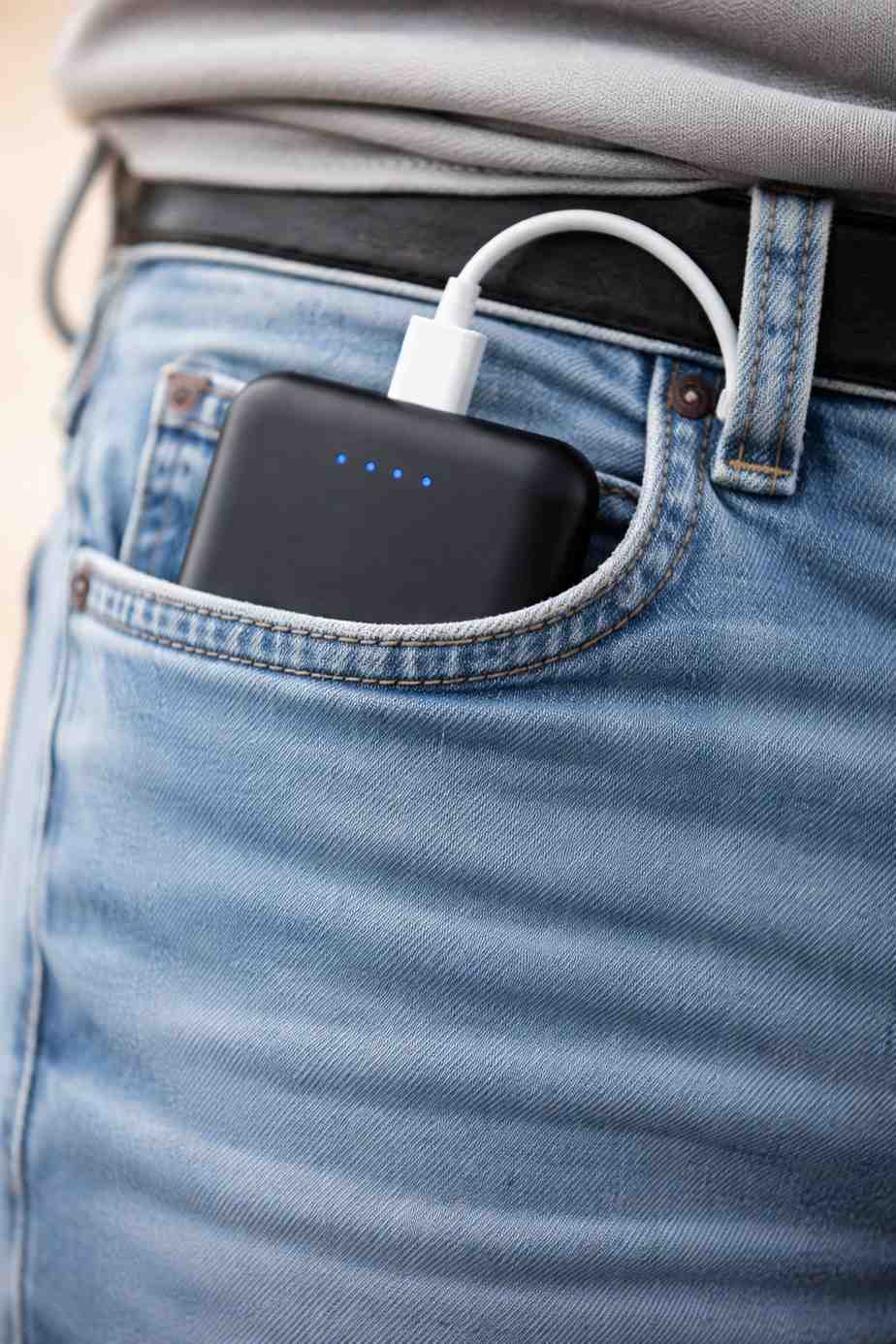
Because they are frequently carried close to the body, many people eventually begin to ask a reasonable question: are power banks safe to carry in your pocket for long periods of time? A portable charger contains a lithium battery and electronic circuitry, and in some cases it may also be connected to a phone while charging. That combination raises concerns about heat, battery safety, and possible electromagnetic field (EMF) exposure.
The good news is that most modern power banks are designed with safety in mind. When manufactured by reputable companies and used properly, they are generally considered safe for daily use. However, like any electronic device, there are a few important factors to understand. In this article, we will explore how power banks work, whether they emit EMF radiation, what risks might exist when carrying one close to the body, and how to use them safely in everyday situations.
How Power Banks Actually Work
To understand whether carrying a portable charger close to the body is safe, it helps to first understand what is inside one of these devices.
A power bank is essentially a rechargeable battery pack that stores electrical energy and releases it through a USB connection when needed. Most power banks use lithium-ion or lithium-polymer batteries, the same battery technology used in smartphones and laptops. These batteries are capable of storing large amounts of energy relative to their size, which is why portable chargers can be small yet powerful.
Inside a typical power bank you will find several components working together:
- One or more lithium batteries that store electricity
- A charging circuit that manages incoming power when the device is being recharged
- A voltage conversion system that regulates power output for USB devices
- Safety protection circuits that prevent overheating, overcharging, and short circuits
When you plug a phone into a power bank, electricity flows from the internal battery through the voltage regulator and into the charging cable. If the power bank is simply sitting in your pocket and not charging anything, the stored energy remains inside the battery and very little electrical activity occurs.
This detail becomes important when discussing EMF exposure and heat generation, because both tend to increase when electricity is actively moving through circuits.
Do Power Banks Emit EMF Radiation?
Before discussing pocket safety, it helps to clarify what EMF radiation actually means in this context.
Electromagnetic fields are produced whenever electricity flows through a wire or electronic circuit. Many household devices create small electromagnetic fields, including phone chargers, lamps, laptops, and televisions. These fields are generally categorized as low-frequency electromagnetic energy rather than the higher-frequency signals used by wireless communication devices.
Power banks typically produce two types of EMF:
First, extremely low frequency electric fields created by electrical current moving through the device. Second, small magnetic fields that occur when energy flows between the battery and a connected device.
The amount of EMF produced by a portable charger is usually quite small compared with other electronics people carry daily. A smartphone in your pocket, for example, regularly transmits cellular signals, WiFi signals, and Bluetooth signals. These wireless transmissions generate significantly more electromagnetic activity than a passive battery pack.
If the power bank is sitting idle in a pocket and not charging a phone, electrical activity inside the device is minimal. As a result, EMF output is typically very low. The level can increase slightly when the power bank is actively charging a device because electricity is flowing continuously through the circuit and cable.
For individuals who prefer to reduce EMF exposure near the body whenever possible, maintaining some distance from electronics is often considered a practical precaution. Products such as the DefenderShield Universal EMF Radiation Shielding Pouch can provide an added barrier when carrying electronics close to the body. This type of pouch is designed to reduce EMF exposure from devices such as phones or portable chargers when they are carried in pockets or bags.
DefenderShield also offers a range of high-quality cell phone cases, hip-carrying bags, and holsters designed to help minimize EMF exposure while keeping your devices easily accessible throughout the day.
Are Power Banks Safe to Carry in Your Pocket?
Now we can address the central question: are power banks safe to carry in your pocket during everyday activities?
In most situations, the answer is yes. Portable chargers are widely used and are designed with multiple built-in safety protections. However, a few factors can influence how safe and comfortable it is to keep one close to the body. The three main considerations include EMF exposure, heat production, and lithium battery safety.
Understanding each of these areas can help you decide the safest way to carry and use a power bank throughout the day.
EMF Exposure When a Power Bank Is Near the Body
For many readers of EMFLuLu, EMF exposure is an important topic. Portable chargers do generate electromagnetic fields when electricity flows through their circuits, but the levels are typically lower than those produced by many other electronics.
A smartphone constantly communicates with nearby cell towers and wireless networks. That communication produces radiofrequency signals that are stronger than the low-frequency fields produced by a battery pack. When a power bank is simply sitting in a pocket, the internal battery is not actively transmitting signals.
That said, some individuals prefer to reduce any unnecessary electronic exposure near the body. For people who want to be cautious, carrying a power bank in a bag, backpack, or jacket pocket rather than a pants pocket can provide additional distance from the body.
Some people also choose protective accessories when storing electronics near their body. Products like the DefenderShield Universal EMF Radiation Shielding Pouch can serve as an additional layer of protection when carrying electronics close to your body. These pouches are intended to help limit exposure from devices such as smartphones or portable chargers when stored in pockets, backpacks, or purses.
In addition, DefenderShield offers a variety of thoughtfully designed accessories, including cell phone cases, hip-carrying bags, and holsters, that aim to reduce direct EMF contact while still allowing for convenient, everyday use of your devices.
Affiliate Advertisement

Heat Generation From Portable Chargers
Another factor to consider when carrying a power bank in a pocket is heat. Lithium batteries can produce warmth when energy flows through them, particularly during charging or fast charging.
In normal operation, a quality power bank should remain only slightly warm. If a phone is connected and charging, some heat may develop inside the battery and internal circuits as energy is transferred to the phone.
Keeping a power bank inside a tight pocket while it is actively charging a device can trap heat and reduce airflow. Over time this may cause the device to become warmer than it would in an open environment such as a desk or table.
While this is rarely dangerous with modern safety protections, it can be uncomfortable and may shorten the life of the battery if it occurs frequently. For that reason, many people prefer to place the power bank in a bag or jacket pocket while charging their phone.
Allowing the device to remain in a cooler, ventilated space helps maintain stable battery temperatures.
Lithium Battery Safety
All portable chargers rely on lithium-ion or lithium-polymer batteries. These battery types are widely used because they are efficient and capable of storing large amounts of energy in compact packages. However, like all lithium batteries, they must be manufactured properly and protected by internal safety circuits.
High-quality power banks typically include multiple safety features such as:
- Overcharge protection
- Short-circuit protection
- Temperature monitoring
- Automatic shutoff systems
These features significantly reduce the risk of overheating or battery failure. Still, the quality of the product matters. Cheap, poorly manufactured battery packs sometimes lack robust protection systems.
For this reason, it is wise to purchase portable chargers from well-known manufacturers that follow safety standards. Choosing reputable brands greatly reduces the chances of battery swelling, overheating, or other safety issues.
Affiliate Advertisement

Situations Where Carrying a Power Bank in Your Pocket May Be Riskier
Although portable chargers are generally safe, certain situations may increase the likelihood of heat buildup or mechanical stress on the battery.
One example occurs when a power bank is charging a phone while both devices are squeezed tightly inside a pocket. In this situation, electrical current is flowing continuously, which can produce heat. Limited airflow inside a pocket may prevent that heat from dissipating efficiently.
Another scenario involves damaged or aging power banks. If the casing becomes cracked or the battery begins to swell, the internal components may become unstable. Carrying a damaged lithium battery close to the body is not recommended.
Finally, tight clothing or pressure against the device may place mechanical stress on the battery. While modern battery packs are durable, excessive bending or pressure should always be avoided.
These situations do not occur frequently, but being aware of them can help prevent problems.
Simple Ways to Reduce EMF and Safety Risks
For readers who want to minimize potential concerns while using portable chargers, a few simple habits can make a meaningful difference.
First, consider carrying your power bank in a bag, backpack, or jacket pocket when possible. Increasing the distance between electronics and the body is one of the easiest ways to reduce EMF exposure.
Second, avoid charging your phone while the power bank is tightly enclosed in a pocket. Allowing the charger to remain in an open space helps reduce heat buildup.
Third, choose well-manufactured devices from reputable brands with built-in safety features. A quality battery pack is far less likely to experience overheating or battery degradation.
Fourth, inspect your portable charger occasionally for signs of damage. If the casing becomes cracked, swollen, or unusually hot during normal use, replacing the device is the safest option.
How Power Banks Compare to Smartphones for EMF Exposure
It is helpful to place the EMF discussion into perspective by comparing portable chargers with smartphones.
Smartphones constantly communicate with nearby cellular towers, WiFi routers, and Bluetooth devices. These wireless transmissions produce radiofrequency electromagnetic energy that is significantly stronger than the low-frequency fields produced by a battery pack.
A power bank does not transmit signals to networks or other devices. It simply stores electrical energy and releases it when needed. Because of this difference, the electromagnetic activity associated with a power bank is usually lower than what your phone produces.
This comparison suggests that the phone itself is typically the larger source of electromagnetic exposure in a pocket.
When You Should Avoid Carrying a Power Bank in Your Pocket
Even though portable chargers are generally safe, there are a few situations where carrying one close to the body may not be ideal.
If the power bank becomes unusually warm while charging, it may be better to move it to a bag or nearby surface until it cools down. Excessive heat is a sign that the device needs better airflow.
If the casing is damaged, cracked, or swollen, the device should be replaced immediately rather than carried in a pocket. Lithium batteries rely on protective casings to remain stable.
Finally, if you plan to charge a phone for an extended period of time, keeping the power bank outside of your pocket can help maintain proper ventilation.
These simple precautions help ensure long-term battery safety and comfort.
Conclusion
Portable chargers have become a practical solution for keeping phones and other electronics powered throughout the day. Their compact size makes them easy to carry, and millions of people keep them in pockets, purses, or backpacks without problems.
So are power banks safe to carry in your pocket? In most everyday situations, the answer is yes. When manufactured by reputable companies and used properly, portable chargers produce low levels of EMF and include built-in protections designed to prevent overheating or battery damage.
However, it is still wise to use common-sense precautions. Avoid charging devices in tightly enclosed pockets, watch for signs of battery damage, and consider carrying the charger in a bag or jacket pocket when possible. For individuals who want additional EMF protection, accessories such as the DefenderShield Universal EMF Radiation Shielding Pouch can help reduce exposure when electronics are stored close to the body.
By understanding how these devices work and following a few simple habits, you can safely enjoy the convenience of portable power without unnecessary worry.
Before You Go…
Get Weekly EMF Protection Tips
Enjoy this article? Join the EMFLuLu newsletter for simple weekly tips to reduce everyday EMF exposure from phones, WiFi routers, laptops, and smart home devices.
Try Our Free EMF Calculators
Curious how much EMF exposure you may experience each day?
These simple tools can help you estimate your exposure and identify possible problem areas in your home.
Try these free calculators:
Like this article? Pin it on Pinterest!


More to Explore