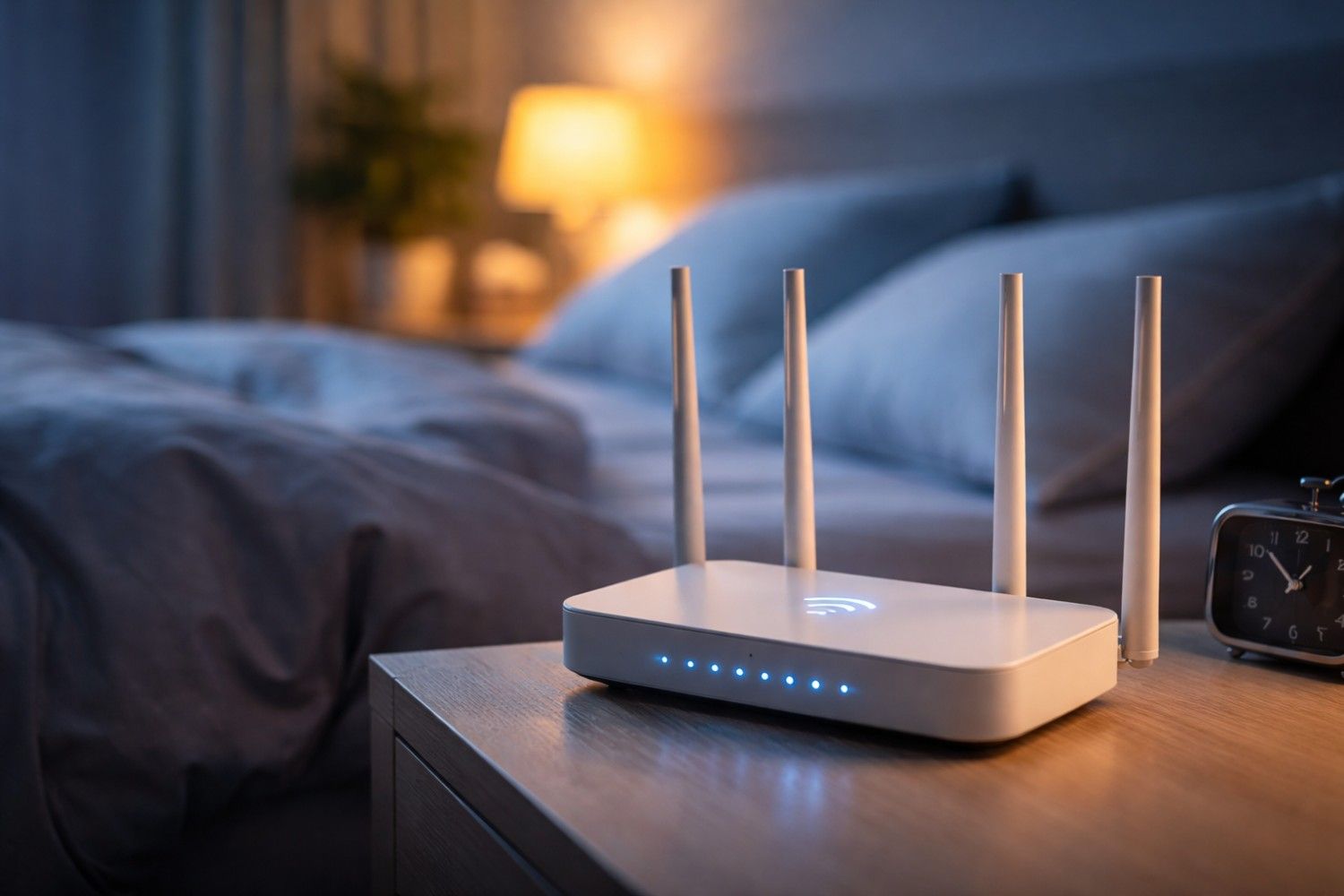
In today’s connected world, WiFi has become as essential as electricity. It powers our phones, laptops, smart TVs, and even home security systems. Most households leave their routers on 24/7 without a second thought. But as awareness of electromagnetic field (EMF) exposure grows, more people are starting to ask an important question: should you turn off wifi at night?
This question often comes up when people are trying to improve sleep quality, reduce unnecessary exposure to wireless signals, or simply create a calmer nighttime environment. While WiFi radiation falls into the category of non-ionizing radiation – generally considered low risk – there is still interest in minimizing constant exposure, especially during the hours when your body is meant to rest and recover.
In this article, we’ll take a balanced and practical look at whether turning off your WiFi at night makes sense. You’ll learn what WiFi EMF actually is, the potential benefits and downsides of shutting it off, and some realistic alternatives that may fit better with your lifestyle.
What Is WiFi EMF and How Does It Work?
WiFi operates using radiofrequency (RF) radiation, a type of non-ionizing electromagnetic energy. Unlike ionizing radiation (such as X-rays), non-ionizing radiation does not carry enough energy to remove tightly bound electrons from atoms. That’s why WiFi is generally considered safe under current scientific guidelines.
However, your WiFi router emits RF signals continuously as long as it is powered on. These signals allow devices to connect and exchange data wirelessly. The strength of this exposure typically decreases rapidly with distance, meaning the closer you are to the router, the stronger the signal you receive.
It’s also important to recognize that WiFi is only one source of EMF in your home. Smartphones, Bluetooth devices, tablets, laptops, and even nearby cell towers contribute to your overall exposure. Because of this, the goal for many people is not complete elimination, but rather reducing unnecessary or constant exposure when possible.
Why People Consider Turning Off WiFi at Night
As more individuals become mindful of their home environment, nighttime has become a natural focus for change. Sleep is one of the most important biological processes, and many people are looking for ways to optimize it. That’s where the idea of turning off WiFi comes in.
When people ask should you turn off wifi at night, they’re often motivated by a combination of curiosity, caution, and a desire for better rest. The reasoning behind this decision tends to fall into a few common themes.
First, there is the idea of reducing cumulative EMF exposure. Even though WiFi radiation is low-level, it is constant. Turning it off for 6–8 hours each night creates a window where your environment is quieter from an electromagnetic standpoint.
Second, some individuals feel that reducing electronic activity at night helps create a more peaceful atmosphere. This isn’t just about EMF – it’s also about habits. When WiFi is off, there’s less temptation to scroll through your phone or stream late into the night.
Finally, there is a psychological component. For people who are sensitive to environmental factors or simply prefer a more controlled living space, turning off WiFi can provide peace of mind. That alone can contribute to better sleep.
Pros of Turning Off WiFi at Night
Before making any changes, it’s helpful to understand the potential benefits in a realistic way. While turning off WiFi is not a miracle solution, it can offer some meaningful advantages depending on your situation.
One of the most obvious benefits is a reduction in EMF exposure during sleep. Although the levels emitted by WiFi routers are low, eliminating them for a portion of the day does reduce your total exposure over time. For individuals trying to minimize all possible sources, this can feel like a logical step.
Another potential benefit is improved sleep quality, particularly from a behavioral standpoint. When WiFi is turned off, devices that rely on internet connectivity become less engaging. This can naturally encourage people to disconnect earlier, which supports healthier sleep routines.
There’s also the advantage of creating clearer digital boundaries. Many people struggle with constant connectivity, and shutting off WiFi can act as a signal that the day is over. Over time, this habit can reinforce a more structured and restful evening routine.
Even small energy savings can be considered a minor benefit. While a router does not consume a large amount of electricity, turning it off every night can still reduce usage slightly over the course of a year.
If your router is located close to your bedroom, you may also benefit from increasing distance or reducing exposure without having to rearrange your space. During the day, if you use a laptop frequently, you might consider tools like the DefenderShield Laptop Radiation Shield which is designed to reduce direct exposure when devices are in close contact with your body.
Cons of Turning Off WiFi at Night
While the benefits may sound appealing, there are also some practical drawbacks that need to be considered. For many households, these downsides can outweigh the advantages.
One of the biggest concerns is disruption to smart home devices. Many modern homes rely on WiFi for thermostats, security cameras, doorbells, and alarm systems. Turning off your router could interfere with these systems, potentially reducing their effectiveness or functionality.
Another issue is delayed updates and backups. Devices often perform automatic updates overnight, including software patches, security updates, and cloud backups. Turning off WiFi can interrupt these processes, meaning they will need to run during the day instead.
Convenience is another factor. If someone in your household wakes up early or works irregular hours, having no internet access can be frustrating. This is especially true in homes with multiple people who have different schedules.
There’s also the reality that WiFi is just one piece of the EMF puzzle. Even if you turn it off, your phone may still be connected to a cellular network, and other devices may continue emitting signals. Because of this, the overall reduction in exposure may be smaller than expected.
Does Turning Off WiFi at Night Actually Reduce EMF?
The short answer is yes- turning off your WiFi at night does reduce EMF exposure. However, it’s important to understand the scale of that reduction.
WiFi routers emit RF radiation continuously, so shutting them off eliminates that specific source entirely during the time they are powered down. If your router is located close to where you sleep, this reduction may be more noticeable.
That said, WiFi is only one contributor to your overall exposure. Smartphones, nearby networks, and external sources still exist. This means that while turning off WiFi can lower your exposure, it does not eliminate it completely.
When people ask should you turn off wifi at night, the more useful perspective might be to view it as one small step within a broader strategy rather than a complete solution.
Affiliate Advertisement

Alternative Ways to Reduce EMF at Night
If turning off your WiFi feels inconvenient or disruptive, there are several other ways to reduce exposure without sacrificing connectivity. These approaches can often provide a good balance between comfort and practicality.
One of the simplest changes is increasing distance between your router and your sleeping area. Since EMF strength decreases rapidly with distance, even moving the router a few feet farther away can make a difference.
Another effective strategy is using airplane mode on your phone while you sleep. This stops the device from transmitting signals while still allowing you to use it as an alarm clock.
You can also turn off Bluetooth devices, such as wireless headphones or smartwatches, when they are not in use. These devices emit their own signals and can contribute to your overall exposure.
For those looking to go a step further, switching to a wired internet connection at night is an option.
Who Should Consider Turning Off WiFi at Night?
Not everyone needs to make this change, but there are certain groups who may find it more beneficial.
Light sleepers who are easily affected by their environment may appreciate the added sense of calm that comes with reducing electronic activity. Even if the benefit is partly psychological, better sleep is still a valuable outcome.
Individuals who consider themselves sensitive to EMF may also prefer turning off WiFi as part of a larger effort to control their environment.
Families with young children sometimes choose to reduce exposure as a precautionary step, especially in bedrooms or play areas.
Finally, anyone looking to improve their relationship with technology may find that turning off WiFi at night helps create healthier boundaries.
Conclusion
So, should you turn off wifi at night? The answer depends on your priorities, your home setup, and your personal comfort level.
Turning off your WiFi can reduce EMF exposure and may help create a more restful nighttime environment. It can also encourage better habits and provide peace of mind. At the same time, it comes with trade-offs in convenience, especially in homes that rely on constant connectivity.
For many people, the best approach is not an all-or-nothing decision, but a balanced one. Small adjustments – like moving your router, using airplane mode, or limiting device use before bed – can offer similar benefits without major disruption.
In the end, turning off WiFi at night is less about eliminating risk and more about creating a space that feels comfortable, intentional, and supportive of good sleep.
Before You Go…
Get Weekly EMF Protection Tips
Enjoy this article? Join the EMFLuLu newsletter for simple weekly tips to reduce everyday EMF exposure from phones, WiFi routers, laptops, and smart home devices.
Try Our Free EMF Calculators
Curious how much EMF exposure you may experience each day?
These simple tools can help you estimate your exposure and identify possible problem areas in your home.
Try these free calculators:
Like this article? Pin it on Pinterest!

More to Explore