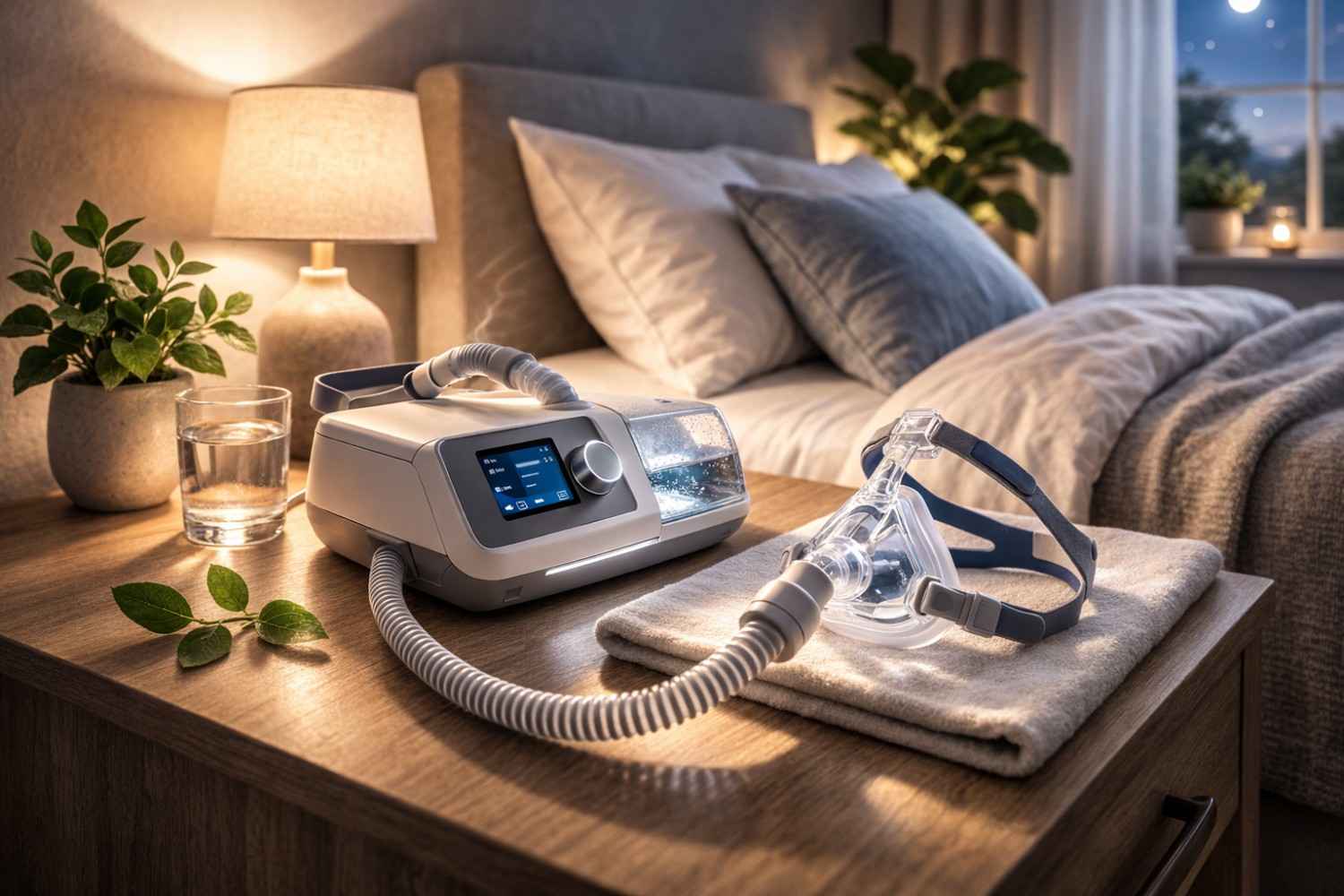
For millions of people, CPAP therapy is life-changing. Continuous Positive Airway Pressure (CPAP) machines help keep airways open during sleep, reducing snoring, improving oxygen levels, and lowering long-term cardiovascular risk. For those with moderate to severe sleep apnea, consistent nightly use is not optional – it is essential.
At the same time, CPAP machines are electrical devices that run just inches from the body for six to eight hours every night. That reality has led many health-conscious individuals to explore EMF protection for sleep apnea patients using CPAP machines. They want reassurance that they are improving their breathing without introducing unnecessary electrical exposure.
The good news is that CPAP machines typically emit low levels of electromagnetic fields (EMFs), and there are simple, practical ways to reduce exposure without interfering with therapy. In this article, we will examine what types of EMF CPAP machines produce, whether those levels are significant, and how to thoughtfully approach EMF protection for sleep apnea patients using CPAP in a balanced, evidence-based way.
Do CPAP Machines Emit EMF Radiation?
Before trying to reduce exposure, it helps to understand what we are actually dealing with. CPAP machines are powered medical devices that contain a small electric motor, circuit board, and sometimes wireless communication components. Because of this, they can emit electromagnetic fields.
There are three primary types of EMF associated with CPAP machines:
First, there are low-frequency magnetic fields generated by the motor. These are similar to what you would find near small household appliances such as fans or air purifiers. The intensity decreases rapidly with distance.
Second, there are electric fields associated with the power cord and internal wiring. These are usually strongest directly adjacent to the cord.
Third, in some modern models, there may be radiofrequency (RF) emissions if the device has built-in WiFi, Bluetooth, or cellular capability to transmit compliance data to healthcare providers.
In most cases, the motor sits on a nightstand while the hose delivers air to the mask. Your head is closer to the hose than to the motor itself. Measurements performed with reliable EMF meters typically show that magnetic field levels drop significantly within several inches of the unit.
For those who prefer data rather than guesswork, measuring your bedroom environment can provide clarity. A professional-grade meter such as the Safe Living Technologies EMF Meters can help identify actual field strengths near the device, power cord, and surrounding electronics. Measurement prevents unnecessary worry and allows targeted adjustments instead of blanket changes.
Affiliate Advertisement
Understanding Why EMF Concerns Arise
It is important to recognize why this topic comes up in the first place. CPAP therapy is used nightly and often indefinitely. Long-term, close-range exposure makes people think differently than they would about a device used occasionally.
Sleep is also a vulnerable state. During the night, the body is repairing tissues, regulating hormones, and recalibrating neurological function. Some individuals who are sensitive to electrical environments may notice changes in sleep quality when surrounded by multiple electronics.
However, current scientific evidence does not show strong or consistent proof that low-level EMF exposure from CPAP machines causes harm. Most exposure levels measured near CPAP units fall well below established safety guidelines.
That said, many people still prefer to reduce unnecessary exposures where possible. When approached calmly and logically, EMF protection for sleep apnea patients using CPAP can focus on reasonable adjustments rather than extreme modifications.
Practical Ways to Reduce EMF Exposure Without Affecting Therapy
Before outlining specific strategies, it is worth emphasizing one key principle: never modify or block your CPAP machine in a way that interferes with airflow, ventilation, or medical performance. CPAP therapy prevents oxygen drops, reduces strain on the heart, and lowers stroke risk. Untreated sleep apnea carries far greater health consequences than the modest EMF output of the device.
With that foundation in mind, here are practical adjustments that maintain safety while reducing exposure.
Increase Distance From the Motor Unit
Electromagnetic fields decrease rapidly with distance. Even moving the CPAP motor six to twelve inches farther from your head can significantly reduce measured magnetic field strength.
Consider placing the unit slightly lower than mattress height on a stable surface. Avoid placing it directly beside your pillow if possible. The hose length usually provides flexibility in positioning.
This simple adjustment is often enough for those researching EMF protection for sleep apnea patients using CPAP, as it addresses the strongest field source — the motor – without changing therapy settings.
Manage Power Cord Placement
Power cords can generate measurable electric fields directly adjacent to them. Avoid running the cord underneath your pillow or directly beneath your torso.
Keep the cord straight rather than tightly coiled. If there is excess length, loosely route it away from the sleeping area instead of bundling it beside your head.
These small changes can reduce localized exposure without requiring any special products.
Disable Wireless Features If Not Needed
Many newer CPAP machines transmit compliance data to physicians using WiFi or cellular signals. If your doctor does not require daily remote monitoring, you may be able to disable wireless features in the device settings.
Check your user manual or speak with your equipment provider before making changes. Turning off wireless capability can eliminate RF emissions entirely, leaving only low-frequency motor fields.
For individuals especially concerned about EMF protection for sleep apnea patients using CPAP, disabling unnecessary wireless functions is one of the most direct steps available.
Improve Overall Bedroom EMF Hygiene
Sometimes the CPAP is not the largest source of EMF in the room. Nearby WiFi routers, smart speakers, alarm clocks, and charging cables may contribute more significantly.
If your router is close to the bed, relocating it outside the bedroom can reduce overall nighttime RF exposure. For those unable to move it, shielding options such as a router guard (various options from Amazon.com) can help contain ambient wireless emissions while preserving signal performance.
You can also turn off WiFi overnight through your router settings if feasible. Removing unnecessary chargers from outlets and keeping extension cords away from the bed further simplifies the electrical environment.
When the whole room is addressed, concerns about the CPAP itself often diminish.
Should You Shield the CPAP Machine Directly?
This question deserves careful attention. It is not recommended to wrap, cover, or modify a CPAP machine with shielding fabric or metallic materials. Doing so can block ventilation, trap heat, and interfere with the motor’s function.
However, shielding the surrounding environment is different from shielding the device itself.
Some people choose to use bed canopies designed to reduce ambient radiofrequency exposure. For example, the Swiss Shield Ventus Bed Canopy or the Swiss Shield Naturell Ultra Bed Canopy.
These canopies are intended to reduce external RF radiation entering the sleeping area. They do not modify the CPAP machine and should be installed according to manufacturer guidance to ensure proper airflow and grounding where required.
For most individuals, such measures are not necessary. They may be considered by those who are highly sensitive to wireless radiation or who live in dense urban environments with heavy signal traffic.
The key point is this: never compromise airflow or therapy performance in the name of EMF reduction.
Comparing CPAP EMF to Everyday Appliances
Perspective is important. A CPAP motor is comparable to other small bedside appliances such as air purifiers or white noise machines. Magnetic field levels are generally modest and decline quickly with distance.
In many homes, higher readings may be found near kitchen appliances, breaker panels, or even electric blankets. Yet these devices do not carry the same emotional weight because they are not associated with medical therapy.
When evaluating EMF protection for sleep apnea patients using CPAP machines, it is useful to compare measured values rather than relying on assumptions. Often, a simple meter reading reveals that exposure levels are lower than expected.
Who Might Consider Extra Precautions?
Most CPAP users can sleep comfortably with minor positioning adjustments. However, certain individuals may choose to take additional steps.
Those who report electromagnetic sensitivity symptoms may feel better minimizing nighttime exposures. Pregnant individuals sometimes prefer to reduce cumulative environmental exposure during gestation. People living in high-density apartment buildings with multiple routers nearby may also choose broader shielding strategies.
In these cases, a layered approach works best: measure first, adjust placement, disable wireless features, and then evaluate whether additional environmental shielding is warranted.
The focus should remain on calm optimization rather than fear-driven reactions.
Affiliate Advertisement
The Bigger Health Picture
Sleep apnea is associated with elevated blood pressure, increased risk of heart attack, stroke, arrhythmia, insulin resistance, and daytime fatigue. CPAP therapy dramatically reduces many of these risks when used consistently.
From a risk-benefit standpoint, untreated sleep apnea presents far more documented danger than low-level EMF exposure from a CPAP motor.
This does not invalidate concerns about electrical environments. It simply places them in context. The goal of EMF protection for sleep apnea patients using CPAP is not to eliminate all electromagnetic exposure – an impossible task in modern life — but to reduce unnecessary sources while preserving life-improving therapy.
Conclusion
For those seeking EMF protection for sleep apnea patients using CPAP machines, the path forward is usually straightforward. Increase distance from the motor, manage cord placement, disable wireless features if not required, and optimize the overall bedroom environment. Measure before making assumptions, and never compromise airflow or therapy effectiveness.
CPAP treatment saves lives and improves long-term health outcomes. With a few thoughtful adjustments, you can reduce electromagnetic exposure while continuing to breathe easier every night.
Before You Go…
Get Weekly EMF Protection Tips
Enjoy this article? Join the EMFLuLu newsletter for simple weekly tips to reduce everyday EMF exposure from phones, WiFi routers, laptops, and smart home devices.
Try Our Free EMF Calculators
Curious how much EMF exposure you may experience each day?
These simple tools can help you estimate your exposure and identify possible problem areas in your home.
Try these free calculators:
Like this article? Pin it on Pinterest!
More to Explore