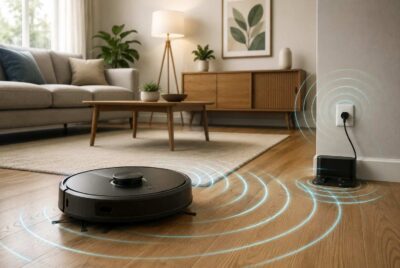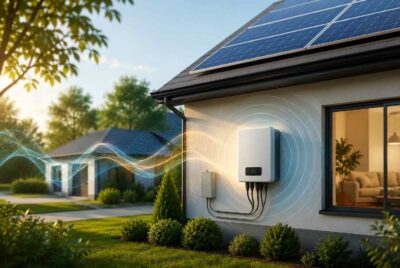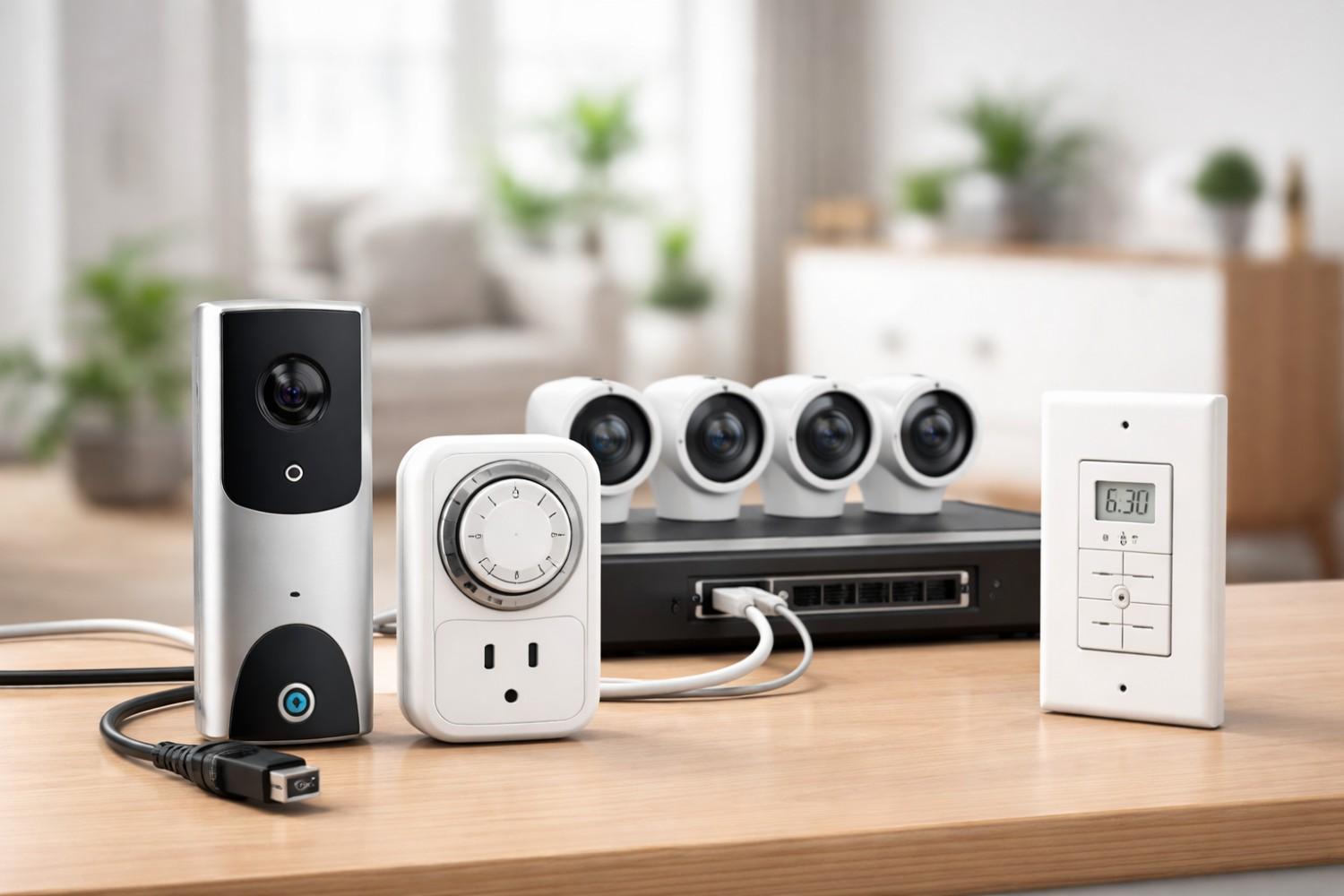
Smart home technology promises convenience, security, and control, but it also introduces a form of background exposure that many homeowners are only beginning to question. Devices that once relied on simple wiring and mechanical switches now operate as small networked computers, quietly transmitting data day and night. For families who are sensitive to electromagnetic fields, or who simply prefer to reduce unnecessary wireless activity, this raises an important question: can you build a modern smart home without filling it with always-on radios?
This question is especially relevant for doorbells, cameras, and smart plugs – three categories of devices that tend to operate continuously and are often installed close to living spaces. Many people searching for a video doorbell without WiFi low EMF quickly discover that most “smart” options rely heavily on wireless communication, even when they are marketed as wired.
The good news is that alternatives do exist. By understanding how these devices communicate, where most emissions come from, and which design choices matter most, you can create a home that is still functional and secure without relying on constant wireless transmission. This article explores low-EMF alternatives for doorbells, cameras, and plugs, and shows how to replace always-on wireless with wired, local, and scheduled solutions that dramatically reduce long-term exposure.
Why Always-On Wireless Matters More Than Peak Exposure
When people think about EMF from electronics, they often focus on peak signal strength. In reality, long-term exposure is driven more by duty cycle – how often a device transmits – than by short bursts of high power.
Smart home devices are different from phones and laptops in this respect. A phone might transmit heavily for a few minutes during a call and then remain mostly idle. A smart doorbell or camera, by contrast, may maintain a persistent network connection, listen constantly for motion, and upload data repeatedly throughout the day.
This creates three layers of continuous exposure.
First, the device itself transmits whenever it sends video, receives commands, or synchronizes with cloud servers.
Second, the indoor base station, chime, or hub often acts as an always-on relay inside the home.
Third, the router must remain active 24/7 to support these devices, increasing the total wireless load of the entire network.
Over months and years, this steady background activity becomes far more significant than occasional short-term use of personal electronics. For homeowners seeking meaningful reduction, the goal is not to eliminate all EMF, but to remove unnecessary always-on transmitters from living spaces.
What “Low-EMF” Really Means in a Smart Home Context
Before comparing alternatives, it is important to define what “low-EMF” actually means in practical terms.
No electronic device is completely free of electromagnetic fields. Even wired devices generate small electric and magnetic fields from their power circuits. The key difference lies in whether a device contains an active radiofrequency transmitter and how often that transmitter operates.
In a smart home context, low-EMF design usually involves three principles.
The first is replacing wireless communication with wired communication wherever possible.
The second is reducing duty cycle by avoiding devices that transmit continuously.
The third is relocating unavoidable transmitters away from bedrooms and long-dwell areas.
When these principles are applied consistently, overall exposure can be reduced dramatically without sacrificing functionality.
Low-EMF Alternatives for Video Doorbells
Video doorbells are often the first smart home device that raises concern because they operate continuously and are mounted directly on exterior walls near living spaces.
Before comparing specific designs, it helps to understand how doorbells differ architecturally.
Some doorbells are battery-powered and fully wireless. These typically transmit frequently and rely heavily on cloud services.
Some are wired for power but still transmit all data via WiFi.
A smaller group uses wired Ethernet for both power and data, eliminating the need for a wireless radio inside the device.
For readers searching specifically for a video doorbell without WiFi low EMF, this third category is the most relevant.
PoE Doorbells With Wired Ethernet
Before listing any models, it is worth explaining why Power over Ethernet systems matter.
In a PoE setup, a single Ethernet cable carries both power and data from a PoE switch or injector to the doorbell. The device does not need a WiFi radio at all. Video is transmitted through a shielded cable directly to a local recorder or monitoring system.
This design reduces wireless exposure in three important ways.
- The doorbell itself does not transmit radiofrequency signals.
- There is no need for a dedicated indoor wireless base station.
- Video can be recorded locally rather than streamed continuously to the cloud.
A widely used example in this category is the Reolink Video Doorbell PoE (link to Amazon.com).
Affiliate Advertisement

Wired-Power Doorbells With Reduced Wireless Use
Not every home can run Ethernet to the front door. In these cases, the next best alternative is a wired-power doorbell that minimizes wireless dependence.
Before choosing from this category, it is important to understand that these devices still use WiFi. The goal is not elimination, but reduction.
Wired-power models avoid high-power battery charging circuits and can often operate at lower transmit levels. They also tend to be more stable, reducing repeated reconnections that increase duty cycle.
When selecting a model in this category, look for devices that allow:
- Lower video resolution and frame rate
- Motion-triggered uploads instead of continuous streaming
- Placement of the indoor chime away from bedrooms
This approach does not match the low exposure of PoE, but it can significantly reduce background wireless traffic.
Non-Camera Doorbell Alternatives
For some households, the real need is awareness, not video.
Before assuming that a camera is required, it is worth considering whether motion lighting, a wide-angle peephole viewer, or a high-quality wired chime can solve the same problem.
This approach eliminates wireless transmission entirely while preserving basic security and awareness at the front door.
Low-EMF Alternatives for Security Cameras
Security cameras often contribute more to household wireless exposure than doorbells because they are installed in multiple locations and may stream video continuously.
As with doorbells, the architecture matters more than the brand.
- WiFi cameras generate the highest long-term exposure.
- Hybrid systems shift transmission to an indoor base station.
- Wired systems eliminate wireless transmission at the camera entirely.
Wired PoE Camera Systems With Local Recording
For homeowners serious about minimizing exposure, hardwired PoE camera systems represent the gold standard.
Before listing benefits, it is important to understand what these systems do differently.
Each camera connects via Ethernet to a PoE switch or NVR. Power and data travel through the cable. Video is stored locally on a recorder inside the home.
This design eliminates wireless transmission at the camera, avoids cloud dependence, and provides stable performance.
Systems like Reolink Security Cameras Without WiFi allow homeowners to build fully wired monitoring setups that operate independently of wireless networks. This approach not only reduces EMF, but also improves privacy and reliability.
Affiliate Advertisement

Low-EMF Alternatives for Smart Plugs
Smart plugs are often overlooked in EMF discussions, yet they are among the most persistent wireless devices in a home.
Before listing alternatives, it helps to reflect on why most people use smart plugs in the first place.
In most cases, the goal is simple scheduling, energy control, or remote on-off switching.
All of these functions can be achieved without WiFi.
Mechanical and Digital Outlet Timers
Mechanical and digital timers perform scheduling functions with no wireless transmission at all. They are ideal for lamps, fans, holiday lights, and even for scheduling router shutdowns at night. These devices replace always-on WiFi plugs with a simple, reliable solution that generates no radiofrequency emissions.
A wide range of timer switches is available through Amazon.
Digital and Mechanical Outlet Timers on Amazon
In-Wall Timer Switches
In-wall timer switches allow permanent scheduling without any wireless communication. They are especially useful for porch lights, bathroom fans, and outdoor lighting. These switches eliminate the need for smart plugs entirely in many use cases.
Reducing Exposure Even When Wireless Is Unavoidable
Even in a carefully designed home, some wireless devices are often unavoidable.
Before listing techniques, it is important to recognize that EMF reduction is cumulative. Small improvements add up over time.
The most effective strategies include:
- Placing hubs and base stations far from bedrooms and work areas.
- Disabling unnecessary live streaming features.
- Reducing motion sensitivity to limit repeated uploads.
- Scheduling router downtime during sleeping hours.
These steps reduce duty cycle, which is the most important factor in long-term exposure.
Supporting EMF Reduction With Shielding and Home Practices
While wiring and placement produce the largest reductions, some homeowners also choose to add protective layers to their broader technology habits.
DefenderShield products are commonly used to reduce exposure from phones and tablets used close to the body. Some readers also use EMF-Harmony’s harmonizing or grounding products as a complementary layer.
These products should always be viewed as supportive measures rather than primary solutions. The greatest reductions come from removing or relocating transmitters.
Conclusion
Building a low-EMF smart home is not about rejecting technology. It is about choosing designs that respect both convenience and long-term health.
Before You Go…
Get Weekly EMF Protection Tips
Enjoy this article? Join the EMFLuLu newsletter for simple weekly tips to reduce everyday EMF exposure from phones, WiFi routers, laptops, and smart home devices.
Try Our Free EMF Calculators
Curious how much EMF exposure you may experience each day?
These simple tools can help you estimate your exposure and identify possible problem areas in your home.
Try these free calculators:
Like this article? Pin it on Pinterest!

More to Explore