Electromagnetic fields (EMFs) are everywhere in modern life, from your Wi-Fi router to your phone charger. If you live in an apartment or small home, you’re likely surrounded by wireless signals, smart devices, Bluetooth items, and power cables in every room. While some EMF exposure is unavoidable, many people are looking for natural, low-cost ways to reduce their exposure – without buying pricey EMF-blocking gadgets. That’s where the best household items that naturally block EMF in small homes come in. It might surprise you, but everyday objects you already own can act as simple, effective EMF barriers when used the right way.
This article explores how to use common and affordable household materials like blankets, books, mirrors, ceramics, and even plants to create natural shields that help you reduce EMF exposure – especially in tight living spaces where distance or large shielding devices are not practical. Whether you’re just getting started with EMF awareness or you’re looking for smarter ways to reduce wireless exposure without expensive products, this guide is for you.
What Are EMFs and Why Should You Care?
Electromagnetic fields (EMFs) are invisible areas of energy produced naturally by electrical currents and artificially through wireless technology. You’re exposed to EMFs every day from sources such as microwaves, Wi-Fi routers, cell phones, smart meters, laptops, Bluetooth speakers, and even power lines. EMFs are categorized into low-frequency and high-frequency types, and although much of the research on EMF health effects is ongoing and inconclusive, many people choose to minimize exposure – especially in close proximity.
In small homes or apartments, devices are often clustered in living spaces, which creates a challenge. You’re closer to your router when you’re in bed. Your laptop and phone charging on a nightstand are just inches from your head while you sleep. Even appliances like your fridge and TV can emit low-level EMFs into shared rooms. It’s no surprise that many people are searching for practical, affordable ways to shield themselves from constant exposure – without spending hundreds on professional EMF-blocking products.
Can Household Items Really Block EMF Radiation?
Before diving into ideas, it’s important to understand how EMF shielding works. Most EMF-blocking devices use conductive material – often a metallic or dense substance – to absorb or deflect electromagnetic waves. But you don’t always need a special product to get the same effect. Natural materials like dense fabrics, ceramics, books, and metal surfaces also interact with electromagnetic waves. They block, absorb, or disrupt EMFs when placed directly between you and the source.
This means that with a little creativity, you can use household objects to create barriers or buffers that reduce EMF exposure in your most sensitive spaces – like bedrooms, workstations, or children’s play areas. And for small homes, knowing how to use space effectively is as important as the items you use.
The Best Household Items That Naturally Block EMF in Small Homes
Before listing these natural EMF blockers, it’s important to understand how to use them. The following recommendations are not simply a list of what item to use, but how to apply them strategically. The key is to create intentional placement – using objects to create distance or a barrier between your body and a source of EMF. Even a few inches of EMF-blocking material placed correctly can make a noticeable difference.
Below are some of the best household items that naturally block EMF in small homes, and how to use them effectively:
Thick Cotton or Wool Blankets
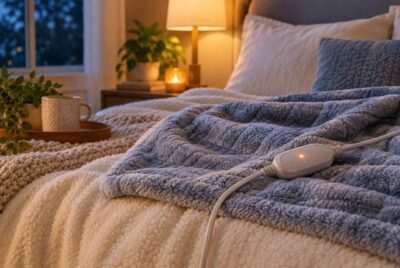
Blankets made from dense natural fibers like cotton, wool, or fleece are surprisingly good at blocking lower-level EMF waves – especially if they are heavy and layered. While they won’t block high-level radiation like metal does, they can significantly reduce field strength from small devices like phones and laptops when used intentionally.
For example, when you place a thick blanket over your lap while working with a laptop, you’re creating a physical layer that dampens EMFs traveling from the device to your body. You can also drape blankets over laptop bags or use them as a makeshift cover for your Wi-Fi router at night when it’s not in use. Avoid covering devices that generate heat while they’re operating to prevent any overheating issues.
Blankets are especially useful in small homes where devices often lie close to your body. Try placing folded blankets in a stack between your bed and the wall where your router or smart meter is located. This adds a natural buffer and reduces direct exposure during sleep – a time when many people prefer a low-EMF environment.
Ceramic or Glass Containers
Ceramic and glass materials do not conduct electricity and, because of their density, they can reflect or absorb some types of EMF radiation. You likely have ceramic mugs, glass cookware, or bowls in your kitchen that could serve as EMF reducers when used properly.
To use ceramic or glass containers effectively, position them between yourself and EMF-emitting devices. For example, when using a tablet or phone on a desk, you can place a heavy ceramic baking dish in the path between your feet and the device. Likewise, placing glass jars or thick vases on a shelf between your bed and your router can help create a subtle EMF shield.
These natural materials are not perfect blockers, but when used in layers or with other items on this list, they contribute to a healthier indoor environment.
Affiliate Advertisement

Books and Bookshelves
Books – and lots of them – are excellent EMF blockers because they’re dense and made of layered materials that absorb and scatter electromagnetic waves. If you live in a small home and your workspace is close to your router or wiring, a fully stocked bookshelf can function as an EMF buffer.
If your bedroom shares a wall with your living room – and your TV or router sits on the opposite side of that wall – you can use a bookshelf on your side to reduce the EMF passing through. The mass of the paper and ink in books disrupts the flow of EMF waves. You can also stack books or place them strategically on nightstands or between sources of EMF and areas where you spend the most time.
Even a handful of textbooks or large novels stacked next to your bed or couch can reduce the EMF strength between you and a nearby device. Books are also great for visually hiding routers or power cords while doubling as protection. The more mass between you and an EMF source, the better.
Aluminum Foil and Metal Sheets
Let’s get practical – everyone has aluminum foil in their kitchen. While it may seem like a stereotype, aluminum foil is one of the most effective DIY EMF blockers around. It’s conductive, inexpensive, and easy to apply. For a small home, you don’t have room for giant EMF tents or wall panels, but aluminum can be used to shield areas of concern efficiently.
One idea is to create a smart meter shield. If your smart meter is mounted outside your bedroom wall, you can tape a layer of aluminum foil to a cardboard piece and secure it to the inside wall behind your headboard. This reduces the EMF exposure in your sleeping area significantly.
You can also wrap small boxes or line containers with foil to create safe storage for phones or wireless devices. When tightly wrapped in aluminum, a device cannot send or receive EMF signals. The key is to ensure that the metal covers all sides – and take care not to cover devices while charging or in use, as this can create heat buildup.
Metal baking sheets are another useful item. Lean one behind your laptop or router, or place it behind a TV to reflect EMFs away from high-use living areas.
Plants with EMF Absorbing Properties
While plants do not block EMFs in the electrical sense, they do help create healthier indoor environments, and some studies suggest that certain plants can reduce radiation stress or absorb minor electromagnetic energy. Plus, plants naturally promote cleaner air and a grounding effect in your home.
Some people swear by aloe vera, snake plants, cacti, and spider plants for EMF protection. You can place pots between your seating area and devices like routers, smart speakers, or power strips. Even if the scientific EMF absorption is minimal, plants add balance, reduce electrical stress, and make your space feel calmer – especially in compact homes where EMFs can feel overwhelming.
A helpful tip is to place medium to large plants in corners where EMF energy tends to gather – such as near power outlets or behind your TV. These “green buffers” may not stop EMFs completely, but they serve as an accessible and natural addition to your home’s shielding strategy.
Affiliate Advertisement

Mirrors and Stainless-Steel Surfaces
Mirrors contain a metallic backing and can reflect EMF waves when placed strategically. The key to using mirrors for EMF protection in small homes is knowing where to position them. If your bedroom shares a wall with the kitchen (with a smart fridge or microwave nearby), you could hang a mirror on your bedroom side to reflect EMF waves away from your body during sleep.
Similarly, stainless-steel surfaces such as a refrigerator, baking sheet, or even a metal trash can lid can be arranged as simple reflectors. Place them between you and a router or radio device, or behind electronics to direct EMF away from seating areas. Stainless steel works especially well as a back shield behind devices mounted on walls.
Again, make sure the devices are not covered while plugged in or generating heat, and never place metal shields in damp areas where they might become hazardous.
How to Arrange Your Small Home for Optimal EMF Protection
Even with the best household items that naturally block EMF in small homes, your home setup plays a huge role in overall exposure. Small homes make placement challenging, but smart arrangement can make a major difference.
Start by identifying high-EMF areas – places where your router, smart meter, or phone charger is located. Then determine where you spend the most time, such as your bed, workspace, or sofa. You want to create as much distance and as many barriers between those zones as possible, without resorting to expensive shielding cloth or paints.
A simple yet powerful move is placing your Wi-Fi router as far from bedrooms as possible, preferably in a living room corner or high shelf. If relocating is not possible, surround the router with a dense barrier: a ceramic vase, stacked books, or a bowl lined with aluminum foil. You can even place it behind a curtain lined with organic cotton or linen to serve as a soft shield.
Another option is to create a “router window” – place your router near an actual window so EMF waves reflect outdoors rather than bouncing around the room. For smart meters, use double drywall and thick, layered barriers directly behind the meter, especially for rooms that share a wall.
Lastly, turn off or unplug wireless devices at night. Even with natural shielding, reducing the “on-time” of EMF sources is the most effective solution.
What to Do When Household Items Aren’t Enough
Every household has natural EMF blockers, but sometimes DIY solutions are not sufficient. In small homes especially, you may need to invest in targeted protection for key areas – like your bed, lap, or devices.
Consider upgrading to EMF-blocking fabric, grounding pads, or phone cases from reliable companies that specialize in EMF protection. Products from trusted brands like EMF-Harmony and DefenderShield offer shielding with measurable results, especially when used in combination with household setups.
These products can complement your existing strategy without requiring a total home overhaul. You can easily incorporate affiliate links to these items on your blog or store for interested readers.
Conclusion
Even if you live in a small apartment or a compact home, you can take meaningful steps to reduce EMF exposure without spending a lot of money. By focusing on the best household items that naturally block EMF in small homes, such as thick blankets, books, ceramic containers, metal sheets, plants, and mirror panels, you can create a safer and more balanced environment.
These DIY methods are not only budget-friendly but also empower you to take control of your EMF exposure. Start with what you have, adjust your layout, and gradually add targeted products if needed. Small changes can have a big impact, especially in tight spaces where every object has the potential to shield or absorb unwanted radiation. Your health and peace of mind deserve it.
Before You Go…
Get Weekly EMF Protection Tips
Enjoy this article? Join the EMFLuLu newsletter for simple weekly tips to reduce everyday EMF exposure from phones, WiFi routers, laptops, and smart home devices.
Try Our Free EMF Calculators
Curious how much EMF exposure you may experience each day?
These simple tools can help you estimate your exposure and identify possible problem areas in your home.
Try these free calculators:
Like this article? Pin it on Pinterest!

More to Explore