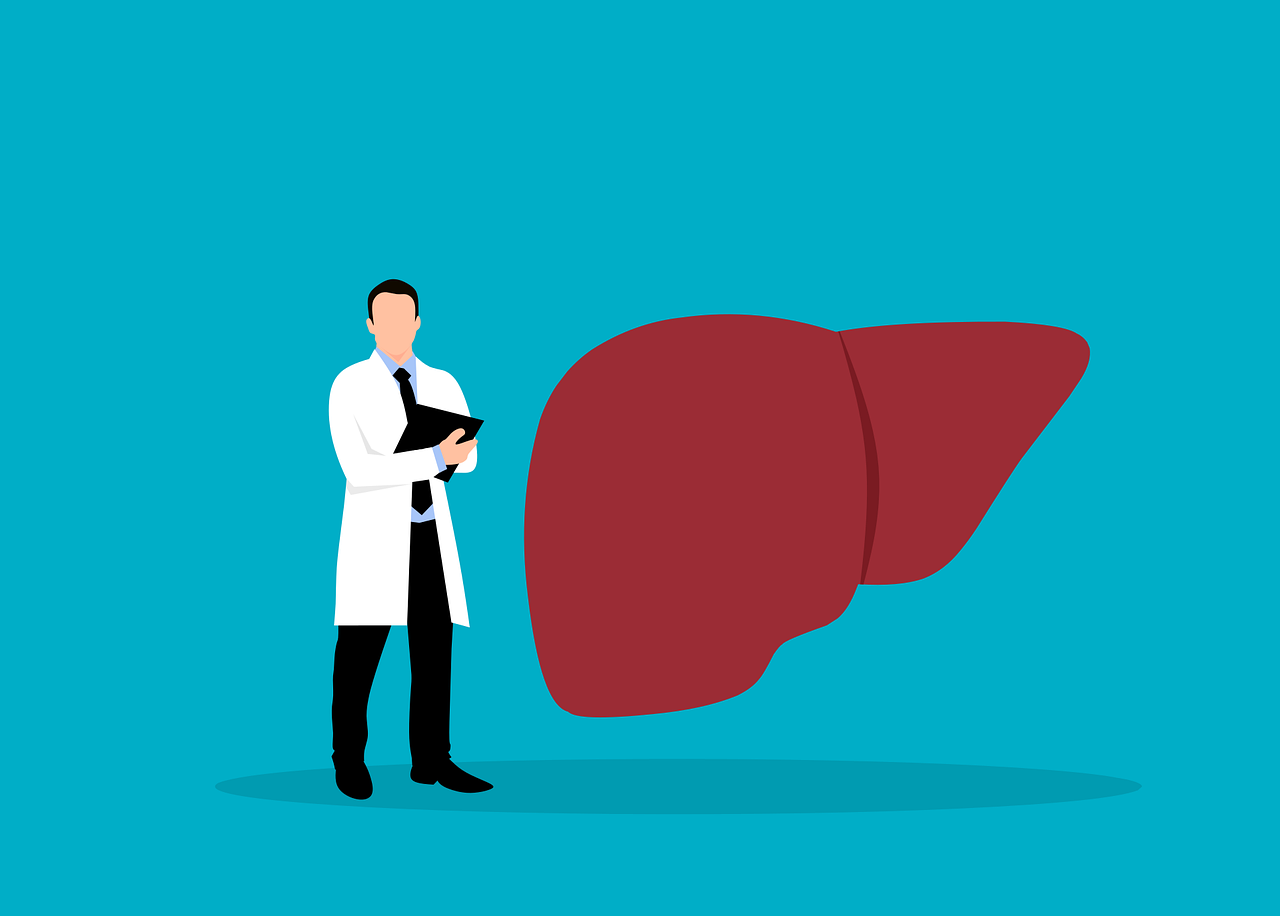
Electromagnetic fields (EMFs) surround us every day – from cell phones and WiFi routers to household wiring and power lines. While most people are aware of debates about EMFs and brain health, far fewer stop to ask whether these invisible fields could influence other vital organs. One organ worth examining closely is the liver, which plays a central role in metabolism, detoxification, and overall health.
The central question many researchers are now exploring is this: what are the effects of EMF exposure on liver enzymes, and do these changes signal potential harm to liver health? This is an important area to investigate, since liver enzymes like ALT and AST are key markers used in routine medical tests to assess whether the liver is functioning properly. If EMFs can disrupt these markers, it could mean subtle but meaningful impacts on human health.
In this article, we’ll break down what EMFs are, how the liver works, what studies show about EMFs and liver enzyme changes, possible mechanisms behind these effects, and what practical steps you can take to protect both your liver and your overall well-being.
What Are EMFs and Where Do They Come From?
Before we can dive into the liver connection, it’s important to clarify what EMFs actually are. Electromagnetic fields are areas of energy that come from both natural and human-made sources. They vary in frequency and intensity, and scientists usually divide them into two broad categories:
- Extremely Low Frequency (ELF) fields: Generated by power lines, household wiring, and electrical appliances.
- Radiofrequency (RF) fields: Produced by wireless technologies like cell phones, WiFi routers, and smart devices.
Both ELF and RF EMFs are classified as non-ionizing radiation, meaning they don’t have enough energy to break chemical bonds directly like X-rays or gamma rays. However, researchers are investigating whether even non-ionizing fields can subtly interfere with biological systems, especially with long-term or high-intensity exposure.
The Liver and Its Key Functions
The liver is the body’s chemical processing plant. Every nutrient you eat, every toxin you ingest, and every hormone you produce passes through this vital organ. Its key roles include:
- Metabolizing nutrients into usable energy.
- Detoxifying harmful substances like alcohol, drugs, and environmental chemicals.
- Producing bile to digest fats.
- Regulating blood sugar and cholesterol.
Doctors commonly measure liver health by looking at liver enzymes, such as ALT (alanine aminotransferase) and AST (aspartate aminotransferase). Elevated levels usually signal liver stress or damage. That’s why many studies on EMFs and the liver focus specifically on whether effects of EMF exposure on liver enzymes can be detected.
What Research Says About EMFs and Liver Enzymes
Studies exploring the liver – EMF connection fall into two main groups: animal experiments and human observational studies. Both provide valuable insights, though each has limitations.
Animal Studies
Animal studies are useful because researchers can tightly control EMF exposure levels and monitor exact biological changes. In many rodent studies:
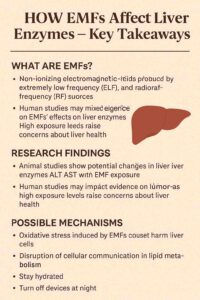
- Rats exposed to ELF or RF fields for weeks to months showed increases in ALT and AST levels, suggesting liver cells were under stress.
- Other studies found no significant enzyme changes but did record oxidative stress markers rising, which could eventually affect enzyme levels.
- Some experiments revealed changes in antioxidant enzyme activity (like superoxide dismutase and catalase), which are part of the liver’s defense system against damage.
In short, animal data show a mixed picture, but they suggest that EMFs can influence liver enzymes under certain exposure conditions.
Human Studies
Human studies are fewer and more complex because people are exposed to EMFs in uncontrolled, real-world environments. However:
- Occupational studies of electrical workers exposed to ELF EMFs found slightly altered liver enzyme profiles compared to non-exposed groups.
- Other studies reported no significant long-term liver enzyme changes in people using mobile phones, though these often had smaller sample sizes and shorter observation periods.
Overall, the evidence is not conclusive, but it raises enough concern to keep researchers investigating the effects of EMF exposure on liver enzymes further.
Affiliate Advertisement

Possible Mechanisms Behind Liver Enzyme Changes
Whenever scientists see a biological effect, they ask: how could this happen? Several mechanisms have been proposed to explain why EMFs might influence liver enzymes.
Oxidative Stress
One of the most consistent findings in EMF studies is the generation of oxidative stress – an imbalance between damaging free radicals and protective antioxidants. The liver is particularly sensitive to oxidative stress because it processes toxins daily. When free radicals overwhelm its defenses, liver cells release ALT and AST into the bloodstream, raising enzyme levels.
Disruption of Cellular Communication
Some studies suggest EMFs may alter how calcium ions move inside cells, which could disrupt cell signaling. In the liver, this could interfere with enzyme regulation and cell repair processes.
Effects on Lipid Metabolism
The liver manages fat processing. EMFs have been linked to changes in lipid metabolism, which could indirectly stress the liver. In experimental settings, EMF exposure sometimes worsened fatty liver changes, while in others it seemed to improve them – indicating that frequency, intensity, and duration all matter.
Magnitude of Exposure: Lab vs. Real Life
One important factor is whether the exposure levels used in experiments resemble real life. Many laboratory studies expose animals to much higher EMF intensities than most people encounter daily. That doesn’t mean lower levels are harmless, but it does raise questions about how relevant the findings are to everyday life.
For example, carrying a cell phone in your pocket exposes you to localized RF EMFs, but usually at levels well below occupational safety limits. Still, chronic exposure – even at lower intensities – remains an area of concern and deserves more study.
Affiliate Advertisement

What We Don’t Know Yet
Despite decades of research, significant gaps remain. We don’t yet know:
- Whether short-term enzyme changes translate into long-term liver disease.
- What exposure levels and durations are most harmful.
- Why some studies show enzyme changes while others don’t.
- How factors like diet, alcohol, or genetics interact with EMF exposure.
This uncertainty is why ongoing studies continue to focus on the effects of EMF exposure on liver enzymes, as they provide measurable early signals of possible liver stress.
Practical Steps to Support Liver Health and Reduce EMF Exposure
Even though the science is not settled, you can take precautionary steps to reduce risk. These steps fall into two categories: lowering EMF exposure and strengthening your liver’s resilience.
Lowering EMF Exposure
It’s not realistic to avoid EMFs completely, but small lifestyle adjustments can help. Here are practical actions you can take:
- Increase distance from devices: Don’t keep your phone pressed against your body for long periods. Use speakerphone or a wired headset.
- Turn off devices at night: Shutting off WiFi routers while you sleep reduces exposure during hours when your body is repairing itself.
- Use wired connections when possible: For computers, choose Ethernet instead of WiFi to cut down RF exposure.
- Limit unnecessary screen time: This isn’t just good for your liver; it reduces overall EMF load too.
Each of these steps reduces cumulative exposure, which may lower any potential impact on liver enzymes.
Supporting Liver Health
Your liver has a remarkable ability to regenerate and defend itself. You can help it by focusing on everyday habits:
- Eat a nutrient-dense diet: Foods rich in antioxidants, such as berries, leafy greens, and cruciferous vegetables, help neutralize free radicals.
- Stay hydrated: Water supports toxin elimination and optimal enzyme activity.
- Limit alcohol and processed foods: Both add stress to liver detox pathways, which EMFs may already be challenging.
- Get regular check-ups: Routine liver enzyme tests (ALT, AST) provide an early warning system if something is off.
By combining EMF-reduction strategies with liver-supporting lifestyle changes, you create a protective buffer against possible risks.
Conclusion
The research on EMFs and the liver is still emerging, but what we know so far is worth paying attention to. Studies in both animals and humans suggest that effects of EMF exposure on liver enzymes may occur, though findings are mixed and depend on exposure intensity and duration. The most consistent mechanisms involve oxidative stress and subtle changes in cellular processes.
For most people, everyday EMF exposure may not pose a dramatic risk, but the liver’s central role in detoxification makes it an organ worth protecting. By reducing unnecessary EMF exposure and supporting your liver with healthy habits, you can take practical steps toward safeguarding your long-term health.
Before You Go…
Get Weekly EMF Protection Tips
Enjoy this article? Join the EMFLuLu newsletter for simple weekly tips to reduce everyday EMF exposure from phones, WiFi routers, laptops, and smart home devices.
Try Our Free EMF Calculators
Curious how much EMF exposure you may experience each day?
These simple tools can help you estimate your exposure and identify possible problem areas in your home.
Try these free calculators:
Like this article? Pin it on Pinterest!

More to Explore